A session of the Eight Annual Central and Southwest Asia Conference at the University of Montana, University Center Theater, Missoula, USA, 23 April 2010, 1.00-3.00 pm
Public lecture by Farid Younos: "Failure of Democracy in Afghanistan"
http://news.umt.edu/2010/04/041410asia.aspx
Farid Younos is a Lecturer in the Human Development Department at California State University, East Bay, and a TV host and anchorman at California-based Noor TV Afghan Television.
The lecture is open to the public and free of charge.
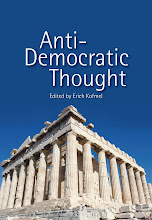
Younos is also the author of a book titled "Democratic Imperialism: Democratization vs. Islamization" (AuthorHouse, 2008):
www.authorhouse.com/Bookstore/ItemDetail.aspx?bookid=45904
From the publisher's description: "This book poses and clearly answers a compelling question: Are Americans qualified to export or impose their brand of democracy in the Middle East? [...] Farid Younos, as a scholar of not only social sciences, but also the culture of the Middle East, namely Islam, argues that democracy in the land of Islam is not functional. The deeply rooted value system and way of life of Islam calls for a different system, especially when western democracy has its own problems and has failed to bring justice for all at home. Liberal democracy as a secular system negates the role of faith in the political system of the Middle East, and this negation is the main concern for many Muslims worldwide. The question arises as to why the United States of America tries to impose its brand of political system in the Middle East while knowing that it is not a workable idea. Democracy in Afghanistan and Iraq proved to be fatal. [...] This study provides an alternative approach for Muslim countries: an Islamic political system [...] could be an ideal system [...] if Muslims would make an effort to not only meet the needs of their people, but also meet the needs of the international community. The purpose, presumably, of all parties, is peace in the region, and that peace is not possible if Islamic economic, social and political ideas are ignored and replaced by a manifesto of globalization."
Showing posts with label public lecture. Show all posts
Showing posts with label public lecture. Show all posts
17 April 2010

Public lecture: Asia's Anti-Democracy: North Korea
An event in the Business and Policy Speaker Series "Prospects for Democracy in China, Afghanistan and North Korea" of the Asia Society Texas Center, at the Houston Club, 811 Rusk Avenue, Houston, Texas, USA, 29 April 2010, 11.30 am-1.30 pm (Attention: the registration form gives the date as 12 May 2010)
Public lecture by John Delury (Associate Director of the Asia Society's Center on U.S.-China Relations): "Asia's Anti-Democracy: North Korea"
www.asiasociety.org/events-calendar/asias-anti-democracy-north-korea-lecture-john-delury
Description: "One of the last surviving planned socialist economies, history's only communist dynasty, and an ideological hybrid of Confucianism, Christianity, Stalinism, and Maoism, North Korea is truly unique. To its south lies arguably the most democratic society in East Asia – South Korea. Across its northern border, China is being remade by relentless socio-economic dynamism. But North Korea's regime has proven itself remarkably resilient, and at least for now is East Asia's most undemocratic state. John Delury [...] explores what paths, if any, to democratic rule are imaginable for the North Korean people and what can be done to lay foundations for a more moderate and liberal regime."
Cost: $30 members, $40 non-members, $300 tables of 10.
Public lecture by John Delury (Associate Director of the Asia Society's Center on U.S.-China Relations): "Asia's Anti-Democracy: North Korea"
www.asiasociety.org/events-calendar/asias-anti-democracy-north-korea-lecture-john-delury
Description: "One of the last surviving planned socialist economies, history's only communist dynasty, and an ideological hybrid of Confucianism, Christianity, Stalinism, and Maoism, North Korea is truly unique. To its south lies arguably the most democratic society in East Asia – South Korea. Across its northern border, China is being remade by relentless socio-economic dynamism. But North Korea's regime has proven itself remarkably resilient, and at least for now is East Asia's most undemocratic state. John Delury [...] explores what paths, if any, to democratic rule are imaginable for the North Korean people and what can be done to lay foundations for a more moderate and liberal regime."
Cost: $30 members, $40 non-members, $300 tables of 10.
06 January 2010
Public lecture: The Mixed Constitution: Monarchical and Aristocratic Aspects of Modern Democracy
The 2010 British Academy Lecture, at the British Academy, 10 Carlton Terrace, London, SW1Y 5AH, 25 February 2010, 5.30-6.30 pm
Mogens Herman Hansen (University of Copenhagen): "The Mixed Constitution: Monarchical and Aristocratic Aspects of Modern Democracy"
www.britac.ac.uk/events/2010/bal2010/index.cfm
The theory of the separation of powers between a legislature, an executive, and a judiciary is the foundation of modern representative democracy. It was developed by Montesquieu and came to replace the older theory of the mixed constitution which goes back to Plato, Aristotle, and Polybios, that there are three types of constitution: monarchy, oligarchy, and democracy. When institutions from each of the three types are mixed, an interplay between the institutions emerges that affects all functions of state. Today Montesquieu's separation of powers is obsolete. The mixed constitution deserves to be revived as a corrective to the prevailing view that western states are pure democracies. Ancient political thought is remarkably modern or – rather – modern political thought has much to learn from the Greek and Roman political thinkers.
The annual keynote British Academy Lecture is intended to address a wider audience than the purely scholarly.
British Academy Lectures are freely open to the general public and everyone is welcome; there is no charge for admission, no tickets will be issued, and seats cannot be reserved. The Lecture Room is opened at 5.00 pm, and the first 80 audience members arriving at the Academy will be offered a seat in the Lecture Room; the next 60 people to arrive will be offered a seat in the Overflow Room, which has a video and audio link to the Lecture Room. Lectures are followed by a reception at 6.30 pm, to which members of the audience are invited.
Mogens Herman Hansen (University of Copenhagen): "The Mixed Constitution: Monarchical and Aristocratic Aspects of Modern Democracy"
www.britac.ac.uk/events/2010/bal2010/index.cfm
The theory of the separation of powers between a legislature, an executive, and a judiciary is the foundation of modern representative democracy. It was developed by Montesquieu and came to replace the older theory of the mixed constitution which goes back to Plato, Aristotle, and Polybios, that there are three types of constitution: monarchy, oligarchy, and democracy. When institutions from each of the three types are mixed, an interplay between the institutions emerges that affects all functions of state. Today Montesquieu's separation of powers is obsolete. The mixed constitution deserves to be revived as a corrective to the prevailing view that western states are pure democracies. Ancient political thought is remarkably modern or – rather – modern political thought has much to learn from the Greek and Roman political thinkers.
The annual keynote British Academy Lecture is intended to address a wider audience than the purely scholarly.
British Academy Lectures are freely open to the general public and everyone is welcome; there is no charge for admission, no tickets will be issued, and seats cannot be reserved. The Lecture Room is opened at 5.00 pm, and the first 80 audience members arriving at the Academy will be offered a seat in the Lecture Room; the next 60 people to arrive will be offered a seat in the Overflow Room, which has a video and audio link to the Lecture Room. Lectures are followed by a reception at 6.30 pm, to which members of the audience are invited.
Subscribe to:
Posts (Atom)

 Posts
Posts

