"We Are an Image from the Future: The Greek Revolt of December 2008", edited by A.G. Schwarz, Tasos Sagris and Void Network (AK Press, February 2010):
www.akpress.org/2010/items/weareanimagefromthefuture
Publisher's description: "What causes a city, then a whole country, to explode? How did one neighborhood's outrage over the tragic death of one teenager transform itself into a generalized insurrection against State and capital, paralyzing an entire nation for a month? This is a book about the murder of fifteen-year-old Alexis Grigoropoulos, killed by the police in the Exarchia neighborhood of Athens on December 6th, 2008, and of the revolution in the streets that followed, bringing business as usual in Greece to a screeching, burning halt for three marvelous weeks, and putting the fear of history back into the bureaucrats of Fortress Europe and beyond. We Are an Image From the Future delves into the December insurrection and its aftermath through interviews with those who witnessed and participated in it, alongside the communiqués and texts that circulated through the networks of revolt. It provides the on-the-ground facts needed to understand these historic events, and also dispels the myths activists outside of Greece have constructed around them. What emerges is not just the intensity of the riots, but the stories of organizing and solidarity, the questions of strategy and tactics: a desperately needed examination of the fabric of the Greek movements that made December possible."
Endorsement: "This dazzling collection is not a book about the great insurrection of 2008 – it is a living piece of it that can become a part of us, and through us, it opens the prospect of a universe we might never otherwise have imagined possible. Future historians may well conclude that the Revolution finally began in 2008. If they do, this book will have played a crucial role in that realization." (David Graeber, Goldsmiths, University of London)
The book contains texts such as "Their Democracy Murders – The Polytechnic University Occupation" and many writings by the "Ego Te Provoco" counter-information group, including the eponymous "We Are Here / We Are Everywhere / We Are an Image from the Future" (pp. 165-8), "The media as part of the counter-insurgency" (pp. 169-72), and "A Bedouin Anytime! A Citizen Never." (pp. 197-8; translators not named).
Excerpts: "The other thing we put forward was a discourse against democracy, because many people were saying, what kind of democracy kills children, we need more democracy, and we were trying to deconstruct this whole notion of democracy, to claim that this murder is not an exception, it is the rule of democracy, the rule of the nation-state, the rule of capitalism." (p. 170)
"We despise democracy more than anything else in this decadent world. For what is democracy other than a system of discriminations and coercions in the service of property and privacy? [...] The bourgeois, with a voice trembling from piety, promise: rights, justice, equality. And the revolted hear: repression, exploitation, looting. [...] Our contempt for democracy does not derive from some sort of idealism but rather from our very material animosity for a social entity in which value and organizing are centered around the product and the spectacle." (p. 198)
A.G. Schwarz is the assumed name of a North American living in exile abroad.
Tasos Sagris is a member of the Athens-based Void Network, an arts and action collective established in 1990.
Showing posts with label capitalism and democracy. Show all posts
Showing posts with label capitalism and democracy. Show all posts
12 November 2010

17 October 2010
Article: What Checks and Balances in a Democratic Dictatorship?
One M. Rafic Soormally, apparently based in London, is credited as the guest author of a blog post titled "What Checks and Balances in a Democratic Dictatorship?", published on 14 October 2010 on the website of the bilingual (French and English) Mauritian daily newspaper "Le Matinal".
The full text of the article can be read free of charge here:
www.lematinal.com/blogs/7847-Blog-What-Checks-and-Balances-in-a-Democratic-Dictatorship.html
Excerpts: "Debates are presently raging on what to do with the presidential system imposed on Mauritians. The [...] system of political control is not an invention of democracy, and people are being grossly misled. [...] Majority rule must necessarily command over 50% of the votes but this is hardly the case in any so-called democracy. In practice, a minority almost always rules through a process of 'buying' votes through electoral promises and unspeakable forms of corruption perpetrated by a capitalist system wherein less that 10% of the population owns over 90% of the wealth. Moreover, people are forced to vote for candidates selected by political parties and not by them. Democracy is a most manipulative, infectious and lying political system controlled by powerful lobbies and is a [sic] most war-mongering system the world has ever known through the perpetration of terror, invasions, occupations, land theft, decimation of whole populations and the use of weapons of mass destruction such as Nuclear Bombs (Hiroshima, Nagasaki, Fallujah), Agent Orange and Napalm (Vietnam), Phosphorous Bombs (Palestine), Cluster and Uranium Bombs and Biological Weapons (Iraq, Afghanistan), and more. [...]
"Adolph Hitler, George Bush, Tony Blair, Benjamin Netanyahu, Nicolas Sarkozy have all been 'democratically' elected but they all act/ed like dictators. [...] In theory, the US Constitution guarantees the Separation of Powers between the three branches of government [...]. In practice, there is overwhelming evidence that all three branches do act in concert as they are dictated by the same powerful lobbies, for example, in decisions to embark on false flag operations, to pass dictatorial laws and make wars, not to mention that the US is still a very racist country built upon the genocide of the Native Americans. The US is still torturing people they kidnapped and transported to Guantanamo Cuba, Diego Garcia Mauritius and elsewhere, and all checks and balances are non-existent. The President effectively has dictatorial powers [...]. The notion of checks and balances has become just another myth in most modern democracies. The strategy is to find ways to dominate the people, and the world. [...] The Mauritian President is a symbol of dictatorship as, like the British Queen, he is above the law too."
The full text of the article can be read free of charge here:
www.lematinal.com/blogs/7847-Blog-What-Checks-and-Balances-in-a-Democratic-Dictatorship.html
Excerpts: "Debates are presently raging on what to do with the presidential system imposed on Mauritians. The [...] system of political control is not an invention of democracy, and people are being grossly misled. [...] Majority rule must necessarily command over 50% of the votes but this is hardly the case in any so-called democracy. In practice, a minority almost always rules through a process of 'buying' votes through electoral promises and unspeakable forms of corruption perpetrated by a capitalist system wherein less that 10% of the population owns over 90% of the wealth. Moreover, people are forced to vote for candidates selected by political parties and not by them. Democracy is a most manipulative, infectious and lying political system controlled by powerful lobbies and is a [sic] most war-mongering system the world has ever known through the perpetration of terror, invasions, occupations, land theft, decimation of whole populations and the use of weapons of mass destruction such as Nuclear Bombs (Hiroshima, Nagasaki, Fallujah), Agent Orange and Napalm (Vietnam), Phosphorous Bombs (Palestine), Cluster and Uranium Bombs and Biological Weapons (Iraq, Afghanistan), and more. [...]
"Adolph Hitler, George Bush, Tony Blair, Benjamin Netanyahu, Nicolas Sarkozy have all been 'democratically' elected but they all act/ed like dictators. [...] In theory, the US Constitution guarantees the Separation of Powers between the three branches of government [...]. In practice, there is overwhelming evidence that all three branches do act in concert as they are dictated by the same powerful lobbies, for example, in decisions to embark on false flag operations, to pass dictatorial laws and make wars, not to mention that the US is still a very racist country built upon the genocide of the Native Americans. The US is still torturing people they kidnapped and transported to Guantanamo Cuba, Diego Garcia Mauritius and elsewhere, and all checks and balances are non-existent. The President effectively has dictatorial powers [...]. The notion of checks and balances has become just another myth in most modern democracies. The strategy is to find ways to dominate the people, and the world. [...] The Mauritian President is a symbol of dictatorship as, like the British Queen, he is above the law too."
01 October 2010
Article: On Democracy and Kings
John C. Médaille is the author of an article titled "On Democracy and Kings", which appeared on 15 September 2010 as the first of a series of articles in the fortnightly traditionalist Roman Catholic US newspaper "The Remnant" (43 [15]: no page numbers given).
The full text of the article can be read free of charge here:
www.remnantnewspaper.com/Archives/2010-0915-medaille-monarchy.htm
Excerpts: "[I]t is clear to me, especially in this late date of our democracy, that it enthrones the will of determined and well-financed minorities, that it dissolves the customs and traditions of the people, and that it has no concern for the future. And a king may indeed be a tyrant, but such is the exception rather than the rule. [...] A king, no less than a president, must consider the forces and interests in his kingdom. But a king is free to judge the justice of the arguments; a president is free only to count the votes. And while the president might attempt to engage in persuasion, in the end he himself can only be persuaded by power, that is, by whoever controls the votes, which is very likely to be the one who controls the money. A king may also be persuaded by power and money, but he is always free to be persuaded by justice. And even when a king is a tyrant, he is an identifiable tyrant; much worse is when a people live in a tyranny they may not name, a system where the forms of democracy serve as cover for the reality of tyranny. And that, I believe, is our situation today. [...]
"Modern democracy has come to mean, in preference to all other possible forms, electoral democracy [...]. Since this democracy is something we are willing to both kill and die for, it assumes the status of a religion, albeit a secular one. Like all religions, electoral democracy has its central sacrament, its central liturgy, and its central dogma; its sacrament is the secret ballot, its liturgy is the election campaign, and its dogma is that the election will represent the will of the people. But is this dogma true in any sense? [...] One might respond that it is the will of the people who cared enough to vote. However, that ignores the fact that there are people (like myself) who care enough not to vote; people who find no party acceptable, or worse, find that both parties are really the same party with cosmetic differences for the entertainment and manipulation of the public. [...] Further, we can ask if a bare majority is actually a sufficient margin for any really important decision, one that commits everyone to endorse serious and abiding actions. For example, should 51% be allowed to drag the rest into war? [...]
"[D]emocracies tend to erode traditions by pandering to current desires. [...] In abandoning the past, democracy also abandons the future. We pile the children with debts they cannot pay, wars they cannot win, obligations they cannot meet [...]. In truth, elections are markets with very high entry costs. [...] Indeed, in the 2008 elections, campaign costs were a staggering $5.3 billion, and that was just for the national races. There are very limited sources for that kind of money, and the political process must, perforce, be dominated by those sources. [...] And why is so much money needed? Because the political arts in a democracy are not the arts of deliberation and persuasion, which are relatively inexpensive, but are the arts of manipulation and propaganda, which are extremely costly. The appeal is almost never to the intelligence, but to raw passion and emotion. The path to power in a democracy, the surest way to ensure the loyalty of one's followers, is to exaggerate small differences into great 'issues.' [...]
"A thing is known by its proper limits, and a thing without limits becomes its own opposite. Thus democracy, sacralized and absolutized, becomes its own opposite, a thinly disguised oligarchy of power which uses all the arts of propaganda to convince the public that their votes matter. There is precedent for this. The Western Roman Empire maintained the Republican form and offices. Consul, quaestor, aedile, and tribune remained and there were hotly contested and highly expensive campaigns for these offices. The army still marched under the banner not of the emperor, but of the SPQR, 'The Senate and People of Rome.' But of course it was all a sham; real power lay with the emperor and with the army and the merchant/landowning classes whose interests he largely represented, while buying off the plebs with the world's largest welfare state. But at least the Romans could see their emperor, could know his name, could love him or hate him. We are not permitted to see our real rulers, and never permitted to name them. The democratic sham covers the oligarchic reality."
The second installment of the series, an article titled "A Real Catholic Monarchy", appeared in "The Remnant" on 30 September 2010 (43 [16]: no page numbers given).
Excerpt: "A modern bureaucrat, in the normal course of his day, exercises more power than a medieval king; the bureaucrat can, with a stroke of a pen, take away your business or your children, thereby making tyranny a sort of daily routine; the bureaucrat's writ does indeed run as law, as long as the proper forms are filled out ..."
The full text of this article is only accessible to subscribers of the paper (available in print or as e-edition).
I was not able to ascertain whether there will be further installments in future issues of "The Remnant".
John C. Médaille is Adjunct Instructor of Theology at the University of Dallas.
The full text of the article can be read free of charge here:
www.remnantnewspaper.com/Archives/2010-0915-medaille-monarchy.htm
Excerpts: "[I]t is clear to me, especially in this late date of our democracy, that it enthrones the will of determined and well-financed minorities, that it dissolves the customs and traditions of the people, and that it has no concern for the future. And a king may indeed be a tyrant, but such is the exception rather than the rule. [...] A king, no less than a president, must consider the forces and interests in his kingdom. But a king is free to judge the justice of the arguments; a president is free only to count the votes. And while the president might attempt to engage in persuasion, in the end he himself can only be persuaded by power, that is, by whoever controls the votes, which is very likely to be the one who controls the money. A king may also be persuaded by power and money, but he is always free to be persuaded by justice. And even when a king is a tyrant, he is an identifiable tyrant; much worse is when a people live in a tyranny they may not name, a system where the forms of democracy serve as cover for the reality of tyranny. And that, I believe, is our situation today. [...]
"Modern democracy has come to mean, in preference to all other possible forms, electoral democracy [...]. Since this democracy is something we are willing to both kill and die for, it assumes the status of a religion, albeit a secular one. Like all religions, electoral democracy has its central sacrament, its central liturgy, and its central dogma; its sacrament is the secret ballot, its liturgy is the election campaign, and its dogma is that the election will represent the will of the people. But is this dogma true in any sense? [...] One might respond that it is the will of the people who cared enough to vote. However, that ignores the fact that there are people (like myself) who care enough not to vote; people who find no party acceptable, or worse, find that both parties are really the same party with cosmetic differences for the entertainment and manipulation of the public. [...] Further, we can ask if a bare majority is actually a sufficient margin for any really important decision, one that commits everyone to endorse serious and abiding actions. For example, should 51% be allowed to drag the rest into war? [...]
"[D]emocracies tend to erode traditions by pandering to current desires. [...] In abandoning the past, democracy also abandons the future. We pile the children with debts they cannot pay, wars they cannot win, obligations they cannot meet [...]. In truth, elections are markets with very high entry costs. [...] Indeed, in the 2008 elections, campaign costs were a staggering $5.3 billion, and that was just for the national races. There are very limited sources for that kind of money, and the political process must, perforce, be dominated by those sources. [...] And why is so much money needed? Because the political arts in a democracy are not the arts of deliberation and persuasion, which are relatively inexpensive, but are the arts of manipulation and propaganda, which are extremely costly. The appeal is almost never to the intelligence, but to raw passion and emotion. The path to power in a democracy, the surest way to ensure the loyalty of one's followers, is to exaggerate small differences into great 'issues.' [...]
"A thing is known by its proper limits, and a thing without limits becomes its own opposite. Thus democracy, sacralized and absolutized, becomes its own opposite, a thinly disguised oligarchy of power which uses all the arts of propaganda to convince the public that their votes matter. There is precedent for this. The Western Roman Empire maintained the Republican form and offices. Consul, quaestor, aedile, and tribune remained and there were hotly contested and highly expensive campaigns for these offices. The army still marched under the banner not of the emperor, but of the SPQR, 'The Senate and People of Rome.' But of course it was all a sham; real power lay with the emperor and with the army and the merchant/landowning classes whose interests he largely represented, while buying off the plebs with the world's largest welfare state. But at least the Romans could see their emperor, could know his name, could love him or hate him. We are not permitted to see our real rulers, and never permitted to name them. The democratic sham covers the oligarchic reality."
The second installment of the series, an article titled "A Real Catholic Monarchy", appeared in "The Remnant" on 30 September 2010 (43 [16]: no page numbers given).
Excerpt: "A modern bureaucrat, in the normal course of his day, exercises more power than a medieval king; the bureaucrat can, with a stroke of a pen, take away your business or your children, thereby making tyranny a sort of daily routine; the bureaucrat's writ does indeed run as law, as long as the proper forms are filled out ..."
The full text of this article is only accessible to subscribers of the paper (available in print or as e-edition).
I was not able to ascertain whether there will be further installments in future issues of "The Remnant".
John C. Médaille is Adjunct Instructor of Theology at the University of Dallas.
23 September 2010
Article: Toppling democracy
Thongchai Winichakul, "Toppling democracy" ("Journal of Contemporary Asia", 38 [1], February 2008: pp. 11-37).
The full text of the article can be read free of charge here:
www.sameskybooks.org/wp-content/uploads/2008/02/j-of-contem-asia-2008-thongchai-winichakul-toppling-democracy.pdf
Abstract: "Thailand's 2006 royalist coup is best understood by reference to the historical context of democratisation. The dominant historiography of Thai democratisation is either a simplistic liberal view of anti-military democracy or a royalist one that is ultimately anti-democratic. This article offers a serial history of democratisation that allows us to see the long duration of layered historical processes. As democratisation is fundamentally a break from the centralised absolute monarchy, the monarchy and the monarchists, despite their up and down political fortunes, have probably played the most significant role in shaping Thai democracy since 1932. Despite that, their role and place in history has been overlooked due to the perception that they are 'above politics.' This article argues that, since 1973 in particular, the monarchists have assumed the status of the superior realm in Thai politics that claims the high moral ground above politicians and normal politics. With distaste for electoral politics, and in tacit collaboration with the so-called people's sector, activists and intellectuals, they have undermined electoral democracy in the name of 'clean politics' versus the corruption of politicians. The 2006 coup that toppled democracy was the latest effort of the monarchists to take control of the democratisation process."
Excerpts: "The fight against corruption and money politics seems indisputably a good cause. It should contribute to democracy with no harm whatsoever. In the context of Thai democratisation of the past thirty years, however, the repercussions and consequences of clean politics against elected politicians significantly contributed to the coup in 2006. [...] To understand the effects of the discourse of clean politics on democratisation, I shall elaborate its four constitutive discourses and point out how each of them has ramified to become anti-democratic. They are (i) politicians are extremely corrupt; (ii) politicians come to power by vote-buying; (iii) an election does not equal democracy; and (iv) democracy means a moral, ethical rule. [...] If a 'communist threat' was the usual reason for many military coups during the Cold War, corruption has been the usual reason for coups after the end of the communist threat in Thailand since the early 1980s. [...]
"From the 1980s, people have believed that vote-buying is rampant at every level of election. It is considered a political pandemic. [...] Given the distrust of politicians and parliament's assumed lack of legitimacy due to vote-buying, Thailand's democracy has been seriously undermined. The public as well as many intellectuals question the legitimacy of the election as a trustworthy means to democracy. [...] While these public intellectuals may support civic movements or people's power, the supporters of clean politics adopted the rhetoric to undermine the electoral and parliamentary system. During the political crisis in 2006, the royalists and the anti-Thaksin activists alike often called the Thaksin government an 'electocracy' and his rule 'monetocracy.' After the coup, as critics of the coup insisted on electoral legitimacy in democracy, the coup defenders and apologists, including the royalist activists, military leaders and many leading intellectuals, kept repeating that the staging of an election does not equal democracy. [...]
"The distrust of elections in fact goes a long way back and is deeper than the rhetoric above. It is rooted in the nationalistic conservatism that distrusts democracy for being alien to Thai culture which honours hierarchical relations and venerates the monarchy as the highest authority in the land. [...] These conservatives often remind us that a constitution, thereby democracy as well, is merely a Western object. It is not necessarily good for Thai political culture. [...] In 2005 and 2006, the anti-Thaksin movement called for the return of power to the monarchy, arguing that it fits Thai political culture, unlike electoral democracy, which is an alien political system. [...] Not only could politicians and elections not be trusted, but democracy itself is also suspect. This is the ideological basis for the royalist distaste of elections. It is compatible with the anti-electocracy discourse of liberal intellectuals, thanks to their shared distrust of the existing 'democracy.'"
Thongchai Winichakul is Professor of History at the University of Wisconsin-Madison.
The full text of the article can be read free of charge here:
www.sameskybooks.org/wp-content/uploads/2008/02/j-of-contem-asia-2008-thongchai-winichakul-toppling-democracy.pdf
Abstract: "Thailand's 2006 royalist coup is best understood by reference to the historical context of democratisation. The dominant historiography of Thai democratisation is either a simplistic liberal view of anti-military democracy or a royalist one that is ultimately anti-democratic. This article offers a serial history of democratisation that allows us to see the long duration of layered historical processes. As democratisation is fundamentally a break from the centralised absolute monarchy, the monarchy and the monarchists, despite their up and down political fortunes, have probably played the most significant role in shaping Thai democracy since 1932. Despite that, their role and place in history has been overlooked due to the perception that they are 'above politics.' This article argues that, since 1973 in particular, the monarchists have assumed the status of the superior realm in Thai politics that claims the high moral ground above politicians and normal politics. With distaste for electoral politics, and in tacit collaboration with the so-called people's sector, activists and intellectuals, they have undermined electoral democracy in the name of 'clean politics' versus the corruption of politicians. The 2006 coup that toppled democracy was the latest effort of the monarchists to take control of the democratisation process."
Excerpts: "The fight against corruption and money politics seems indisputably a good cause. It should contribute to democracy with no harm whatsoever. In the context of Thai democratisation of the past thirty years, however, the repercussions and consequences of clean politics against elected politicians significantly contributed to the coup in 2006. [...] To understand the effects of the discourse of clean politics on democratisation, I shall elaborate its four constitutive discourses and point out how each of them has ramified to become anti-democratic. They are (i) politicians are extremely corrupt; (ii) politicians come to power by vote-buying; (iii) an election does not equal democracy; and (iv) democracy means a moral, ethical rule. [...] If a 'communist threat' was the usual reason for many military coups during the Cold War, corruption has been the usual reason for coups after the end of the communist threat in Thailand since the early 1980s. [...]
"From the 1980s, people have believed that vote-buying is rampant at every level of election. It is considered a political pandemic. [...] Given the distrust of politicians and parliament's assumed lack of legitimacy due to vote-buying, Thailand's democracy has been seriously undermined. The public as well as many intellectuals question the legitimacy of the election as a trustworthy means to democracy. [...] While these public intellectuals may support civic movements or people's power, the supporters of clean politics adopted the rhetoric to undermine the electoral and parliamentary system. During the political crisis in 2006, the royalists and the anti-Thaksin activists alike often called the Thaksin government an 'electocracy' and his rule 'monetocracy.' After the coup, as critics of the coup insisted on electoral legitimacy in democracy, the coup defenders and apologists, including the royalist activists, military leaders and many leading intellectuals, kept repeating that the staging of an election does not equal democracy. [...]
"The distrust of elections in fact goes a long way back and is deeper than the rhetoric above. It is rooted in the nationalistic conservatism that distrusts democracy for being alien to Thai culture which honours hierarchical relations and venerates the monarchy as the highest authority in the land. [...] These conservatives often remind us that a constitution, thereby democracy as well, is merely a Western object. It is not necessarily good for Thai political culture. [...] In 2005 and 2006, the anti-Thaksin movement called for the return of power to the monarchy, arguing that it fits Thai political culture, unlike electoral democracy, which is an alien political system. [...] Not only could politicians and elections not be trusted, but democracy itself is also suspect. This is the ideological basis for the royalist distaste of elections. It is compatible with the anti-electocracy discourse of liberal intellectuals, thanks to their shared distrust of the existing 'democracy.'"
Thongchai Winichakul is Professor of History at the University of Wisconsin-Madison.
21 September 2010
Article: Manifesto of Affirmationism
The leftist French philosopher Alain Badiou's "Manifesto of Affirmationism" (trans. Barbara P. Fulks) was published in the New York-based biannual journal of critical theory, art, and fiction "Lacanian Ink" (24/25, spring 2005: no page numbers given).
The full text of the article can be read free of charge here:
www.lacan.com/frameXXIV5.htm
Excerpts: "We cannot understand what is gripping us and causing us to despair if we do not return again and again to the fact that our world is not at all a democracy, but rather an imperial conservatism under the guise of democratic phraseology. What to say of today's world? A solitary power whose army is terrorizing the entire planet dictates its law of the circulation of capital and images and proclaims everywhere, with the most extreme violence, the Duties and Rights of everyone. [...] Under the imposed name of 'terrorism,' those most violently opposed to this hegemony of the brutal West, for which 'democracy' is spiritual ornament, are in reality part of it [...]: the fury of inspired barbarism against sated imperialism. [...] Romantic formalism has always been an artistic orientation of ensconced and terminal dominations. And it is thus in our time: that of a unique and multiform doctrine (economic liberalism and political electoralism), integrating for the first time the quasi-totality of human species in the distribution and constraint of its fortune.
"Yes, our time is that of the unique doctrine and of the consensus which is created around it under the strange name of 'democracy.' Any unique doctrine of this type is desperate, nihilist, because it only proposes to the human multiplicity the absurd perpetuation of its obscene order. And the artistic subjectivity that it leads to is that of this nihilism and of this obscenity. [...] The only maxim of contemporary art is to not be 'Western.' Which means also that it should not be democratic, if democratic means: conforming to the Western idea of political liberty. [...] Yes, the only problem is to know if the artistic imperative can be detached from the Western imperative, which is that of marketing and communication. Western democracy, in effect, is marketing and communication. Thus true art is that which interrupts marketing, that which communicates nothing. Immobile and incommunicable, this is the art we need, the only one that addresses everyone, not circulating according to any pre-established network and not communicating with anyone in particular. Art should augment in everyone the non-democratic strength of one's liberty. [...]
"A non-Western art is necessarily an abstract art, in the following sense: it abstracts from all particularity and formalizes this gesture of abstraction. In order to combat expressivity, to combat Romantic formalism, there is only the dynamic of abstraction. [...] The abstraction in art which is and which is to come does not consider any particular public [...]: it does what it says, without needing acceptance from anyone. We affirm that all sociological and institutional speculations about the audience for the arts must be abandoned. Sociology, and criticism itself, is only and always the auxiliary of Western democracy. [...] Convinced of controlling the entire extent of the visible and of the audible through commercial laws of marketing and the democratic laws of communication, contemporary power no longer needs censorship. It says: 'Everything is possible.' Which also might mean that nothing is. Abandoning itself to this authorization to jouir [enjoy, delight in] is the ruin of all art, as well as all thought. We should be our own pitiless censors. [...] It is better to do nothing than to work officially in the visibility of what the West declares to exist."
Alain Badiou was formerly chair of Philosophy at the École Normale Supérieure (ENS) in Paris.
The full text of the article can be read free of charge here:
www.lacan.com/frameXXIV5.htm
Excerpts: "We cannot understand what is gripping us and causing us to despair if we do not return again and again to the fact that our world is not at all a democracy, but rather an imperial conservatism under the guise of democratic phraseology. What to say of today's world? A solitary power whose army is terrorizing the entire planet dictates its law of the circulation of capital and images and proclaims everywhere, with the most extreme violence, the Duties and Rights of everyone. [...] Under the imposed name of 'terrorism,' those most violently opposed to this hegemony of the brutal West, for which 'democracy' is spiritual ornament, are in reality part of it [...]: the fury of inspired barbarism against sated imperialism. [...] Romantic formalism has always been an artistic orientation of ensconced and terminal dominations. And it is thus in our time: that of a unique and multiform doctrine (economic liberalism and political electoralism), integrating for the first time the quasi-totality of human species in the distribution and constraint of its fortune.
"Yes, our time is that of the unique doctrine and of the consensus which is created around it under the strange name of 'democracy.' Any unique doctrine of this type is desperate, nihilist, because it only proposes to the human multiplicity the absurd perpetuation of its obscene order. And the artistic subjectivity that it leads to is that of this nihilism and of this obscenity. [...] The only maxim of contemporary art is to not be 'Western.' Which means also that it should not be democratic, if democratic means: conforming to the Western idea of political liberty. [...] Yes, the only problem is to know if the artistic imperative can be detached from the Western imperative, which is that of marketing and communication. Western democracy, in effect, is marketing and communication. Thus true art is that which interrupts marketing, that which communicates nothing. Immobile and incommunicable, this is the art we need, the only one that addresses everyone, not circulating according to any pre-established network and not communicating with anyone in particular. Art should augment in everyone the non-democratic strength of one's liberty. [...]
"A non-Western art is necessarily an abstract art, in the following sense: it abstracts from all particularity and formalizes this gesture of abstraction. In order to combat expressivity, to combat Romantic formalism, there is only the dynamic of abstraction. [...] The abstraction in art which is and which is to come does not consider any particular public [...]: it does what it says, without needing acceptance from anyone. We affirm that all sociological and institutional speculations about the audience for the arts must be abandoned. Sociology, and criticism itself, is only and always the auxiliary of Western democracy. [...] Convinced of controlling the entire extent of the visible and of the audible through commercial laws of marketing and the democratic laws of communication, contemporary power no longer needs censorship. It says: 'Everything is possible.' Which also might mean that nothing is. Abandoning itself to this authorization to jouir [enjoy, delight in] is the ruin of all art, as well as all thought. We should be our own pitiless censors. [...] It is better to do nothing than to work officially in the visibility of what the West declares to exist."
Alain Badiou was formerly chair of Philosophy at the École Normale Supérieure (ENS) in Paris.
20 September 2010
Article: Democracy Still Matters
Roger Cohen, a London-based "International Herald Tribune" columnist, in an op-ed piece the "New York Times" today published on its website, eloquently paints a picture of the global "anti-democratic tide" that seems at once gradual and unavoidable. The title of the article, "Democracy Still Matters", subsequently cannot but ring untrue.
The full text of the article can be read free of charge here:
www.nytimes.com/2010/09/21/opinion/21iht-edcohen.html
Excerpts: "One mystery of the first decade of the 21st century is the decline of democracy. It's not that nations with democratic systems have dwindled in number but that democracy has lost its luster. It's an idea without a glow. [...] Those who saw something of the blood expended through the 20th century to secure liberal societies must inevitably find democracy's diminished appeal puzzling. But there are reasons. The lingering wars waged partly in democracy's name in Iraq and Afghanistan hurt its reputation [...]. Given the bloody mayhem, it was easy to portray 'democracy' as a fig leaf for the West's bellicose designs and casual hypocrisies. While the democratic West fought, a nondemocratic China grew. It emerged onto the world stage prizing stability, avoiding military adventure and delivering 10 percent annual growth of which Western democracies could only dream. China's 'surge' was domestic. It was unencumbered by the paralyzing debate of democratic process.
"When the West's financial system imploded in 2008, the Chinese response was vigorous. A 'Beijing consensus' gained traction. The borderline between democracy and authoritarianism grew more opaque. The dichotomy between freedom and tyranny suddenly seemed oh-so 20th century. The new authoritarianism of China or Russia was harder to define and therefore harder to confront. 'Regimes like the one in Russia are stabilized by the fact that they have no ideology,' said Ivan Krastev, a fellow at the Institute for Human Sciences in Vienna. 'There is really no ideological means to attack them.' They also derive resilience from the fact that their borders are open. 'The middle class is not interested in changing the system because if they don't like it they can fly to London,' Krastev noted. Having grown up in Communist Bulgaria, he believes democracy was oversold in the 1990's. All good things, at the Cold War's end, were shoveled into the democratic basket: prosperity, growth, peace. When democracy stopped delivering in these areas, it suffered. [...]
"Meanwhile technology kicked in with what the author Jonathan Franzen has called its 'trillion little bits of distracting noise.' People, synched with themselves, retreated into private networks and away from the public space – the commons – where democratic politics had been played out. Democracies seemed blocked, as in Belgium, or corrupted, as in Israel, or parodies, as in Italy, or paralyzed, as in the Netherlands. [...] Obama soon found himself caught in the gridlock of the very partisan shrieking he had vowed to overcome. [...] So what? So what if money trumped democracy and stability trumped open societies for hundreds of millions of people? So what if the rule of law or individual freedom was compromised, the press muzzled, and media-controlling presidents thought they could use 'democracy' to rule for life with occasional four-year breaks. So what if people no longer thought their vote would change anything because politics was for sale? Perhaps liberal democracy, along with its Western cradle, had passed its zenith."
As of now, the article seems not to have appeared in print in the "New York Times", though it may be included in a print edition of the "Times"-owned "International Herald Tribune".
The full text of the article can be read free of charge here:
www.nytimes.com/2010/09/21/opinion/21iht-edcohen.html
Excerpts: "One mystery of the first decade of the 21st century is the decline of democracy. It's not that nations with democratic systems have dwindled in number but that democracy has lost its luster. It's an idea without a glow. [...] Those who saw something of the blood expended through the 20th century to secure liberal societies must inevitably find democracy's diminished appeal puzzling. But there are reasons. The lingering wars waged partly in democracy's name in Iraq and Afghanistan hurt its reputation [...]. Given the bloody mayhem, it was easy to portray 'democracy' as a fig leaf for the West's bellicose designs and casual hypocrisies. While the democratic West fought, a nondemocratic China grew. It emerged onto the world stage prizing stability, avoiding military adventure and delivering 10 percent annual growth of which Western democracies could only dream. China's 'surge' was domestic. It was unencumbered by the paralyzing debate of democratic process.
"When the West's financial system imploded in 2008, the Chinese response was vigorous. A 'Beijing consensus' gained traction. The borderline between democracy and authoritarianism grew more opaque. The dichotomy between freedom and tyranny suddenly seemed oh-so 20th century. The new authoritarianism of China or Russia was harder to define and therefore harder to confront. 'Regimes like the one in Russia are stabilized by the fact that they have no ideology,' said Ivan Krastev, a fellow at the Institute for Human Sciences in Vienna. 'There is really no ideological means to attack them.' They also derive resilience from the fact that their borders are open. 'The middle class is not interested in changing the system because if they don't like it they can fly to London,' Krastev noted. Having grown up in Communist Bulgaria, he believes democracy was oversold in the 1990's. All good things, at the Cold War's end, were shoveled into the democratic basket: prosperity, growth, peace. When democracy stopped delivering in these areas, it suffered. [...]
"Meanwhile technology kicked in with what the author Jonathan Franzen has called its 'trillion little bits of distracting noise.' People, synched with themselves, retreated into private networks and away from the public space – the commons – where democratic politics had been played out. Democracies seemed blocked, as in Belgium, or corrupted, as in Israel, or parodies, as in Italy, or paralyzed, as in the Netherlands. [...] Obama soon found himself caught in the gridlock of the very partisan shrieking he had vowed to overcome. [...] So what? So what if money trumped democracy and stability trumped open societies for hundreds of millions of people? So what if the rule of law or individual freedom was compromised, the press muzzled, and media-controlling presidents thought they could use 'democracy' to rule for life with occasional four-year breaks. So what if people no longer thought their vote would change anything because politics was for sale? Perhaps liberal democracy, along with its Western cradle, had passed its zenith."
As of now, the article seems not to have appeared in print in the "New York Times", though it may be included in a print edition of the "Times"-owned "International Herald Tribune".
19 September 2010
Article: The Crisis of Capitalist Democracy
Adrian Pabst, "The Crisis of Capitalist Democracy" ("Telos", 152, fall 2010: pp. 44-67):
http://journal.telospress.com/cgi/content/abstract/2010/152/44
Excerpt: "Is the neo-liberal era since the mid-1970s synonymous with a corporate capture of the state and the passage to 'post-democracy'? And if so, might the failure of neo-liberalism since the onset of the international economic crisis in 2007 and the state-sponsored bailout of global finance presage a return to the primacy of democratic politics over 'free-market' economics commonly associated with the post-World War II period? At the time of this writing, it is premature to analyze the aftermath of the Great Recession (2007-09), which could yet mutate into a twenty-first-century Great Depression. However, the current ..."
Unfortunately, the journal neither provides an abstract nor a more extensive excerpt. I could not access the full text of the article (which was published as part of a themed issue on "Religion and the Critique of Modernity").
Adrian Pabst is Lecturer in Politics at the University of Kent.
http://journal.telospress.com/cgi/content/abstract/2010/152/44
Excerpt: "Is the neo-liberal era since the mid-1970s synonymous with a corporate capture of the state and the passage to 'post-democracy'? And if so, might the failure of neo-liberalism since the onset of the international economic crisis in 2007 and the state-sponsored bailout of global finance presage a return to the primacy of democratic politics over 'free-market' economics commonly associated with the post-World War II period? At the time of this writing, it is premature to analyze the aftermath of the Great Recession (2007-09), which could yet mutate into a twenty-first-century Great Depression. However, the current ..."
Unfortunately, the journal neither provides an abstract nor a more extensive excerpt. I could not access the full text of the article (which was published as part of a themed issue on "Religion and the Critique of Modernity").
Adrian Pabst is Lecturer in Politics at the University of Kent.
04 September 2010
Article: Enemies of democracy (in Nigeria)
Adamu Adamu, a columnist writing for various Nigerian newspapers, is the author of an article titled "Enemies of democracy" that was published in two parts on 26 July and 2 August 2010 in the "Peoples Daily".
The full text of the article can be read free of charge online:
Part I:
www.peoplesdaily-online.com/index.php?option=com_content&view=article&id=10202:enemies-of-democracy-i&catid=118:monday-columnists&Itemid=193
Part II:
www.peoplesdaily-online.com/index.php?option=com_content&view=article&id=10832:enemies-of-democracy-ii&catid=118:monday-columnists&Itemid=193
Excerpts: "If, as they always say, democracy is rule of the people, by the people and for the people, what exactly will they call what has been happening in Nigeria? If they will be honest with themselves, they ought to admit that democracy here is simply a kleptocratic autocracy in which so-called elections are also held. [...] It shouldn't be surprising if those who don't believe in the essential equality of human beings hate the very idea of democracy. Nor will it be unexpected if those opposed to the principle of the rule of law become an obstacle to the instituting of democratic culture. [...] But democracy's most determined enemies are not, as you may suppose, kings and queens or Emirs and Chiefs, though they are by no means its friends; its most dangerous enemies are those who eagerly join its train, loudly espouse its name, greedily enjoy its dividends and then unwittingly – or all too wittingly – dig its grave. Thus, democracy in Nigeria will certainly not fail because of those who openly come out to oppose it; but it may disappear on account of those who hide and subvert its very essence from within.
"It is indeed the special misfortune of democracy in Nigeria that it has three powerful, determined, and well-placed enemies – the Executive, the Legislature and the Judiciary. In other places, these are the three pillars upon which democratic rule is founded; but here these are the three weapons with which its very foundation is plundered. Instead of checking and balancing each other, they checkmate the system and outdo each other only in the race to help themselves to the spoils. [...] And as it is locally, so is it globally: at home, they swear by democracy even as they empty the national treasury without asking themselves whether democracy is compatible with thievery; abroad, they raise the cry of democracy even as they go about conquering the world, without asking themselves whether imperialism is compatible with democracy. In the name of democracy, the world's most formidable military machine is currently on the rampage in the Middle East, as it will soon be in certain areas of Africa with resources worth stealing.
"The function of the Legislature is to make laws for the good governance of the nation, while its other role in governance is to serve as a check on the exercise of the powers of the Executive. But we all know that the laws for the good governance of this nation are yet to be passed just as the exercise of executive power is yet to be checked. Instead of making laws, the majority of lawmakers spend their time out of the law-making chambers busy running around cornering contracts in ministries and departments, or playing Public Service Commission as they corner all appointments into all parastatal boards and government agencies for their candidates. But making laws is actually no bother at all. All you have to do is go to the internet and copy bills from other jurisdictions; or in fact you can have the entire dog work done for you by interested non-governmental organisations, or have it sponsored – hook, line, sinker and fish-knife – by foreign embassies.
"The only bills for which legislators show enthusiasm are the ones detailing their salaries and allowances [....] [W]hat the country should have are not these business-as-usual routine pseudo-democrats who only exploit democracy to create exclusive heavens for themselves even as the society sinks into further political and economic decline and deeper cultural decadence [...]. But with economic policy dictated by international financial institutions, diplomatic policy conducted out of fear of superpowers, [...] [p]erhaps impunity has really come to stay [...]: both the ruling party and the opposition parties are at heart undemocratic and can even be anti-democratic in equal measure [...]. When leaders or parties can't be voted out, the nation is saddled with politicians who will not cooperate to grow democracy in the country but can get together to fleece it for their own benefit. [...] Democratic victory was not obtained at the ballot box in all the past three elections; it was sold to the highest bidder. [...] And that is why there is no democracy in Nigeria today: too many enemies and no friend."
The full text of the article can be read free of charge online:
Part I:
www.peoplesdaily-online.com/index.php?option=com_content&view=article&id=10202:enemies-of-democracy-i&catid=118:monday-columnists&Itemid=193
Part II:
www.peoplesdaily-online.com/index.php?option=com_content&view=article&id=10832:enemies-of-democracy-ii&catid=118:monday-columnists&Itemid=193
Excerpts: "If, as they always say, democracy is rule of the people, by the people and for the people, what exactly will they call what has been happening in Nigeria? If they will be honest with themselves, they ought to admit that democracy here is simply a kleptocratic autocracy in which so-called elections are also held. [...] It shouldn't be surprising if those who don't believe in the essential equality of human beings hate the very idea of democracy. Nor will it be unexpected if those opposed to the principle of the rule of law become an obstacle to the instituting of democratic culture. [...] But democracy's most determined enemies are not, as you may suppose, kings and queens or Emirs and Chiefs, though they are by no means its friends; its most dangerous enemies are those who eagerly join its train, loudly espouse its name, greedily enjoy its dividends and then unwittingly – or all too wittingly – dig its grave. Thus, democracy in Nigeria will certainly not fail because of those who openly come out to oppose it; but it may disappear on account of those who hide and subvert its very essence from within.
"It is indeed the special misfortune of democracy in Nigeria that it has three powerful, determined, and well-placed enemies – the Executive, the Legislature and the Judiciary. In other places, these are the three pillars upon which democratic rule is founded; but here these are the three weapons with which its very foundation is plundered. Instead of checking and balancing each other, they checkmate the system and outdo each other only in the race to help themselves to the spoils. [...] And as it is locally, so is it globally: at home, they swear by democracy even as they empty the national treasury without asking themselves whether democracy is compatible with thievery; abroad, they raise the cry of democracy even as they go about conquering the world, without asking themselves whether imperialism is compatible with democracy. In the name of democracy, the world's most formidable military machine is currently on the rampage in the Middle East, as it will soon be in certain areas of Africa with resources worth stealing.
"The function of the Legislature is to make laws for the good governance of the nation, while its other role in governance is to serve as a check on the exercise of the powers of the Executive. But we all know that the laws for the good governance of this nation are yet to be passed just as the exercise of executive power is yet to be checked. Instead of making laws, the majority of lawmakers spend their time out of the law-making chambers busy running around cornering contracts in ministries and departments, or playing Public Service Commission as they corner all appointments into all parastatal boards and government agencies for their candidates. But making laws is actually no bother at all. All you have to do is go to the internet and copy bills from other jurisdictions; or in fact you can have the entire dog work done for you by interested non-governmental organisations, or have it sponsored – hook, line, sinker and fish-knife – by foreign embassies.
"The only bills for which legislators show enthusiasm are the ones detailing their salaries and allowances [....] [W]hat the country should have are not these business-as-usual routine pseudo-democrats who only exploit democracy to create exclusive heavens for themselves even as the society sinks into further political and economic decline and deeper cultural decadence [...]. But with economic policy dictated by international financial institutions, diplomatic policy conducted out of fear of superpowers, [...] [p]erhaps impunity has really come to stay [...]: both the ruling party and the opposition parties are at heart undemocratic and can even be anti-democratic in equal measure [...]. When leaders or parties can't be voted out, the nation is saddled with politicians who will not cooperate to grow democracy in the country but can get together to fleece it for their own benefit. [...] Democratic victory was not obtained at the ballot box in all the past three elections; it was sold to the highest bidder. [...] And that is why there is no democracy in Nigeria today: too many enemies and no friend."
06 June 2010
Trend: Enemies of democracy have become stronger due to economic crisis, says Aznar
On 27 May 2010, the Geneva-based non-governmental organization UN Watch awarded its first Guardian of Freedom Award to the conservative former Spanish Prime Minister, José Maria Aznar:
www.unwatch.org/site/apps/nlnet/content2.aspx?c=bdKKISNqEmG&b=1286087&ct=8417193
In his acceptance speech, titled "Leadership on the World Stage", Aznar said: "There is a widespread feeling of crisis and confusion in the face of some new and complex phenomena. Old problems have not disappeared and yet new ones are arising. [...] In my view, they are the economic crisis, the threats to global security and the challenges to democracy and human rights worldwide. I firmly believe that the three of them are interconnected and that all of them have in common the fact that liberal democracy is at stake. [...] It should not come as a surprise if the enemies of free and open societies take advantage of this situation. It is not by chance that those who oppose the free-market economy end up criticizing the principles and values that underpin liberal democracy. The authoritarian forces and the enemies of democracy have become stronger in the last year and half. Our current crisis emboldens the enemies of freedom; emboldens those who do not believe in liberty, market economy, democracy or equality [...]. It is also worrisome to see the growing alliance of authoritarian regimes and theocratic tyrannies around the world. We should pay more attention to what is going on in Latin America, where old dictatorships and their new disciples are taking advantage of our weaknesses to advance on their populist and socialist agendas."
www.unwatch.org/site/apps/nlnet/content2.aspx?c=bdKKISNqEmG&b=1286087&ct=8417193
In his acceptance speech, titled "Leadership on the World Stage", Aznar said: "There is a widespread feeling of crisis and confusion in the face of some new and complex phenomena. Old problems have not disappeared and yet new ones are arising. [...] In my view, they are the economic crisis, the threats to global security and the challenges to democracy and human rights worldwide. I firmly believe that the three of them are interconnected and that all of them have in common the fact that liberal democracy is at stake. [...] It should not come as a surprise if the enemies of free and open societies take advantage of this situation. It is not by chance that those who oppose the free-market economy end up criticizing the principles and values that underpin liberal democracy. The authoritarian forces and the enemies of democracy have become stronger in the last year and half. Our current crisis emboldens the enemies of freedom; emboldens those who do not believe in liberty, market economy, democracy or equality [...]. It is also worrisome to see the growing alliance of authoritarian regimes and theocratic tyrannies around the world. We should pay more attention to what is going on in Latin America, where old dictatorships and their new disciples are taking advantage of our weaknesses to advance on their populist and socialist agendas."
05 June 2010
Article: Celebrating eleven years of democradura
Abba Gana Shettima's op-ed article "Celebrating eleven years of democradura" was published on 4 June in the Nigerian national daily newspaper "Daily Trust".
The full text of the article can be read free of charge here:
www.news.dailytrust.com/index.php?option=com_content&view=article&id=19931:celebrating-eleven-years-of-democradura&catid=49:opinion&Itemid=200
Excerpts: "A year after Nigeria returned to democratic rule in 1999, The Economist [...] narrated, in murky details, the tribulations confronting Africa. These range from natural disasters to the social plague of 'tribalism', and the failure of democracy and leadership, all combining to produce 'shell states'. According to the magazine, 'Democracy does not have much to offer Africa. Democracies are no more stable than dictatorships ... The African ruler finds himself trapped. He wants power and control; but the outside world makes demands about democracy, human rights and good governance [...]'. What the Economist did not contemplate was that Africa, or at least some parts of Africa, such as Nigeria could have the scientific ingenuity to clone their own breed of democracy. Nigeria, 'the giant of Africa' is leading the way in this social and political revolution of the 21st century. The trade mark of the Made in Nigeria Democracy is first and foremost the negation of the very principle of democracy. [...]
"In Nigerian democracy, elections are secondary, if at all important. Elections are conducted simply to mask the political thievery with a moral garment. Since 1999, Nigerian elections at all levels have been a sham. [...] Perhaps, the root of all the election malpractice in the country can be traced to the influence of money in the whole electoral process. Beginning from the level of party primaries to the actual elections, money is the magic that buys and shifts alliances. In Nigeria's cash and carry democracy, everybody has a price – ranging from the electoral officials and security agents to highly placed party delegates and desperate blue-collar political activists and passive voters on the streets. [...] [I]t is deceptive and futile to talk about enforcing due process in the award of contracts and the general conduct of government business when the leaders did not emerge through a due electoral process. How can leaders who emerged through rigging of elections become accountable to the people?
"Nigerian politicians keep telling us that it is all part of the painful 'learning process', and that the nation must endure to 'foster its nascent democracy', as if the country is a perpetual democratic toddler. [...] Now, because the leaders are not accountable to the people, the type of democracy they have succeeded in enforcing on the nation in the last eleven years comes close to what some scholars called democradura or 'hard democracy' – a very hard one for that matter, and habitually gruesome to the core. [...] Even as hundreds of thousands of poor people continue to languish and die in droves, the profligate political class keep stealing and hoarding the resources of the nation like some army of rapacious ants. [...] Do our politicians think that they can continue to subvert democracy to serve their personal interests, and keep hoping that the institution can be maintained? This democracy, the Nigerian democracy, this democradura appears to take so much pleasure in inflicting sufferings on its people. [...] This is why we should not celebrate the so-called 'democracy day', never again [...]."
Abba Gana Shettima is a Senior Lecturer in the Department of Sociology at the University of Maiduguri, Nigeria.
The full text of the article can be read free of charge here:
www.news.dailytrust.com/index.php?option=com_content&view=article&id=19931:celebrating-eleven-years-of-democradura&catid=49:opinion&Itemid=200
Excerpts: "A year after Nigeria returned to democratic rule in 1999, The Economist [...] narrated, in murky details, the tribulations confronting Africa. These range from natural disasters to the social plague of 'tribalism', and the failure of democracy and leadership, all combining to produce 'shell states'. According to the magazine, 'Democracy does not have much to offer Africa. Democracies are no more stable than dictatorships ... The African ruler finds himself trapped. He wants power and control; but the outside world makes demands about democracy, human rights and good governance [...]'. What the Economist did not contemplate was that Africa, or at least some parts of Africa, such as Nigeria could have the scientific ingenuity to clone their own breed of democracy. Nigeria, 'the giant of Africa' is leading the way in this social and political revolution of the 21st century. The trade mark of the Made in Nigeria Democracy is first and foremost the negation of the very principle of democracy. [...]
"In Nigerian democracy, elections are secondary, if at all important. Elections are conducted simply to mask the political thievery with a moral garment. Since 1999, Nigerian elections at all levels have been a sham. [...] Perhaps, the root of all the election malpractice in the country can be traced to the influence of money in the whole electoral process. Beginning from the level of party primaries to the actual elections, money is the magic that buys and shifts alliances. In Nigeria's cash and carry democracy, everybody has a price – ranging from the electoral officials and security agents to highly placed party delegates and desperate blue-collar political activists and passive voters on the streets. [...] [I]t is deceptive and futile to talk about enforcing due process in the award of contracts and the general conduct of government business when the leaders did not emerge through a due electoral process. How can leaders who emerged through rigging of elections become accountable to the people?
"Nigerian politicians keep telling us that it is all part of the painful 'learning process', and that the nation must endure to 'foster its nascent democracy', as if the country is a perpetual democratic toddler. [...] Now, because the leaders are not accountable to the people, the type of democracy they have succeeded in enforcing on the nation in the last eleven years comes close to what some scholars called democradura or 'hard democracy' – a very hard one for that matter, and habitually gruesome to the core. [...] Even as hundreds of thousands of poor people continue to languish and die in droves, the profligate political class keep stealing and hoarding the resources of the nation like some army of rapacious ants. [...] Do our politicians think that they can continue to subvert democracy to serve their personal interests, and keep hoping that the institution can be maintained? This democracy, the Nigerian democracy, this democradura appears to take so much pleasure in inflicting sufferings on its people. [...] This is why we should not celebrate the so-called 'democracy day', never again [...]."
Abba Gana Shettima is a Senior Lecturer in the Department of Sociology at the University of Maiduguri, Nigeria.
22 May 2010
Article: Democracy vs Desire: Beyond the Politics of Measure
Andy Robinson's article "Democracy vs Desire: Beyond the Politics of Measure" was published in "Anarchy: A Journal of Desire Armed"
(issue 60, 23 [2], fall/winter 2005-06: page numbers not given).
The full text of the article can be read free of charge here:
www.theanarchistlibrary.org/HTML/Andy_Robinson__Democracy_vs_Desire__Beyond_the_Politics_of_Measure.html
Excerpts: "My contention in this article is that anarchy and democracy are incompatible, because anarchy is based on an active politics of desire whereas democracy is necessarily reactive and thus plays into the repressive logics of industrial society and especially, of contemporary capitalism. [...] Democracy and the politics of desire may seem complementary, but in fact they run contrary to each other. [...] That minorities be prevented from expressing themselves with wildness and immediacy – that they remain always the 'loyal opposition' within the confines of a system in which the majority gets its way – is a necessary part of the idea of democracy. For this reason, democracy goes against the emancipation of desire, operating simply as a particularly powerful ideology of recuperation with especially effective, and therefore insidious, ways of excusing social repression. [...] [D]emocracy is a specific instance of state power – and not, as implied by some anarchists, a critique of state power or a form of anarchy. [...]
"The people – the 'decent' or 'law-abiding' or 'hard-working' ordinary folk or 'citizens' invoked to justify crackdowns and repression – are the agent of repression, while the excluded, the new barbarians, defined as criminal, indecent, and 'anti-social,' are the object. It is thus 'rule by the people' at its most brutal – a violent tyranny by those who define themselves as the authentic people, over those who are excluded from it. It is also, of course, a self-policing of capitalism and industrial society – but this is unsurprising, since the 'people', after all, are not defined externally to this society but rather are constructed by it. [...] Reactive psychology, which expresses itself in the ethics of self-deadening 'shoulds,' transmutes the internal repression of desire (itself necessary for one to subordinate oneself to the majority) into a hostility against the expression of active desires by others, thus drawing social repression as the consequence of psychological repression. Where the majority have such character-structures, democracy can be nothing more than a dictatorship by bigots. Where they do not, democracy is unstable, undermined in its calculative finality by desires that overflow it. [...]
"Is it a coincidence that the same self-styled anarchists who identify anarchism with democracy are also often insufficiently rigorous in opposing the new form of capitalist control expressed through the crackdown culture? [...] Everywhere, 'class struggle' anarchists rally behind the calls to oppose 'anti-social' activities, even to the point of critically supporting crackdowns (always, of course, with the usual supplements, denouncing the existing state even while forming the working-class itself into a parallel state with its own repressive force and its own conformity-imposing closures). One thus finds these would-be anarchists cast as the last defenders of the state. For the state, in its last instance, is not the macro-social aggregate; it is the logic of control and policing of life from above, which is epitomised locally in policing agencies (whether those of the official state police or of vigilantes, snoops, and busybodies), and psychologically in repressively formulated ethics (whether those of a liberal or aristocratic elite, or those of a self-righteous 'decent people' fixated on its own decency). Without a rejection of the fixed identities and categories that operate as cops in our heads, there can be no destruction of the state – only its transmutation, fragmentation, and ultimate revival ih [sic] new, and maybe stronger, forms.
"The 'people' who rule must after all be a determinate entity, and in order to be conceived as such, the 'people' must be given fixity as what Max Stirner terms a spook – an ideological construction to which actual people subordinate themselves, and of which one is a part only to the extent that one conforms. [...] 'Rule by the people' thus turns out not to be self-determination by actual people at all, but rather, to be the tyrannical imposition of a normative conception of an essence of peoplehood by those whose own identity is constructed around this category. What is excluded is the 'un-people' to misquote Stirner – the flows of desire and activity which exceed and overflow the fixed category, which are unspeakable in terms of its representations. [...] The adherents of anarchy, the opponents of despotic gestures of this kind, must necessarily be on the side of the excluded, indeed, among the excluded, and thus, against the imposition of conformity, and radically exterior to the imagined 'community' their fixed categories construct. [...]
"Democracy is not an inclusion of all those who vote; it is a means of silencing those who are left in the minority. [...] Active desire is not capable of accepting the a priori insistence that it conform to the result of a majority decision. [...] Thus, desire is minoritarian not simply in that it can often end up in the minority when a vote is taken; it is minoritarian in that it is non-denumerable, it cannot be reduced to something to be counted and weighed on a scale with other desires or with other entities of whatever kind. To reject the aspiration to be the majority – not only in the numerical sense but in the ideological sense, to reject the aspiration for one's own desires and contingencies to be classified as decent and normal to the exclusion of others – is a logical extension of active desire. Active desire, wildness, is unconditional and irreducible. It cannot, therefore, find expression in a system which reduces it to its representation, as one among many elements to be counted."
Andy Robinson is a Leverhulme Fellow in the Centre for the Study of Social and Global Justice at the University of Nottingham, from which he holds a PhD in Political Theory.
(issue 60, 23 [2], fall/winter 2005-06: page numbers not given).
The full text of the article can be read free of charge here:
www.theanarchistlibrary.org/HTML/Andy_Robinson__Democracy_vs_Desire__Beyond_the_Politics_of_Measure.html
Excerpts: "My contention in this article is that anarchy and democracy are incompatible, because anarchy is based on an active politics of desire whereas democracy is necessarily reactive and thus plays into the repressive logics of industrial society and especially, of contemporary capitalism. [...] Democracy and the politics of desire may seem complementary, but in fact they run contrary to each other. [...] That minorities be prevented from expressing themselves with wildness and immediacy – that they remain always the 'loyal opposition' within the confines of a system in which the majority gets its way – is a necessary part of the idea of democracy. For this reason, democracy goes against the emancipation of desire, operating simply as a particularly powerful ideology of recuperation with especially effective, and therefore insidious, ways of excusing social repression. [...] [D]emocracy is a specific instance of state power – and not, as implied by some anarchists, a critique of state power or a form of anarchy. [...]
"The people – the 'decent' or 'law-abiding' or 'hard-working' ordinary folk or 'citizens' invoked to justify crackdowns and repression – are the agent of repression, while the excluded, the new barbarians, defined as criminal, indecent, and 'anti-social,' are the object. It is thus 'rule by the people' at its most brutal – a violent tyranny by those who define themselves as the authentic people, over those who are excluded from it. It is also, of course, a self-policing of capitalism and industrial society – but this is unsurprising, since the 'people', after all, are not defined externally to this society but rather are constructed by it. [...] Reactive psychology, which expresses itself in the ethics of self-deadening 'shoulds,' transmutes the internal repression of desire (itself necessary for one to subordinate oneself to the majority) into a hostility against the expression of active desires by others, thus drawing social repression as the consequence of psychological repression. Where the majority have such character-structures, democracy can be nothing more than a dictatorship by bigots. Where they do not, democracy is unstable, undermined in its calculative finality by desires that overflow it. [...]
"Is it a coincidence that the same self-styled anarchists who identify anarchism with democracy are also often insufficiently rigorous in opposing the new form of capitalist control expressed through the crackdown culture? [...] Everywhere, 'class struggle' anarchists rally behind the calls to oppose 'anti-social' activities, even to the point of critically supporting crackdowns (always, of course, with the usual supplements, denouncing the existing state even while forming the working-class itself into a parallel state with its own repressive force and its own conformity-imposing closures). One thus finds these would-be anarchists cast as the last defenders of the state. For the state, in its last instance, is not the macro-social aggregate; it is the logic of control and policing of life from above, which is epitomised locally in policing agencies (whether those of the official state police or of vigilantes, snoops, and busybodies), and psychologically in repressively formulated ethics (whether those of a liberal or aristocratic elite, or those of a self-righteous 'decent people' fixated on its own decency). Without a rejection of the fixed identities and categories that operate as cops in our heads, there can be no destruction of the state – only its transmutation, fragmentation, and ultimate revival ih [sic] new, and maybe stronger, forms.
"The 'people' who rule must after all be a determinate entity, and in order to be conceived as such, the 'people' must be given fixity as what Max Stirner terms a spook – an ideological construction to which actual people subordinate themselves, and of which one is a part only to the extent that one conforms. [...] 'Rule by the people' thus turns out not to be self-determination by actual people at all, but rather, to be the tyrannical imposition of a normative conception of an essence of peoplehood by those whose own identity is constructed around this category. What is excluded is the 'un-people' to misquote Stirner – the flows of desire and activity which exceed and overflow the fixed category, which are unspeakable in terms of its representations. [...] The adherents of anarchy, the opponents of despotic gestures of this kind, must necessarily be on the side of the excluded, indeed, among the excluded, and thus, against the imposition of conformity, and radically exterior to the imagined 'community' their fixed categories construct. [...]
"Democracy is not an inclusion of all those who vote; it is a means of silencing those who are left in the minority. [...] Active desire is not capable of accepting the a priori insistence that it conform to the result of a majority decision. [...] Thus, desire is minoritarian not simply in that it can often end up in the minority when a vote is taken; it is minoritarian in that it is non-denumerable, it cannot be reduced to something to be counted and weighed on a scale with other desires or with other entities of whatever kind. To reject the aspiration to be the majority – not only in the numerical sense but in the ideological sense, to reject the aspiration for one's own desires and contingencies to be classified as decent and normal to the exclusion of others – is a logical extension of active desire. Active desire, wildness, is unconditional and irreducible. It cannot, therefore, find expression in a system which reduces it to its representation, as one among many elements to be counted."
Andy Robinson is a Leverhulme Fellow in the Centre for the Study of Social and Global Justice at the University of Nottingham, from which he holds a PhD in Political Theory.
12 May 2010
Pamphlet: Democracy in Crisis: How the Islamic Political System ensures Good Governance
On the day of the general elections in the United Kingdom (6 May 2010), the British branch of Hizb ut-Tahrir, the pan-Islamist revolutionary party active in many Muslim as well as western countries, released a pamphlet titled "Democracy in Crisis: How the Islamic Political System ensures Good Governance".
The full text of the pamphlet can be read free of charge here:
www.hizb.org.uk/hizb/images/PDFs/Democracy_in_crisis_may2010.pdf
Excerpts: "Democracy [...] is the established order in a chaotic and unstable world, where every critic of democracy is viewed with heretical suspicion. [...] For every civilization, for every country for every tribe, for every time – goes the mantra – democracy is the claimed answer to all our ills. [...] In addition to elections, Western democracies also champion a separation of state and religion, liberal values towards personal conduct, as well as capitalism, with its policy of unbridled free markets. Western societies promote individualism, hedonism and utilitarianism, with faith and morality kept strictly to the private arena. There is very little evidence that the people of Kabul (never mind Kandahar), Baghdad or Cairo support or accept that Islam should be marginalised in society and kept solely to the confines of the mosque, nor would most accept that a person has freedom to view pornography or commit adultery. Nor would most agree with laws permitting alcohol, gambling establishments or free market capitalism with all its adverse impacts; yet these are all norms in Western democracies. [...]
"Yet the problem of secular democracies originates not from bad implementation but shaky theoretical foundations. The view that laws become superior to other laws based on the number of people voting for them is as absurd as it is dangerous. We certainly don't decide scientific progress based on the number of people who support a position, if we did then Galileo, Copernicus and the hundreds of scientists who spoke truth to power and who struggled against public opinion must have been wrong. We decide trials based on the quality of evidence not on the numerical superiority of witnesses on any particular side. If people, as they did in the 1930's, vote for a populist leader who would later kill millions of Jews and start a world war, does this validate their choice just because they constituted a majority at a point in time. No it doesn't. [...] It is the active promotion of secular democracy abroad while simultaneously abandoning it at home that is the brazen hypocrisy. In rolling back democracy at home, the West has lost its moral leadership to preach to countries abroad, seriously undermining the pro democracy activists abroad it claims to support. [...]
"Theocracies at their heart believe that there is a group or leaders who are infallible and who have an exclusive right to interpret the word of God, where no one is allowed to challenge their interpretation and anyone doing so is condemned. Muslims believe Prophets are selected by God but that subsequent political leaders are not. Their legitimacy must emanate from the authority of the people. The Islamic political system is not theocratic in nature with anyone allowed to challenge any ruling by either scholars or the head of state. [...] The Islamic system would take the money out of modern politics. The electoral circus every four or five years [...] in the West positively encourages the growth of money in politics forcing politicians to either raise grotesque amounts of money for re-election or maximise their own wealth before they get booted out. The Islamic system, though not immune from the temptations on offer, seeks to actively detach both finance and the interests of corporations from politics [...].
"No one – including the head of state, their family, or any religious scholar – is above the law. And unlike the West where justice is skewed to those that are more powerful and wealthier, Islamic courts have historically – and will do so in the future – exercised justice for the weak, minorities and the less well off. [...] We do not believe in arbitrary arrest or torture or rendition or internment. Every person has the right to a presumption of innocence, a right to privacy and a right to a fair trial. Secular democracies do not have a monopoly over respecting the rights of its [sic] citizens. [...] There are also clear constitutionally enshrined Islamic prohibitions on torture and abusive behaviour amongst other things – applied to the police, armed forces and security services as well as the general population – as a protection from such forceful rule [....]
"The failure to acknowledge the Khilafah State as an alternative, despite its resonance with hundreds of millions of Muslims is not surprising. Western political leaders are more at ease comparing their way of life with the low benchmark of brutal dictators of the Middle East (despite propping up these same leaders for years) than in actually arguing the substantive issues of which political system would be better for the Muslim world. [...] In practice there is a huge gap between the reality of democratic countries and the rhetoric. [...] Debt is rising as democratic states continue to pander to their populations for short-term electoral considerations. The financial crisis of 2008 driven by the unholy trinity of democracy, capitalism and liberalism brought the world to the brink of disaster. We should learn the lessons before its [sic] too late. [...] What we need today is fresh thinking, not another model of secular democracy or some diluted set of reforms. It is a system so bankrupt that the world needs radical new alternatives, intertwined with new values and a new ethos of politics serving the public not a wealthy elite. This is the essence of the Islamic alternative."
The pamphlet includes case studies on the United States, United Kingdom, India, and Afghanistan, as well as a Q & A section on the Islamic Caliphate (Khilafah) system as an alternative to democracy.
The full text of the pamphlet can be read free of charge here:
www.hizb.org.uk/hizb/images/PDFs/Democracy_in_crisis_may2010.pdf
Excerpts: "Democracy [...] is the established order in a chaotic and unstable world, where every critic of democracy is viewed with heretical suspicion. [...] For every civilization, for every country for every tribe, for every time – goes the mantra – democracy is the claimed answer to all our ills. [...] In addition to elections, Western democracies also champion a separation of state and religion, liberal values towards personal conduct, as well as capitalism, with its policy of unbridled free markets. Western societies promote individualism, hedonism and utilitarianism, with faith and morality kept strictly to the private arena. There is very little evidence that the people of Kabul (never mind Kandahar), Baghdad or Cairo support or accept that Islam should be marginalised in society and kept solely to the confines of the mosque, nor would most accept that a person has freedom to view pornography or commit adultery. Nor would most agree with laws permitting alcohol, gambling establishments or free market capitalism with all its adverse impacts; yet these are all norms in Western democracies. [...]
"Yet the problem of secular democracies originates not from bad implementation but shaky theoretical foundations. The view that laws become superior to other laws based on the number of people voting for them is as absurd as it is dangerous. We certainly don't decide scientific progress based on the number of people who support a position, if we did then Galileo, Copernicus and the hundreds of scientists who spoke truth to power and who struggled against public opinion must have been wrong. We decide trials based on the quality of evidence not on the numerical superiority of witnesses on any particular side. If people, as they did in the 1930's, vote for a populist leader who would later kill millions of Jews and start a world war, does this validate their choice just because they constituted a majority at a point in time. No it doesn't. [...] It is the active promotion of secular democracy abroad while simultaneously abandoning it at home that is the brazen hypocrisy. In rolling back democracy at home, the West has lost its moral leadership to preach to countries abroad, seriously undermining the pro democracy activists abroad it claims to support. [...]
"Theocracies at their heart believe that there is a group or leaders who are infallible and who have an exclusive right to interpret the word of God, where no one is allowed to challenge their interpretation and anyone doing so is condemned. Muslims believe Prophets are selected by God but that subsequent political leaders are not. Their legitimacy must emanate from the authority of the people. The Islamic political system is not theocratic in nature with anyone allowed to challenge any ruling by either scholars or the head of state. [...] The Islamic system would take the money out of modern politics. The electoral circus every four or five years [...] in the West positively encourages the growth of money in politics forcing politicians to either raise grotesque amounts of money for re-election or maximise their own wealth before they get booted out. The Islamic system, though not immune from the temptations on offer, seeks to actively detach both finance and the interests of corporations from politics [...].
"No one – including the head of state, their family, or any religious scholar – is above the law. And unlike the West where justice is skewed to those that are more powerful and wealthier, Islamic courts have historically – and will do so in the future – exercised justice for the weak, minorities and the less well off. [...] We do not believe in arbitrary arrest or torture or rendition or internment. Every person has the right to a presumption of innocence, a right to privacy and a right to a fair trial. Secular democracies do not have a monopoly over respecting the rights of its [sic] citizens. [...] There are also clear constitutionally enshrined Islamic prohibitions on torture and abusive behaviour amongst other things – applied to the police, armed forces and security services as well as the general population – as a protection from such forceful rule [....]
"The failure to acknowledge the Khilafah State as an alternative, despite its resonance with hundreds of millions of Muslims is not surprising. Western political leaders are more at ease comparing their way of life with the low benchmark of brutal dictators of the Middle East (despite propping up these same leaders for years) than in actually arguing the substantive issues of which political system would be better for the Muslim world. [...] In practice there is a huge gap between the reality of democratic countries and the rhetoric. [...] Debt is rising as democratic states continue to pander to their populations for short-term electoral considerations. The financial crisis of 2008 driven by the unholy trinity of democracy, capitalism and liberalism brought the world to the brink of disaster. We should learn the lessons before its [sic] too late. [...] What we need today is fresh thinking, not another model of secular democracy or some diluted set of reforms. It is a system so bankrupt that the world needs radical new alternatives, intertwined with new values and a new ethos of politics serving the public not a wealthy elite. This is the essence of the Islamic alternative."
The pamphlet includes case studies on the United States, United Kingdom, India, and Afghanistan, as well as a Q & A section on the Islamic Caliphate (Khilafah) system as an alternative to democracy.
11 May 2010
Article: The Mechanics of Regime Instability in Latin America
Adam Przeworski, "The Mechanics of Regime Instability in Latin America" ("Journal of Politics in Latin America", 1 [1], 2009: pp. 5-36).
The full text of the article can be read free of charge here:
http://hup.sub.uni-hamburg.de/giga/jpla/article/viewFile/20/20
Abstract: "The paper is narrowly addressed to a single puzzle: How did it happen that countries that attempted to install democracy earlier enjoyed it less frequently? Regime dynamics are driven by two mechanisms: (1) Democracies become more durable as per capita income increases, and (2) Past experiences with democracy destabilize both democracies and autocracies. As a result, countries that experiment with democracy at lower income levels experience more regime instability. Moreover, until they reach some income threshold, at any time such countries are less likely to be democratic than countries that first enter democracy when they have higher incomes. Hence, paradoxically, the resistance of European monarchies against democracy resulted in democracies that were more stable than those following post-independence attempts in Latin America."
Excerpts: "Now, the claim that Latin American countries tried democracy earlier and, most importantly, at lower levels of economic development than Europe and North America is not original, even if it often evokes surprise among ethnocentric North American and Europeans. [...] To some extent, this timing is due to the fact that several parts of Latin America participated in the 1809 election to the Cortes of Cádiz, thus launching the idea of representative institutions at the time when many European countries were involved in the Napoleonic wars and elections were still rare. But a more general reason was that Latin American wars of independence were at the same time directed against monarchical rule, while most European countries experienced a gradual devolution of power from monarchs to parliaments. [...]
"Latin Americans had to constitute their institutions anew. And they were traversing a terra incognita. Monarchies, republics with predominantly hereditary collective governing bodies, and one republic with an elected legislature and an indirectly elected president were the choices known when first Haiti in 1804 and then Venezuela in 1811 proclaimed independence. In several new countries the first form of the government was a collective body that exercised both the legislative and the executive function. Triumvirates governed Argentina from 1811 to 1814 and Venezuela in 1811-12. [...] In the end institutions based on the United States pattern prevailed – in time all Latin American political systems would have elected legislatures while placing executive function in the hands of presidents – but this alternative became complicated from the onset by Bolívar's itch to keep the position for life. [...]
"The most creative was Dr. José Gaspár Rodriguez de Francia who, having become one of two consuls who were to alternate every four months in 1813, then a dictator appointed for three years, in 1816 proclaimed himself El Dictador Perpetuo of Paraguay and ruled it until 1840 as El Supremo. While this story may sound anecdotal, Francia's innovation was both radical and durable, deserving to be placed on par with Lenin's invention of the one-party state. It was radical since the only model of dictatorship known at the time was the Roman one, and in this model dictatorship was a power that was delegated, exceptional, and limited in duration. 'Perpetual Dictator' was an oxymoron. Moreover, the last attempt to make dictatorship permanent, almost twenty centuries earlier, did not bode well for Dr. Francia's fate. Yet this invention turned out to be durable: Francia set the precedent for such illustrious gentlemen as Mussolini, Hitler, Franco, Kim Il-sung, al-Gaddafi, or Castro. [...]
"Now, how is it possible that Latin American countries attempted to institute democracies at lower income levels but ended up with fewer of them at all levels? [...] [A]t a low income [...] level, the probability of democracy falling is quite high. Suppose this democracy falls. The probability that the subsequent autocracy survives is then lower, so that the probability that this country will try democracy again is higher, but the probability that the second democracy survives is also lower. This sequence can be repeated several times, so that if per capita income were constant, both regimes would become increasingly unstable. But income matters: if the economy grows in the meantime, the probability that a democracy dies declines in spite of the past regime instability. And at one time, income passes a threshold above which democracy is impregnable [...].
"Note that the reasons autocratic spells become shorter and democratic spells longer at higher incomes are different. Autocratic spells are shorter almost exclusively because countries that have higher incomes have accumulated more visits to democracy, and such visits destabilize the subsequent autocracies. Democratic spells are longer, however, only because democracy lasts longer at higher income levels. Although past visits to democracy do destabilize subsequent democratic regimes, this effect is small, while the effect of income is powerful."
Polish-born Adam Przeworski is Carroll and Milton Petrie Professor of Politics and (by courtesy) of Economics at New York University.
The full text of the article can be read free of charge here:
http://hup.sub.uni-hamburg.de/giga/jpla/article/viewFile/20/20
Abstract: "The paper is narrowly addressed to a single puzzle: How did it happen that countries that attempted to install democracy earlier enjoyed it less frequently? Regime dynamics are driven by two mechanisms: (1) Democracies become more durable as per capita income increases, and (2) Past experiences with democracy destabilize both democracies and autocracies. As a result, countries that experiment with democracy at lower income levels experience more regime instability. Moreover, until they reach some income threshold, at any time such countries are less likely to be democratic than countries that first enter democracy when they have higher incomes. Hence, paradoxically, the resistance of European monarchies against democracy resulted in democracies that were more stable than those following post-independence attempts in Latin America."
Excerpts: "Now, the claim that Latin American countries tried democracy earlier and, most importantly, at lower levels of economic development than Europe and North America is not original, even if it often evokes surprise among ethnocentric North American and Europeans. [...] To some extent, this timing is due to the fact that several parts of Latin America participated in the 1809 election to the Cortes of Cádiz, thus launching the idea of representative institutions at the time when many European countries were involved in the Napoleonic wars and elections were still rare. But a more general reason was that Latin American wars of independence were at the same time directed against monarchical rule, while most European countries experienced a gradual devolution of power from monarchs to parliaments. [...]
"Latin Americans had to constitute their institutions anew. And they were traversing a terra incognita. Monarchies, republics with predominantly hereditary collective governing bodies, and one republic with an elected legislature and an indirectly elected president were the choices known when first Haiti in 1804 and then Venezuela in 1811 proclaimed independence. In several new countries the first form of the government was a collective body that exercised both the legislative and the executive function. Triumvirates governed Argentina from 1811 to 1814 and Venezuela in 1811-12. [...] In the end institutions based on the United States pattern prevailed – in time all Latin American political systems would have elected legislatures while placing executive function in the hands of presidents – but this alternative became complicated from the onset by Bolívar's itch to keep the position for life. [...]
"The most creative was Dr. José Gaspár Rodriguez de Francia who, having become one of two consuls who were to alternate every four months in 1813, then a dictator appointed for three years, in 1816 proclaimed himself El Dictador Perpetuo of Paraguay and ruled it until 1840 as El Supremo. While this story may sound anecdotal, Francia's innovation was both radical and durable, deserving to be placed on par with Lenin's invention of the one-party state. It was radical since the only model of dictatorship known at the time was the Roman one, and in this model dictatorship was a power that was delegated, exceptional, and limited in duration. 'Perpetual Dictator' was an oxymoron. Moreover, the last attempt to make dictatorship permanent, almost twenty centuries earlier, did not bode well for Dr. Francia's fate. Yet this invention turned out to be durable: Francia set the precedent for such illustrious gentlemen as Mussolini, Hitler, Franco, Kim Il-sung, al-Gaddafi, or Castro. [...]
"Now, how is it possible that Latin American countries attempted to institute democracies at lower income levels but ended up with fewer of them at all levels? [...] [A]t a low income [...] level, the probability of democracy falling is quite high. Suppose this democracy falls. The probability that the subsequent autocracy survives is then lower, so that the probability that this country will try democracy again is higher, but the probability that the second democracy survives is also lower. This sequence can be repeated several times, so that if per capita income were constant, both regimes would become increasingly unstable. But income matters: if the economy grows in the meantime, the probability that a democracy dies declines in spite of the past regime instability. And at one time, income passes a threshold above which democracy is impregnable [...].
"Note that the reasons autocratic spells become shorter and democratic spells longer at higher incomes are different. Autocratic spells are shorter almost exclusively because countries that have higher incomes have accumulated more visits to democracy, and such visits destabilize the subsequent autocracies. Democratic spells are longer, however, only because democracy lasts longer at higher income levels. Although past visits to democracy do destabilize subsequent democratic regimes, this effect is small, while the effect of income is powerful."
Polish-born Adam Przeworski is Carroll and Milton Petrie Professor of Politics and (by courtesy) of Economics at New York University.
28 April 2010
Article: Against the Myth of Democratic Rights and Liberties
"Communism", the "[c]entral review in English of the Internationalist Communist Group (ICG)", twice published an English translation of the same unsigned (quite likely collectively authored) article originally written in Spanish. While I don't know the date or title of the original article, the first translation was published in November 1983 in issue No. 1 of that review. An improved translation, titled "Against the Myth of Democratic Rights and Liberties", was published in issue No. 8 in July 1993.
The second version of the article can be read free of charge here:
http://gci-icg.org/english/communism8.htm#mythdemo
Excerpts: "In the same way as two opposite classes exist, there are two fundamental conceptions of workers' struggle. One is bourgeois, where one criticizes the lack of equality, of democracy, where one should fight for more rights and liberties. The other is proletarian, based on an understanding of the fact that the roots of all those liberties, rights and equalities are essentially of anti-worker type. This leads to the total practical destruction of the democratic State with its equality, rights and liberties. These two opposite conceptions show the contradiction between, on one hand, passive criticism – to improve, reform, and in this way, reiinforce [sic] the exploitation system – and, on the other hand, active criticismm [sic] , our criticism – the destruction of that exploitation system. [...]
"[T]he mass of human rights and liberties correspond exactly to the ideal form of the reproduction of capitalist oppression. Let's see what this ideal form of democracy is and where it comes from. [...] The party of order, the general party of Capital, or in other words, all the bourgeois parties, is totally unable to face the proletariat [...] as an autonomous force and there is nothing more efficient for the bourgeoisie than the mass of human rights and liberties to drown the working-class, to dissolve it in the false concept of the 'people'. When the proletariat stops existing as a class, when each worker is a good citizen, with his liberties, rights and duties, he accepts all the rules of the game that atomize him and drown him in the mass where his specific class interests disappear. As a good citizen, he does not exist as a class, this is the condition for democracy to work. [...]
"Some people will point out that nowhere such rights and liberties can be found, that everywhere there are prisoners, everywhere the right to strike is limited, that in this country the right of property is limited and that in that country only one party is allowed, etc. All this is obvious. Nevertheless, in all these countries, there is a faction of the bourgeoisie that will criticize the lack of democracy of different governments, and to do so, it must have a democratic ideal as reference. This is exactly what we want to explain and denounce. It is the only way to break with the bourgeois criticism of democracy and to recognize the enemy in all the defenders of a pure and perfect democracy. Indeed, as well as democracy being the product and the reflection of the mercantile basis of capitalist society, it is also the reference of all bourgeois criticisms which only aim at correcting the imperfections of democracy [...].
"The right of election means that every 4, 5, 6, 7, ... years, the worker can dress as a citizen to go and choose his oppressors freely. [...] The so-called rights and liberties even give the workers the 'privilege' to choose between the self-named 'worker parties': to choose the one that will be the most capable of directing the State of Capital and to organize the massacre of the proletarians who would tend to ignore the directives of the big 'worker' parties and who would refuse what the majority has decided. [...] The parties never hesitate in using white terror against the workers' class movement, and always in the name of democracy and liberty, of the right to work, of the respect of the trade-union's decisions ... Without any doubt, the same thing will happen every time the workers' association will become a school for communism, every time the question of socialism will stop being a question of words and a struggle will be carried on, not only for the increase in wages, but for the abolition of wage-labour. [...]
"Repression is democratic because it strikes when the workers leave their uniform of citizenship to act as a class, when they stop accepting being a well disciplined army for the valorization of Capital, for which the bourgeoisie had given them these rights and liberties. [...] Repression of all those who do not accept to behave as good citizens is the logical answer to the bourgeois desire for a democratic paradise. [...] As soon as the proletariat organises as a class, tries to attack the Capital dictatorship, democracy shows its terrorist face; as long as its dictatorship holds on firmly, democracy can show its liberal face to the stupid mass. [...] In the same way that, under capitalism, every worker is potentially unemployed, any worker who does not accept the rules of the citizenship game is, potentially, a prisoner. Repression, torture, murder are only applications of democracy. [...]
"For all these reasons, the communist position [...] is to assert without doubt that the organization of the proletariat is based on no right, no law, no liberty conceded by its enemy but on the contrary, is based on illegal action [....] That does not mean that we abandon a strike when it becomes legal, or that we do not publish and distribute revolutionary press when it can circulate legally or that we refuse to get out of prison when a judge sets us free. That would simply be reacting antithetically on the same legal field. [...] To fight on the illegal field means assuming all tasks independently of all democratic rights and liberties, which are only decisions of our enemy and therefore a strategy of the bourgeoisie to fight us." (all italics originally underline)
The second version of the article can be read free of charge here:
http://gci-icg.org/english/communism8.htm#mythdemo
Excerpts: "In the same way as two opposite classes exist, there are two fundamental conceptions of workers' struggle. One is bourgeois, where one criticizes the lack of equality, of democracy, where one should fight for more rights and liberties. The other is proletarian, based on an understanding of the fact that the roots of all those liberties, rights and equalities are essentially of anti-worker type. This leads to the total practical destruction of the democratic State with its equality, rights and liberties. These two opposite conceptions show the contradiction between, on one hand, passive criticism – to improve, reform, and in this way, reiinforce [sic] the exploitation system – and, on the other hand, active criticismm [sic] , our criticism – the destruction of that exploitation system. [...]
"[T]he mass of human rights and liberties correspond exactly to the ideal form of the reproduction of capitalist oppression. Let's see what this ideal form of democracy is and where it comes from. [...] The party of order, the general party of Capital, or in other words, all the bourgeois parties, is totally unable to face the proletariat [...] as an autonomous force and there is nothing more efficient for the bourgeoisie than the mass of human rights and liberties to drown the working-class, to dissolve it in the false concept of the 'people'. When the proletariat stops existing as a class, when each worker is a good citizen, with his liberties, rights and duties, he accepts all the rules of the game that atomize him and drown him in the mass where his specific class interests disappear. As a good citizen, he does not exist as a class, this is the condition for democracy to work. [...]
"Some people will point out that nowhere such rights and liberties can be found, that everywhere there are prisoners, everywhere the right to strike is limited, that in this country the right of property is limited and that in that country only one party is allowed, etc. All this is obvious. Nevertheless, in all these countries, there is a faction of the bourgeoisie that will criticize the lack of democracy of different governments, and to do so, it must have a democratic ideal as reference. This is exactly what we want to explain and denounce. It is the only way to break with the bourgeois criticism of democracy and to recognize the enemy in all the defenders of a pure and perfect democracy. Indeed, as well as democracy being the product and the reflection of the mercantile basis of capitalist society, it is also the reference of all bourgeois criticisms which only aim at correcting the imperfections of democracy [...].
"The right of election means that every 4, 5, 6, 7, ... years, the worker can dress as a citizen to go and choose his oppressors freely. [...] The so-called rights and liberties even give the workers the 'privilege' to choose between the self-named 'worker parties': to choose the one that will be the most capable of directing the State of Capital and to organize the massacre of the proletarians who would tend to ignore the directives of the big 'worker' parties and who would refuse what the majority has decided. [...] The parties never hesitate in using white terror against the workers' class movement, and always in the name of democracy and liberty, of the right to work, of the respect of the trade-union's decisions ... Without any doubt, the same thing will happen every time the workers' association will become a school for communism, every time the question of socialism will stop being a question of words and a struggle will be carried on, not only for the increase in wages, but for the abolition of wage-labour. [...]
"Repression is democratic because it strikes when the workers leave their uniform of citizenship to act as a class, when they stop accepting being a well disciplined army for the valorization of Capital, for which the bourgeoisie had given them these rights and liberties. [...] Repression of all those who do not accept to behave as good citizens is the logical answer to the bourgeois desire for a democratic paradise. [...] As soon as the proletariat organises as a class, tries to attack the Capital dictatorship, democracy shows its terrorist face; as long as its dictatorship holds on firmly, democracy can show its liberal face to the stupid mass. [...] In the same way that, under capitalism, every worker is potentially unemployed, any worker who does not accept the rules of the citizenship game is, potentially, a prisoner. Repression, torture, murder are only applications of democracy. [...]
"For all these reasons, the communist position [...] is to assert without doubt that the organization of the proletariat is based on no right, no law, no liberty conceded by its enemy but on the contrary, is based on illegal action [....] That does not mean that we abandon a strike when it becomes legal, or that we do not publish and distribute revolutionary press when it can circulate legally or that we refuse to get out of prison when a judge sets us free. That would simply be reacting antithetically on the same legal field. [...] To fight on the illegal field means assuming all tasks independently of all democratic rights and liberties, which are only decisions of our enemy and therefore a strategy of the bourgeoisie to fight us." (all italics originally underline)
26 April 2010
Article: Capital and Democracy
In 2006, the Hungarian anarchist "Barricade Collective" wrote an introduction and commentary, titled "Capital and Democracy", to a 1969 text by French communist theorist Jacques Camatte ("La mystification démocratique").
Both an undated English translation of the original text by Camatte, "The Democratic Mystification", and the more recent introduction and commentary (which may or may not have been written in Hungarian initially) can be read free of charge here:
www.anarkismo.net/article/4454
Excerpts from the introduction: "The dead labour's independence [as value] and its dominance over living productive activity – this necrophilia of capital – yields the present disgusting relationship between individuals and the loathsome ideology which adheres to it: the practice and the theory of bourgeois democracy. [...] Democracy assumes different forms according to the forms of productive labour and the extension of commodity production. Ancient democracy was an internal affair of the ruling class, because only free citizens were commodity owners (namely owners of the land, the slaves and their products). In modern bourgeois democracy everybody is a commodity owner, and the key commodity for the bourgeoisie – labour force – is put on the market by the working class. Hence, democracy is total now. [...] Political parties – i.e. the parties of the bourgeoisie, including the social democratic parties – have never represented more than the alternatives of the development of capital, in other words the interests of some ruling class groups. The democratic (parliamentary) principle was the guarantee that the political management would not separate from the interests of aggregate capital. [...]
"When capital comes to a profound crisis, it seems to break with the democratic principle. During the crisis, a huge mass of constant capital loses its value and is unable to function further as capital, to produce surplus value by absorbing variable capital. So the crisis of constant capital is also the crisis of variable capital, which manifests itself in the fall of (real) wages and massive unemployment. Capitalism is unable to handle such crises through the usual reconciliation of interests between capitals (parliamentarism) and the reconciliation of interests between capital and the working class (trade unionism). In such cases, the strongest representative of capital undertakes the task of capitalism's re-structuring, for capital's survival. The main elements of this are the destruction of those capitals which have lost their value and the destruction of the unnecessary labour force – open or hidden war. [...] Facing this phenomenon, leftists shout: 'Capitalism betrays democracy! Capital is capable of sacrificing democracy for its own interests!' Some go so far as to try to prove theoretically that capitalism can never be democratic.
"In contrast to this, it is extremely important to emphasize that the 'anti-democratism' of capital during crises is an absolutely democratic phenomenon. The case is exactly that it tries to maintain the commodity-owner individuals, private property. Capital is obliged to infringe the political rights proclaimed by capital itself (freedom of press, assembly and speech) if they hinder the process of capital's reproduction (production, circulation or both), and democracy between the people is the first precondition for this reproduction. A revolutionary situation is the peak of capitalism's crisis. [...] Revolutionaries who want to fight consistently against capitalism cannot make any compromise with democracy. Democracy is the form of existence of those who have been alienated from the human community, 'of those who have lost their original organic unity with the community'
(Camatte). Therefore the communist revolution which means the creation of human community cannot be victorious without the total destruction of this way of existence." (italics removed)
Both an undated English translation of the original text by Camatte, "The Democratic Mystification", and the more recent introduction and commentary (which may or may not have been written in Hungarian initially) can be read free of charge here:
www.anarkismo.net/article/4454
Excerpts from the introduction: "The dead labour's independence [as value] and its dominance over living productive activity – this necrophilia of capital – yields the present disgusting relationship between individuals and the loathsome ideology which adheres to it: the practice and the theory of bourgeois democracy. [...] Democracy assumes different forms according to the forms of productive labour and the extension of commodity production. Ancient democracy was an internal affair of the ruling class, because only free citizens were commodity owners (namely owners of the land, the slaves and their products). In modern bourgeois democracy everybody is a commodity owner, and the key commodity for the bourgeoisie – labour force – is put on the market by the working class. Hence, democracy is total now. [...] Political parties – i.e. the parties of the bourgeoisie, including the social democratic parties – have never represented more than the alternatives of the development of capital, in other words the interests of some ruling class groups. The democratic (parliamentary) principle was the guarantee that the political management would not separate from the interests of aggregate capital. [...]
"When capital comes to a profound crisis, it seems to break with the democratic principle. During the crisis, a huge mass of constant capital loses its value and is unable to function further as capital, to produce surplus value by absorbing variable capital. So the crisis of constant capital is also the crisis of variable capital, which manifests itself in the fall of (real) wages and massive unemployment. Capitalism is unable to handle such crises through the usual reconciliation of interests between capitals (parliamentarism) and the reconciliation of interests between capital and the working class (trade unionism). In such cases, the strongest representative of capital undertakes the task of capitalism's re-structuring, for capital's survival. The main elements of this are the destruction of those capitals which have lost their value and the destruction of the unnecessary labour force – open or hidden war. [...] Facing this phenomenon, leftists shout: 'Capitalism betrays democracy! Capital is capable of sacrificing democracy for its own interests!' Some go so far as to try to prove theoretically that capitalism can never be democratic.
"In contrast to this, it is extremely important to emphasize that the 'anti-democratism' of capital during crises is an absolutely democratic phenomenon. The case is exactly that it tries to maintain the commodity-owner individuals, private property. Capital is obliged to infringe the political rights proclaimed by capital itself (freedom of press, assembly and speech) if they hinder the process of capital's reproduction (production, circulation or both), and democracy between the people is the first precondition for this reproduction. A revolutionary situation is the peak of capitalism's crisis. [...] Revolutionaries who want to fight consistently against capitalism cannot make any compromise with democracy. Democracy is the form of existence of those who have been alienated from the human community, 'of those who have lost their original organic unity with the community'
(Camatte). Therefore the communist revolution which means the creation of human community cannot be victorious without the total destruction of this way of existence." (italics removed)
23 April 2010
Article: William Graham Sumner: Against Democracy, Plutocracy, and Imperialism
H.A. Scott Trask, "William Graham Sumner: Against Democracy, Plutocracy, and Imperialism" ("Journal of Libertarian Studies", 18 [4], fall 2004: pp. 1-27).
The article can be read free of charge here:
http://mises.org/journals/jls/18_4/18_4_1.pdf
Excerpts: "Pioneering sociologist William Graham Sumner (1840-1910) was a prolific and astute historian of the early American republic. His work is informed by both his classical liberalism and his understanding of economics. [...] Sumner's political insights can be found throughout his histories and biographies, but [...] [c]onsidering them together, it is possible to reconstruct Sumner's political thought. This reconstruction reveals that Sumner was a first-rate diagnostician of the vices and flaws endemic to modern democracy, and that he saw with remarkable prevision how it would develop into the twentieth century. [...] Democracy is more than a term for a certain type of government; it is [...] an ideology, a quasi-religious faith, a 'superstition,' and it is false. Its two foundational dogmas – human equality and social atomization – have no support in human nature or experience. [...]
"The advance of civilization has been marked at every stage by an increase in inequality, social differentiation, and complexity. The principle of one-man one-vote, by giving no political recognition to differences in intelligence and wealth among persons, to the natural divisions within society, or to the existence of classes, is unjust, and can only lead to laws that are unjust and unwise. He also questioned the democratic dogma that the same form of government was suitable for all kinds of different societies and collectivities, without regard to their level of education, industrial development, and internal diversity. [...] Because Sumner rejected the moralistic, equalitarian, and atomistic dogmas upon which democracy rested, he was not in favor of extending the suffrage to ex-slaves or to women. He denied that either group could claim a moral right to vote, as he denied that anyone had such a right. [...]
"There is no reason to believe that democracy would prove friendlier to liberty than would monarchy, aristocracy, or other forms of elitist rule. [...] If political power be vested in the masses, '[t]hey will commit abuse, if they can and dare, just as others have done.' Ruling elites have misused their power for selfish ends because it was in their nature to do so. The people share the same nature. Greed, selfishness, and other 'vices are confined to no nation, class, or age.' [...] The theory behind extending the suffrage to all adult males was that this would ensure that legislation was framed to benefit the interests of all, rather than of the few. Sumner demonstrated in his historical studies that it did not work out that way. [...] 'The fate of modern democracy is to fall into subjection to plutocracy.' The term plutocracy [...] meant a type of government in which effective control rested with men of wealth who sought to use political means to increase their wealth. Sumner believed that there is no form of government better suited to their control than democracy. [...] The plutocrats have [...] no qualms about flattering, lying to, or bribing the masses. [...]
"At election time, the voters are given a choice between two candidates who may stand for essentially the same thing, or nothing. [...] [G]iven that the nature of democracy is to throw off all limitations upon government power, elections become 'struggles for power – war between the two parties' for control of the state. [...] One election is hardly over before the intrigue and planning for the next one begins. [...] Party platforms are full of 'empty phrases and Janus-faced propositions,' and often 'two contradictory propositions are combined in the same sentence, or a non-proposition is so stated that each man may read there just what will suit his own notions.' [...] The object of political campaigning is not to educate the public at all, but to energize one's supporters and win over by means of deception the non-committed middle. [...] No idea more annoyed Sumner than the superstition that democratic elections are a magic elixir from which flow liberty, justice, and wise governance. [...]
"Sumner feared that American 'democracy' would grow even worse by becoming paternal while not ceasing to be plutocratic. Plutocracy would prove to be the parent of paternalism [...] such as limitations on the length of the working day, unemployment insurance, government health care, and other means of providing for economic and social 'security.' The plutocrats may conclude that extending such benefits is the price they must pay for retaining power and their own lucrative privileges, while the masses will regard paternalism as their right to a share in the spoils of the state. Sumner condemned the incipient welfare state as incompatible with freedom and inimical to liberty. Those citizens who favor it are hypocrites who clamor for security with the same insistence and sense of entitlement as they demand freedom and equality. [...] There was also a danger that 'democratic' government would enact moral reforms or try to alter the structure of society. [...] 'The taxing power is especially something after which the reformer's finger always itches,' as it offers endless potential for rewarding certain behaviors and punishing others. [...]
"The Bush doctrine – American world dominion is justified by her divine mission to spread freedom and democracy – is not new. The Spanish-American War and its imperial aftermath were justified on the same grounds. Sumner noted how a senator had claimed that the United States would occupy the Philippines only long enough to teach them self-government. [...] If America attempts 'to be schoolmistress to others, it will shrivel up into the same vanity and self-conceit,' and be the object of the same loathing and hatred as the other imperial powers. Moral imperialism is as 'false and wrong' as any other kind of imperialism, for it violates freedom and self-government. The nation that says, 'We know what is good for you better than you know yourself and we are going to make you do it' cares nothing for liberty or national self-determination, since liberty 'means leaving people to live out their own lives in their own way.' It is also a recipe for endless intervention and perpetual war, as the subsequent history of the United States demonstrated. [...]
"Sumner's final judgment on nineteenth-century American democracy was that it had failed to secure liberty or good government, and it would do worse in the next century. Who was to blame? He blamed the people. 'The root of all our troubles at present and in the future is in the fact that the people fails of what was assumed about it and attributed to it.' The people complain about the politicians, about the special interests, and about the power of corporations to corrupt the political process. But who elected the politicians? Who makes up the special interests? Who elected corruptible legislatures and presidents? 'He who rules is responsible, be it Tsar, Pope, Emperor, Aristocracy, Oligarchy, or Demos.' The 'people is altogether at fault. It has not done its first duty in the premises, and therefore the whole system has gone astray.' [...] What is [our] destiny? A paternalistic, plutocratic, imperial state, in which freedom and individuality will slowly suffocate and civilization coarsen and die. A century of war and collectivism has vindicated Sumner's pessimism, and it appears that the twentieth century has bequeathed even worse to the twenty-first."
H. Arthur Scott Trask, PhD, an independent historian, is an Adjunct Scholar at the libertarian Ludwig von Mises Institute.
The article can be read free of charge here:
http://mises.org/journals/jls/18_4/18_4_1.pdf
Excerpts: "Pioneering sociologist William Graham Sumner (1840-1910) was a prolific and astute historian of the early American republic. His work is informed by both his classical liberalism and his understanding of economics. [...] Sumner's political insights can be found throughout his histories and biographies, but [...] [c]onsidering them together, it is possible to reconstruct Sumner's political thought. This reconstruction reveals that Sumner was a first-rate diagnostician of the vices and flaws endemic to modern democracy, and that he saw with remarkable prevision how it would develop into the twentieth century. [...] Democracy is more than a term for a certain type of government; it is [...] an ideology, a quasi-religious faith, a 'superstition,' and it is false. Its two foundational dogmas – human equality and social atomization – have no support in human nature or experience. [...]
"The advance of civilization has been marked at every stage by an increase in inequality, social differentiation, and complexity. The principle of one-man one-vote, by giving no political recognition to differences in intelligence and wealth among persons, to the natural divisions within society, or to the existence of classes, is unjust, and can only lead to laws that are unjust and unwise. He also questioned the democratic dogma that the same form of government was suitable for all kinds of different societies and collectivities, without regard to their level of education, industrial development, and internal diversity. [...] Because Sumner rejected the moralistic, equalitarian, and atomistic dogmas upon which democracy rested, he was not in favor of extending the suffrage to ex-slaves or to women. He denied that either group could claim a moral right to vote, as he denied that anyone had such a right. [...]
"There is no reason to believe that democracy would prove friendlier to liberty than would monarchy, aristocracy, or other forms of elitist rule. [...] If political power be vested in the masses, '[t]hey will commit abuse, if they can and dare, just as others have done.' Ruling elites have misused their power for selfish ends because it was in their nature to do so. The people share the same nature. Greed, selfishness, and other 'vices are confined to no nation, class, or age.' [...] The theory behind extending the suffrage to all adult males was that this would ensure that legislation was framed to benefit the interests of all, rather than of the few. Sumner demonstrated in his historical studies that it did not work out that way. [...] 'The fate of modern democracy is to fall into subjection to plutocracy.' The term plutocracy [...] meant a type of government in which effective control rested with men of wealth who sought to use political means to increase their wealth. Sumner believed that there is no form of government better suited to their control than democracy. [...] The plutocrats have [...] no qualms about flattering, lying to, or bribing the masses. [...]
"At election time, the voters are given a choice between two candidates who may stand for essentially the same thing, or nothing. [...] [G]iven that the nature of democracy is to throw off all limitations upon government power, elections become 'struggles for power – war between the two parties' for control of the state. [...] One election is hardly over before the intrigue and planning for the next one begins. [...] Party platforms are full of 'empty phrases and Janus-faced propositions,' and often 'two contradictory propositions are combined in the same sentence, or a non-proposition is so stated that each man may read there just what will suit his own notions.' [...] The object of political campaigning is not to educate the public at all, but to energize one's supporters and win over by means of deception the non-committed middle. [...] No idea more annoyed Sumner than the superstition that democratic elections are a magic elixir from which flow liberty, justice, and wise governance. [...]
"Sumner feared that American 'democracy' would grow even worse by becoming paternal while not ceasing to be plutocratic. Plutocracy would prove to be the parent of paternalism [...] such as limitations on the length of the working day, unemployment insurance, government health care, and other means of providing for economic and social 'security.' The plutocrats may conclude that extending such benefits is the price they must pay for retaining power and their own lucrative privileges, while the masses will regard paternalism as their right to a share in the spoils of the state. Sumner condemned the incipient welfare state as incompatible with freedom and inimical to liberty. Those citizens who favor it are hypocrites who clamor for security with the same insistence and sense of entitlement as they demand freedom and equality. [...] There was also a danger that 'democratic' government would enact moral reforms or try to alter the structure of society. [...] 'The taxing power is especially something after which the reformer's finger always itches,' as it offers endless potential for rewarding certain behaviors and punishing others. [...]
"The Bush doctrine – American world dominion is justified by her divine mission to spread freedom and democracy – is not new. The Spanish-American War and its imperial aftermath were justified on the same grounds. Sumner noted how a senator had claimed that the United States would occupy the Philippines only long enough to teach them self-government. [...] If America attempts 'to be schoolmistress to others, it will shrivel up into the same vanity and self-conceit,' and be the object of the same loathing and hatred as the other imperial powers. Moral imperialism is as 'false and wrong' as any other kind of imperialism, for it violates freedom and self-government. The nation that says, 'We know what is good for you better than you know yourself and we are going to make you do it' cares nothing for liberty or national self-determination, since liberty 'means leaving people to live out their own lives in their own way.' It is also a recipe for endless intervention and perpetual war, as the subsequent history of the United States demonstrated. [...]
"Sumner's final judgment on nineteenth-century American democracy was that it had failed to secure liberty or good government, and it would do worse in the next century. Who was to blame? He blamed the people. 'The root of all our troubles at present and in the future is in the fact that the people fails of what was assumed about it and attributed to it.' The people complain about the politicians, about the special interests, and about the power of corporations to corrupt the political process. But who elected the politicians? Who makes up the special interests? Who elected corruptible legislatures and presidents? 'He who rules is responsible, be it Tsar, Pope, Emperor, Aristocracy, Oligarchy, or Demos.' The 'people is altogether at fault. It has not done its first duty in the premises, and therefore the whole system has gone astray.' [...] What is [our] destiny? A paternalistic, plutocratic, imperial state, in which freedom and individuality will slowly suffocate and civilization coarsen and die. A century of war and collectivism has vindicated Sumner's pessimism, and it appears that the twentieth century has bequeathed even worse to the twenty-first."
H. Arthur Scott Trask, PhD, an independent historian, is an Adjunct Scholar at the libertarian Ludwig von Mises Institute.
19 March 2010
Article: Democracy at a crossroads
"Democracy at a crossroads" is an unsigned article that was published on 16 March on the website of the South African magazine "Leadership: Interviews, Insights, Intelligence". The subtitle or lead reads: "Globally, democracy has become stale – even corrupt".
The article can be read free of charge here:
http://leadershiponline.co.za/articles/politics/481-democracy-at-a-crossroads
Excerpts: "South Africa is not the only country that has, in recent history, found it difficult, troublesome and at times extremely challenging to make a transition to a democratic dispensation. [...]
[T]housands of Germans, on a cold November day in 1989, came together to pull down a concrete wall that had symbolised the divide between democracy and communism [...]. The jubilation and euphoria soon was replaced by disillusionment and disgust, as organised crime and unscrupulous politicians stepped into the void left by a discredited state-controlled system [...]. There is a growing disenchantment around the globe and the public is fast losing its interest and support for the democratic system. Democracy has become stale, predictable, uninspiring and perhaps – worst of all – corrupted. It is no coincidence that the decay comes less than a generation after the end of the Cold War and the demise of the traditional ideologies of left and right. The drive to assert the superiority and longevity of democracy vis-à-vis the stifling repression of the old communist system has disappeared and has been replaced by a mediocrity that is downright depressing. [...]
"[G]laringly lacking is inspirational and visionary leadership required to generate energy and vitality necessary to rekindle the enthusiasm and will that is already lost, to face the challenges of the 21st century. The excitement and expectations when Barrack [sic] Obama entered the White House [...] have evaporated and the 'Yes, we can' cry has been replaced by a 'Yes, we'll try' whisper. Obama discovered what others before him also experienced; democracy has become a comfortable vehicle for those seeking an easy ride to self-enrichment. [...] Politics has become a very expensive game and fund-raising has become one of the main functions of candidates, leaving the door wide open for big business, interest groups and those with the finances to buy influence. [...] So lucrative and effective has it become that the corporations and big businesses are bankrolling all political parties to cover all possible election outcomes and keep the smaller ones quiet and dependent.
"If left unchallenged, corruption will signal the end of democracy as we know it. In recent years, corruption has embedded itself in the historical as well as the newly established democracies. [...] Small wonder that the public is disillusioned and disheartened. Corrupt politicians and their accomplices unashamedly will exploit and abuse democracy as cover to gain access to the trough where they and their cohorts can guzzle with gay abandon at government tenders, embezzle government funds and gorge on all the other delicatessen served. After all, no one joins politics or a freedom struggle to stay poor. The fruits of victory are there to be picked and devoured, even if it is reserved only for the privileged few to show the masses in a perverted way how it should be done and what could be attained under the banner of democracy. No wonder democracy is under fire."
The article can be read free of charge here:
http://leadershiponline.co.za/articles/politics/481-democracy-at-a-crossroads
Excerpts: "South Africa is not the only country that has, in recent history, found it difficult, troublesome and at times extremely challenging to make a transition to a democratic dispensation. [...]
[T]housands of Germans, on a cold November day in 1989, came together to pull down a concrete wall that had symbolised the divide between democracy and communism [...]. The jubilation and euphoria soon was replaced by disillusionment and disgust, as organised crime and unscrupulous politicians stepped into the void left by a discredited state-controlled system [...]. There is a growing disenchantment around the globe and the public is fast losing its interest and support for the democratic system. Democracy has become stale, predictable, uninspiring and perhaps – worst of all – corrupted. It is no coincidence that the decay comes less than a generation after the end of the Cold War and the demise of the traditional ideologies of left and right. The drive to assert the superiority and longevity of democracy vis-à-vis the stifling repression of the old communist system has disappeared and has been replaced by a mediocrity that is downright depressing. [...]
"[G]laringly lacking is inspirational and visionary leadership required to generate energy and vitality necessary to rekindle the enthusiasm and will that is already lost, to face the challenges of the 21st century. The excitement and expectations when Barrack [sic] Obama entered the White House [...] have evaporated and the 'Yes, we can' cry has been replaced by a 'Yes, we'll try' whisper. Obama discovered what others before him also experienced; democracy has become a comfortable vehicle for those seeking an easy ride to self-enrichment. [...] Politics has become a very expensive game and fund-raising has become one of the main functions of candidates, leaving the door wide open for big business, interest groups and those with the finances to buy influence. [...] So lucrative and effective has it become that the corporations and big businesses are bankrolling all political parties to cover all possible election outcomes and keep the smaller ones quiet and dependent.
"If left unchallenged, corruption will signal the end of democracy as we know it. In recent years, corruption has embedded itself in the historical as well as the newly established democracies. [...] Small wonder that the public is disillusioned and disheartened. Corrupt politicians and their accomplices unashamedly will exploit and abuse democracy as cover to gain access to the trough where they and their cohorts can guzzle with gay abandon at government tenders, embezzle government funds and gorge on all the other delicatessen served. After all, no one joins politics or a freedom struggle to stay poor. The fruits of victory are there to be picked and devoured, even if it is reserved only for the privileged few to show the masses in a perverted way how it should be done and what could be attained under the banner of democracy. No wonder democracy is under fire."
17 March 2010
Article: Winter in America: Democracy Gone Rogue
"Winter in America: Democracy Gone Rogue" is an op-ed article by Henry A. Giroux that was published on the alternative news website "Truthout" on 4 March:
www.truthout.org/winter-america-democracy-gone-rogue57353
Excerpts: "Democracy in the United States is experiencing both a crisis of meaning and a legitimation crisis. As the promise of an aspiring democracy is sacrificed more and more to corporate and military interests, democratic spheres have largely been commercialized and democratic practices have been reduced to market relations, stripped of their worth and subject to the narrow logics of commodification and profit making. [...] When not equated with the free market capitalism, democracy is reduced to the empty rituals of elections largely shaped by corporate money and indifferent to relations of power that make a mockery out of equality, democratic participation and collective deliberation. [...] As part of the crisis of legitimation, democracy's undoing can be seen in the anti-democratic nature of governance that has increasingly shaped domestic and foreign policy in the United States [...]. What is often missed is how such anti-democratic forces work at home in ways that are less visible and when they are visible seem to become easily normalized, removed from any criticism as they settle into that ideological fog called common sense. [...]
"[D]emocracy is [...] transformed from a mode of politics that subverts authoritarian tendencies to one that reproduces them. [...] Used to gift wrap the interests and values of an authoritarian culture, the rhetoric of democracy is now invoked to legitimate its opposite, a discourse of security and a culture of fear [...]. When tied to the discourse of democracy, such practices seem beyond criticism [...] – beyond ethical and political reproach. As the country undermines its own democratic values, violence and anti-democratic practices become institutionalized throughout American culture, their aftershocks barely noticed, testifying to how normalized they have become. [...] Emerging out of this void and shaping a more militaristic anti-politics are the anti-public intellectuals and their corporate sponsors, eager to fill the air with populist anger by supporting right-wing groups [...] and self-styled patriots that bear an eerie resemblance to the beliefs and violent politics of the late Timothy McVeigh, who bombed a federal building in Oklahoma in 1995. [...]
"Under its common-sense rubric, homelessness and poverty are now criminalized, schools are dominated by zero-tolerance policies that turn public schools into a low-intensity war zone, school lockdowns are the new fire drills, the welfare state morphs into the warfare state, and university research is increasingly funded by the military and designed for military and surveillance purposes. [...] Zombie politics loves to depoliticize any vestige of individual agency and will. [...] Under such circumstances, memory is lost, history is erased, knowledge becomes militarized and education becomes more of a tool of domination rather than empowerment. One result is not merely a collective ignorance over the meaning, nature and possibilities of politics, but a disdain for democracy itself that provides the condition for a lethal combination of political apathy and cynicism on the one hand and a populist anger and an ethical hardening of the culture on the other. [...] [U]nderlying [...] is a hatred not merely for government, but for democracy itself. [...] Going rogue is now a metaphor for the death of democratic values and support for modes of symbolic and potentially real violence in which all vestiges of thought, self-reflection and dialogue are destroyed."
Henry A. Giroux is the prime example of a chronologist of the failure of democracy in the United States. With increasing frequency he publishes books and articles (on "Truthout" and elsewhere) that show how democracy is the problem. He has not been able to make the mental leap, though, to realizing that the problems caused by democracy can only be overcome by opposing and overcoming democracy itself. Democracy (not the abuse of it) is the root cause of the ills Giroux keeps highlighting.
American-born Henry A. Giroux is Professor of English and Cultural Studies and Global TV Network Chair in Communications at McMaster University, Canada.
www.truthout.org/winter-america-democracy-gone-rogue57353
Excerpts: "Democracy in the United States is experiencing both a crisis of meaning and a legitimation crisis. As the promise of an aspiring democracy is sacrificed more and more to corporate and military interests, democratic spheres have largely been commercialized and democratic practices have been reduced to market relations, stripped of their worth and subject to the narrow logics of commodification and profit making. [...] When not equated with the free market capitalism, democracy is reduced to the empty rituals of elections largely shaped by corporate money and indifferent to relations of power that make a mockery out of equality, democratic participation and collective deliberation. [...] As part of the crisis of legitimation, democracy's undoing can be seen in the anti-democratic nature of governance that has increasingly shaped domestic and foreign policy in the United States [...]. What is often missed is how such anti-democratic forces work at home in ways that are less visible and when they are visible seem to become easily normalized, removed from any criticism as they settle into that ideological fog called common sense. [...]
"[D]emocracy is [...] transformed from a mode of politics that subverts authoritarian tendencies to one that reproduces them. [...] Used to gift wrap the interests and values of an authoritarian culture, the rhetoric of democracy is now invoked to legitimate its opposite, a discourse of security and a culture of fear [...]. When tied to the discourse of democracy, such practices seem beyond criticism [...] – beyond ethical and political reproach. As the country undermines its own democratic values, violence and anti-democratic practices become institutionalized throughout American culture, their aftershocks barely noticed, testifying to how normalized they have become. [...] Emerging out of this void and shaping a more militaristic anti-politics are the anti-public intellectuals and their corporate sponsors, eager to fill the air with populist anger by supporting right-wing groups [...] and self-styled patriots that bear an eerie resemblance to the beliefs and violent politics of the late Timothy McVeigh, who bombed a federal building in Oklahoma in 1995. [...]
"Under its common-sense rubric, homelessness and poverty are now criminalized, schools are dominated by zero-tolerance policies that turn public schools into a low-intensity war zone, school lockdowns are the new fire drills, the welfare state morphs into the warfare state, and university research is increasingly funded by the military and designed for military and surveillance purposes. [...] Zombie politics loves to depoliticize any vestige of individual agency and will. [...] Under such circumstances, memory is lost, history is erased, knowledge becomes militarized and education becomes more of a tool of domination rather than empowerment. One result is not merely a collective ignorance over the meaning, nature and possibilities of politics, but a disdain for democracy itself that provides the condition for a lethal combination of political apathy and cynicism on the one hand and a populist anger and an ethical hardening of the culture on the other. [...] [U]nderlying [...] is a hatred not merely for government, but for democracy itself. [...] Going rogue is now a metaphor for the death of democratic values and support for modes of symbolic and potentially real violence in which all vestiges of thought, self-reflection and dialogue are destroyed."
Henry A. Giroux is the prime example of a chronologist of the failure of democracy in the United States. With increasing frequency he publishes books and articles (on "Truthout" and elsewhere) that show how democracy is the problem. He has not been able to make the mental leap, though, to realizing that the problems caused by democracy can only be overcome by opposing and overcoming democracy itself. Democracy (not the abuse of it) is the root cause of the ills Giroux keeps highlighting.
American-born Henry A. Giroux is Professor of English and Cultural Studies and Global TV Network Chair in Communications at McMaster University, Canada.
14 March 2010
Book: The Crisis of Capitalist Democracy
Just published: Richard A. Posner, "The Crisis of Capitalist Democracy" (Harvard University Press, March 2010):
www.hup.harvard.edu/catalog/POSECC.html
Publisher's description: "Following up on his timely and well-received book, A Failure of Capitalism, Richard Posner steps back to take a longer view of the continuing crisis of democratic capitalism as the American and world economies crawl gradually back from the depths to which they had fallen in the autumn of 2008 and the winter of 2009. By means of a lucid narrative of the crisis and a series of analytical chapters pinpointing critical issues of economic collapse and gradual recovery, Posner helps non-technical readers understand business-cycle and financial economics, and financial and governmental institutions, practices, and transactions, while maintaining a neutrality impossible for persons professionally committed to one theory or another. He calls for fresh thinking about the business cycle that would build on the original ideas of Keynes.
"Central to these ideas is that of uncertainty as opposed to risk. Risk can be quantified and measured. Uncertainty cannot, and in this lies the inherent instability of a capitalist economy. As we emerge from the financial earthquake, a deficit aftershock rumbles. It is in reference to that potential aftershock, as well as to the government's stumbling efforts at financial regulatory reform, that Posner raises the question of the adequacy of our democratic institutions to the economic challenges heightened by the greatest economic crisis since the Great Depression. The crisis and the government's energetic response to it have enormously increased the national debt at the same time that structural defects in the American political system may make it impossible to pay down the debt by any means other than inflation or devaluation."
Review: "Posner [...] has enormous credibility when he casts a skeptical eye on Wall Street. As an influential free-market thinker, he helped shape the antiregulatory ideology that inspired so much public policy since 1980 [...]. In his final pages, though, the author can't muster much confidence that America will overcome its splintered politics, the 'quasi bribery' of campaign money, or the bipartisan myth that we can thrive indefinitely on low taxes and profligate public spending." (Paul Barrett, "BusinessWeek")
According to the book's index, "democracy" is discussed only on four (of 400) pages. Interesting, too, that the title speaks of "capitalist democracy", while the blurb has "democratic capitalism".
Richard A. Posner is Circuit Judge at the United States Court of Appeals for the Seventh Circuit and Senior Lecturer in Law at the University of Chicago.
www.hup.harvard.edu/catalog/POSECC.html
Publisher's description: "Following up on his timely and well-received book, A Failure of Capitalism, Richard Posner steps back to take a longer view of the continuing crisis of democratic capitalism as the American and world economies crawl gradually back from the depths to which they had fallen in the autumn of 2008 and the winter of 2009. By means of a lucid narrative of the crisis and a series of analytical chapters pinpointing critical issues of economic collapse and gradual recovery, Posner helps non-technical readers understand business-cycle and financial economics, and financial and governmental institutions, practices, and transactions, while maintaining a neutrality impossible for persons professionally committed to one theory or another. He calls for fresh thinking about the business cycle that would build on the original ideas of Keynes.
"Central to these ideas is that of uncertainty as opposed to risk. Risk can be quantified and measured. Uncertainty cannot, and in this lies the inherent instability of a capitalist economy. As we emerge from the financial earthquake, a deficit aftershock rumbles. It is in reference to that potential aftershock, as well as to the government's stumbling efforts at financial regulatory reform, that Posner raises the question of the adequacy of our democratic institutions to the economic challenges heightened by the greatest economic crisis since the Great Depression. The crisis and the government's energetic response to it have enormously increased the national debt at the same time that structural defects in the American political system may make it impossible to pay down the debt by any means other than inflation or devaluation."
Review: "Posner [...] has enormous credibility when he casts a skeptical eye on Wall Street. As an influential free-market thinker, he helped shape the antiregulatory ideology that inspired so much public policy since 1980 [...]. In his final pages, though, the author can't muster much confidence that America will overcome its splintered politics, the 'quasi bribery' of campaign money, or the bipartisan myth that we can thrive indefinitely on low taxes and profligate public spending." (Paul Barrett, "BusinessWeek")
According to the book's index, "democracy" is discussed only on four (of 400) pages. Interesting, too, that the title speaks of "capitalist democracy", while the blurb has "democratic capitalism".
Richard A. Posner is Circuit Judge at the United States Court of Appeals for the Seventh Circuit and Senior Lecturer in Law at the University of Chicago.
13 March 2010
Article: How Democracy Dies
The US magazine "Newsweek" runs an article in this week's issue titled "How Democracy Dies". Written by Joshua Kurlantzick, the subtitle or lead reads "A global decline in political freedom is partly the fault of the middle class".
The full text of the article (in the browser window alternatively titled "The Global Decline in Democracy") can be read free of charge here:
www.newsweek.com/id/234891
Excerpts: "Many of the same middle-class men and women who once helped push dictators out of power are now seeing just how difficult it can be to establish democracy, and are pining for the days of autocracy. [...] The global economic crisis has also damaged democracy's appeal. To many middle-class men and women in the developing world, the spread of democracy was linked to the spread of capitalism, since many of these countries opened their economies at the same time as they embraced political freedom. As the crisis cuts into people's incomes, many blame democracy, in part, for the economic downturn. [...] The result is that on nearly every continent, democracy is sputtering out. [...]
"[I]n many of the countries where democracy has recently been rolled back, the middle class that once promoted political freedom is now also resorting to extralegal, undemocratic tactics – supposedly to save democracy itself. Middle-class Thai urbanites, for instance, bitterly disappointed by Thaksin's abuses and worried he was empowering the poor at their expense, have rebelled. Rather than challenging Thaksin through the democratic process, such as by bolstering opposition parties or starting their own newspapers, they tore down democracy by shutting down institutions of government and calling for a military coup, even while claiming to support democracy. [...] Many called for a military intervention or some other kind of benign despotism to restore the rule of law and fight corruption, which they claimed had worsened under Thaksin. 'We had to save democracy, even if it meant [ignoring] elections,' said one Thai diplomat sympathetic to the protesters. The Thai elites got what they hoped for: Thaksin is in exile, his opponents are in power, and Thailand's democracy is shattered. [...]
"In Africa, recent coups in Mauritania and Niger were welcomed by the urban middle class, while data from the Asian Barometer surveys, regular polls that examine Asian attitudes toward democracy, show that many respondents have become dissatisfied with their democratic systems. [...] Such is the case in Russia as well, where Putin, even as he wipes out most of the democratic institutions, enjoys staggeringly high poll numbers from the middle class and other segments of the population. [...] Even in China, where it is the poor in rural areas who now take the lead in protests, the urban middle class appears comfortable with the ruling regime. [...]
"The middle class's push back against democracy, by way of coups and other antidemocratic means, has disenfranchised the poor, sparking still more protests. In Thailand, crowds of protesters, most of them poor, have launched their own violent demonstrations that target the middle classes who tried to push Thaksin out of office. Similarly in Bolivia, the middle-class anti-Morales protesters now have been met with angry pro-Morales protesters mostly drawn from the ranks of the poor. In the Philippines, poor men and women furious that their hero Estrada had been forced out by the middle class launched their own counter-protests. Now, with the nation heading to another election, Estrada, out of jail and running again, is picking up support from the poor for his presidential bid."
Joshua Kurlantzick is a journalist and author, a Fellow at the University of Southern California's Center on Public Diplomacy, and a Fellow for Southeast Asia at the Council on Foreign Relations.
The full text of the article (in the browser window alternatively titled "The Global Decline in Democracy") can be read free of charge here:
www.newsweek.com/id/234891
Excerpts: "Many of the same middle-class men and women who once helped push dictators out of power are now seeing just how difficult it can be to establish democracy, and are pining for the days of autocracy. [...] The global economic crisis has also damaged democracy's appeal. To many middle-class men and women in the developing world, the spread of democracy was linked to the spread of capitalism, since many of these countries opened their economies at the same time as they embraced political freedom. As the crisis cuts into people's incomes, many blame democracy, in part, for the economic downturn. [...] The result is that on nearly every continent, democracy is sputtering out. [...]
"[I]n many of the countries where democracy has recently been rolled back, the middle class that once promoted political freedom is now also resorting to extralegal, undemocratic tactics – supposedly to save democracy itself. Middle-class Thai urbanites, for instance, bitterly disappointed by Thaksin's abuses and worried he was empowering the poor at their expense, have rebelled. Rather than challenging Thaksin through the democratic process, such as by bolstering opposition parties or starting their own newspapers, they tore down democracy by shutting down institutions of government and calling for a military coup, even while claiming to support democracy. [...] Many called for a military intervention or some other kind of benign despotism to restore the rule of law and fight corruption, which they claimed had worsened under Thaksin. 'We had to save democracy, even if it meant [ignoring] elections,' said one Thai diplomat sympathetic to the protesters. The Thai elites got what they hoped for: Thaksin is in exile, his opponents are in power, and Thailand's democracy is shattered. [...]
"In Africa, recent coups in Mauritania and Niger were welcomed by the urban middle class, while data from the Asian Barometer surveys, regular polls that examine Asian attitudes toward democracy, show that many respondents have become dissatisfied with their democratic systems. [...] Such is the case in Russia as well, where Putin, even as he wipes out most of the democratic institutions, enjoys staggeringly high poll numbers from the middle class and other segments of the population. [...] Even in China, where it is the poor in rural areas who now take the lead in protests, the urban middle class appears comfortable with the ruling regime. [...]
"The middle class's push back against democracy, by way of coups and other antidemocratic means, has disenfranchised the poor, sparking still more protests. In Thailand, crowds of protesters, most of them poor, have launched their own violent demonstrations that target the middle classes who tried to push Thaksin out of office. Similarly in Bolivia, the middle-class anti-Morales protesters now have been met with angry pro-Morales protesters mostly drawn from the ranks of the poor. In the Philippines, poor men and women furious that their hero Estrada had been forced out by the middle class launched their own counter-protests. Now, with the nation heading to another election, Estrada, out of jail and running again, is picking up support from the poor for his presidential bid."
Joshua Kurlantzick is a journalist and author, a Fellow at the University of Southern California's Center on Public Diplomacy, and a Fellow for Southeast Asia at the Council on Foreign Relations.
Subscribe to:
Posts (Atom)
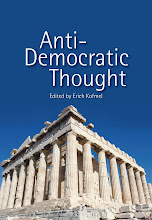

 Posts
Posts

