31 August 2011

Book: The Net Delusion: The Dark Side of Internet Freedom

Google:
Book: The Net Delusion: The Dark Side of Internet Freedom

Journalist and scholar Evgeny Morozov (Stanford) wrote "The Net Delusion: The Dark Side of Internet Freedom", published by PublicAffairs in January 2011.

According to the publisher, it is Morozov's contention that "authoritarian governments are effectively using the Internet to suppress free speech, hone their surveillance techniques, disseminate cutting-edge propaganda, and pacify their populations with digital entertainment. ... [B]y falling for the supposedly democratizing nature of the Internet, Western do-gooders may have missed how it also entrenches dictators, threatens dissidents, and makes it harder - not easier - to promote democracy. ... Morozov shows why ... 'Internet freedom' might have disastrous implications for the future of democracy as a whole."

Notwithstanding the Arab Spring ...

Article: When Democracies Fail

Google:
Article: When Democracies Fail

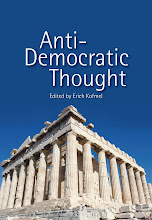
Mark Chou (University of Melbourne) just published an article titled "When Democracies Fail" ("Political Studies Review", 9 [3], September 2011: pp. 344-56) that draws on my own edited volume on "Anti-Democratic Thought" (Imprint Academic, 2008).

Abstract: "Despite democracy's universal appeal, democracies have frequently suffered from debilitating crises, often of their own making. Sometimes, they have even self-destructed. Why is this the case and how might we respond to democracies that fail? In this article, I review five recent works which provide new answers as well as new provocations to these questions.

"In particular, I argue that there are three interrelated categories of reasons and responses prevalent in the literature on democratic failure. The first category intimates that democracies fail for reasons that have to do with unresolved institutional, socio-economic or political problems and that, as such, the best response is to seek to remove these impediments to democratic consolidation.

"The second category of literature, however, argues that there are certain conditions and characteristics intrinsic to democracy that make it prone to fail and self-destruct. Democracies that seek to guard against this possibility are those that are paradoxically the least democratic.

"This leads to the third category: studies that acknowledge democracy's inherent weaknesses and seek to overcome them through a call for anti-democratic alternatives. Foregrounding these categories is, I argue, crucial not only for improving our understanding of how and why democracies decline and then perish. It also provides us with a better glimpse into the very nature of democracy itself."

I had no access to the full text of the article yet.

CONF: Democracy on Trial: Religion, Civil Society, and Democratic Theory

Google:
CONF: Democracy on Trial: Religion, Civil Society, and Democratic Theory

The University of Chicago's Divinity School is organizing a conference, "Democracy on Trial: Religion, Civil Society, and Democratic Theory", based on a theme drawn from the 1993 book of the same title by its faculty member, Jean Bethke Elshtain. The conference will take place on 13-14 October 2011.

Quote: "What is the state of our democracy? Is democracy good for the world? How does religion support or hinder democratic practice? Throughout her career, Jean Bethke Elshtain has ... identified the forces that oppose democracy: identity politics, utopianism, and an elitism that denies ordinary people the prerogatives of citizenship. ... [S]enior scholars, public intellectuals, and public figures ... will present new work on the topics under consideration ... [T]he conference is designed to create opportunities for new ideas to emerge".

Confirmed participants include Elshtain, Francis Fukuyama, Nicholas Wolterstorff, and Carl Gershman.

Free and open to the public. Advance registration strongly recommended.

Article: Threat from the antidemocrats

Google:
Article: Threat from the antidemocrats

Hugh Cortazzi, scholar and former British ambassador to Japan, worries in an op-ed in "The Japan Times" of 9 August 2011 about a perceived "Threat from the antidemocrats".

Excerpts: "The recent massacre perpetrated by a lone gunman in Norway has made leaders in democratic countries review the threat to their societies from extremist anti-democratic elements. ... The terms left and right are no longer valid in any analysis of the forces which threaten our democracy. Those on the extreme left and those on the extreme right are often indistinguishable. Many disgruntled elements have little or no ideology. ... There are neo-Fascist, neo-Nazi and other anti-democratic parties in almost all European countries."

Too short to be of much substance.

Book: Nobilitas: A Study of European Aristocratic Philosophy from Ancient Greece to the Early Twentieth Century

Google:
Book: Nobilitas: A Study of European Aristocratic Philosophy from Ancient Greece to the Early Twentieth Century

I just chanced upon this book by Alexander Jacob, apparently an Indian-born independent right-wing(?) scholar with a PhD from Pennsylvania State University: "Nobilitas: A Study of European Aristocratic Philosophy from Ancient Greece to the Early Twentieth Century" (University Press of America, 2000).

Quote: "Nobilitas ... aims at providing an alternative to the liberal democratic norms, which are propagated today as the only viable socio-political system for the world community. Jacob reveals that, contrary to popular belief, the social and cultural development of European civilization has, for twenty-five centuries, been based not on democratic or communist notions but, rather on aristocratic and nationalist notions. ... As such, the study includes a survey of the philosophical bases of racism and anti-Semitism."

With an appendix titled "The Spiritual Defects of Democracy".

(Update 31 August 2011: While transferring my Google+ posts for archiving purposes to my earlier blog, I noticed that the link I provided was for some reason cut short in Google+. Here's the full link: http://www.univpress.com/Catalog/SingleBook.shtml?command=Search&db=^DB/CATALOG.db&eqSKUdata=0761818871)

Article: Our debased democracies

Google:
Article: Our debased democracies

In the British newspaper "The Daily Telegraph", senior conservative(!) journalist Charles Moore wrote on 22 July:

"What with the the phone-hacking scandal, the eurozone crisis and the US economic woes, the greedy few have left people disillusioned with our debased democracies. [...]

"Democratic politics, which purports to enrich the many, is actually in the pocket of those bankers, media barons and other moguls who run and own everything. [...]

"[P]eople in general have lost faith in the free-market, Western, democratic order. They have not yet, thank God, transferred their faith, as they did in the 1930s, to totalitarianism. They merely feel gloomy and suspicious. [...]

"The greatest capitalist country in history is now dependent on other people’s capital to survive. In such circumstances, Western democracy starts to feel like a threatened luxury. We can wave banners about 'life, liberty and the pursuit of happiness', but they tend to say, in smaller print, 'Made in China'."

16 August 2011

CFP: Anti-Democracy Agenda Symposium 2011

Please circulate widely!

CALL FOR PAPERS

Anti-Democracy Agenda Symposium 2011

Organized by: Sussex Centre for the Individual and Society (SCIS)

Mode: Online by Google+ video conference

Date: 15-16 November 2011

The "Anti-Democracy Agenda" is the premier resource on the net for the study of anti-democratic thought and practice across the boundaries of various traditions and academic disciplines. First introduced by the Sussex Centre for the Individual and Society (SCIS) as a blog in January 2010, it has since been reconstituted as a circle (with associated public posts, much like a blog) on the new social network Google+. An archive of the blog is to be found here: http://anti-democracy-agenda.blogspot.com

For the new circle, see here:
https://plus.google.com/109507108125539761871/posts

The Anti-Democracy Agenda Symposium 2011 will be the third event we organize to advance the research agenda on anti-democratic thought and practice as well as old and new criticisms of democracy. It will build up on a highly successful workshop on anti-democratic thought SCIS organized at the Annual Conference Workshops in Political Theory in Manchester, England, in September 2007, as well as the Anti-Democracy Agenda Symposium 2010, taking place at the Swiss Federal Institute of Technology (ETH) Zurich in November last year. Both events drew participants from the world over. The Manchester workshop led to the publication of an edited volume on "Anti-Democratic Thought" (Imprint Academic, 2008).

The Anti-Democracy Agenda Symposium 2011 is set to be equally international and interdisciplinary in scope. We invite affiliated academics, independent scholars, and doctoral students and candidates from a wide range of disciplines, such as Philosophy, Political Theory, Political Science, International Relations, Development Studies, Security Studies, Law, Economics, Sociology, Anthropology, Psychology, Literature, History, Classics, Theology, Religious Studies, Education, and so on. Papers may not only cover any and all aspects of criticisms of democracy and anti-democratic thought and practice, from perspectives including anarchism, libertarianism, conservatism, communism, Islamism, the extreme right, and others, but also related concepts such as authoritarianism, dictatorship, military rule, monarchy, chieftaincy, mixed constitution, the backlash against democracy promotion, terrorism, post-democracy, voter apathy, voter ignorance, etc. Have a look at the blog to see what might be of interest and falls within our remit. Papers may be theoretical and/or empirical in nature. Work in progress is welcome too.

This symposium may be the first academic conference to make use of the “Hangouts” video conference facility that is an integral part of Google+. Due to technical restrictions, the number of participants in the Anti-Democracy Agenda Symposium 2011 is limited to 10. All accepted participants will be required to create a profile on Google+ in order to be able to participate in the event. While we encourage the participation of scholars from developing countries, please only apply if you have access to a stable Internet connection. As in our previous physical events, over the course of two days, each presenter will have 60 minutes to present his or her paper and discuss it with all others. Due to the small size of the symposium, all participants are expected to attend both days fully.

As with all SCIS events, no fees will be charged from participants, and no funding is available to cover participants' expenses (if any). We will be glad to issue letters of acceptance on request to assist participants in securing leave from work. Detailed instructions on how to set up a Google+ profile and join the video conference will be provided to confirmed participants.

Please send your proposal to: erichkofmel@gmail.com

Deadline: 15 October 2011

Later submissions may still be accepted, but early submission is strongly advised and proposals may be accepted as they come in.

Cordially,

Erich Kofmel
Managing Director / Research Professor of Political Theory
Sussex Centre for the Individual and Society (SCIS)
https://plus.google.com/109507108125539761871
E-mail: erichkofmel@gmail.com

Postal address:
Sussex Centre for the Individual and Society
1200 Geneva
Switzerland

SCIS is an international association under Swiss law.
Founded 2006 at the University of Sussex.

17 February 2011

CFP: Democracy and its Critics: Ancient and Modern

One-day conference "Democracy and its Critics: Ancient and Modern" of the Political Thought Specialist Group of the Political Studies Association (PSA), Oxford, UK (precise venue to be confirmed), October 2011 (possible date: 22 October)

Call for papers

Description: "Most of the countries of the world are now democracies in that they have representative governmental institutions controlled by freely elected officials which operate under the rule of law and guarantee a wide array of individual rights, including equality and non-discrimination, personal liberty, freedom of expression, association and conscience, fair trials and a variety of social benefits. If a country's democratic system works tolerably well, the large majority of its citizens would not want to live under a very different political system, such as an absolute monarchy, communism, fascism, one-party dictatorship or anarchism, and this provides some indication of the relationship between citizenry and democracy. Nevertheless, in the past century or so democracies have had their critics and in some cases powerful enemies who have argued that democracy does not provide society the security, economic development, welfare and the other goods it 'really' needs.

"Some critics, for example, argue that modern liberal democracy is not a 'real' democracy as power is actually exercised not by the people, but by an oligarchy or a bureaucratic elite, and they compare this system unfavourably with the direct democracy of Athens and other Greek city-states in the 5th and 4th centuries BC where the body of citizens actually participated, on an equal footing, in making decisions on public issues. However, ancient democracy also had its critics, including great thinkers like Plato and Aristotle. Similar republican forms of government in ancient Rome also had their critics and enemies. The aim of the conference is to bring together and encourage discussion among scholars who are interested in the main features of ancient and modern forms of democracy, and seek to assess the purposes and methods of their governments by reference to the wishes and needs of the people."

Papers are invited that deal with any of the above issues. Please send an abstract to both Evangelia Sembou (Study group convenor): evangelia.sembou@hotmail.com
and Zenon Stavrinides (University of Leeds): z.stavrinides@leeds.ac.uk

Deadline: 30 April 2011

An early expression of interest would be appreciated, as it would help determine numbers.

31 January 2011

Trend: Again less democracies in the world

While recent events in North Africa could lead one to believe otherwise, the "Freedom in the World 2011" survey, released on 13 January 2011 by Freedom House, an organization that advocates democracy around the world, finds that last year, like the years before, the number of electoral democracies declined further.

According to the press release, "[t]his represents the longest continuous period of decline in the nearly 40-year history of the survey. [...] A total of 25 countries showed significant declines in 2010, more than double the 11 countries exhibiting noteworthy gains [...], and the number of electoral democracies dropped to 115, far below the 2005 figure of 123. [...] Three countries – the Philippines, Tanzania, and Tonga – achieved electoral democracy status after conducting elections that were regarded as improvements over earlier polls. Declines in Burundi, Guinea-Bissau, Haiti, and Sri Lanka triggered their removal from the list of electoral democracies."

In an overview essay, "Freedom in the World 2011: The Authoritarian Challenge to Democracy", the author, Arch Puddington, Director of Research at Freedom House, writes: "[T]he world's most powerful authoritarians have acted with aggression and self-assurance, and democratic leaders have responded with equivocation or silence. [...] Among lesser powers, those with energy riches or geostrategic significance demonstrated that acts of antidemocratic contempt will draw no serious rebuke from the democratic world. [...] [I]f the world's democracies fail to unite and speak out in defense of their own values, despots will continue to gain from divide-and-conquer strategies, as Russia's leaders are now doing in their approach to Europe and the United States. [...] The past decade began at a high point for freedom and concluded with freedom under duress."

Details are to be found here:

www.freedomhouse.org/images/File/fiw/FIW_Overview_2011.pdf

30 December 2010

CFP: Freedom and Power

"Theoria: A Journal of Social and Political Theory", based out of the Faculty of Humanities, Development and Social Sciences at the University of KwaZulu-Natal, South Africa, is planning an issue on "Freedom and Power".

Call for papers

Description: "Ever since Livy proclaimed that 'freedom is to be in one's own power', if not from a long time before, the relationship between freedom and power has been an enduring concern of political theorists. It has withstood even Berlin's sharp distinctions between seemingly irreconcilable kinds of freedom and the subsequent diversion via debates about 'negative['], 'positive' and 'republican' freedom. With greater historical purview it is possible to see that the fault line between various competing conceptions of freedom is clearest with regard to how social and political theorists conceive of the relationship between freedom and power. While some thinkers have opposed freedom and power, arguing that liberty can only be truly attained free from power and domination (republicans) or in the absence of external impediments imposed by other human beings (liberals), others have identified a close and intriguing link between them, especially in the sphere of politics. A motley crew of radicals, Marxists and conservatives occupy the latter camp, including Livy, Machiavelli, Montaigne, Marx, Nietzsche and Foucault. Moreover, those in the former camp tend to think of freedom in formal and abstract terms, while proponents of the latter eschew this now normal tendency in political philosophy and instead think of freedom in fully substantive, concrete and even materialist terms. (Hobbes is an unusual and unique figure as his account of freedom inspires members of both parties in this debate.)

"Several important questions arise concerning freedom and power: What is freedom?; What is the relationship between freedom and power?; How, if at all, are freedom and domination related?; Is there a categorical or insurmountable conflict between freedom and discipline?; Does freedom depend upon being free from interference or being able to achieve certain desired or desirable goals or ends?; Are these two conditions – freedom from interference and the ability or power to achieve certain ends – related in some sense?; Can we measure freedom, and, if so, how?; What forms or degrees of freedom are possible in modern representative democracies?; How does representation affect freedom?; Is our freedom dependent on the power of our representatives?; How does the degradation of the planetary environment affect our views on freedom?; Given the dire need for self-control and self-discipline, especially regarding levels of consumption in the developed North, is the concept of freedom even still relevant?; Does the concept of freedom need to be reconfigured to accommodate constraint, austerity and self-control? If so, how?; What do the experiences of relatively recently liberated states teach us about freedom?; What is the relationship between freedom and power in the 'Global South'?; How, if at all, does poverty affect freedom?

"The editors of Theoria ask contributors to think about these questions in and of themselves and in the light of the various arguments from any of the proponents of the various conceptions of freedom. These can be written about in term of furthering our understanding of the nature of personal and political freedom within modern representative democracies or in order to develop novel arguments that propose conceptions of freedom for different possible future political organizations and forms of power. While abstract theoretical insights and arguments are welcome, we urge contributors to try and think about freedom and power within and between particular political contexts, especially within the 'Global South', where often freedom is a nascent and precarious achievement, and sometimes only for the lucky few, and between the 'Global South' and the 'Global North', either in relational or comparative terms. Given the changing power relations that exist within and between existing states, there is also much room for utopian thought regarding new forms of freedom in as yet un-experienced contexts of political power and moral conflict."

Submission must be sent in MS Word format to the Managing Editor, Sherran Clarence (University of the Western Cape): sherranclarence@gmail.com

Deadline: 31 August 2011

15 November 2010

Article: Postdemocracy, organizational transformation and the (im)possibility of politics

Timon Beyes and Christina Volkmann, "The fantasy of the organizational One: Postdemocracy, organizational transformation and the (im)possibility of politics" ("Journal of Organizational Change Management", 23 [6], 2010: pp. 651-68):

www.emeraldinsight.com/journals.htm?articleid=1891962

Abstract: "Purpose – The purpose of this paper is to reflect upon the politics of and in organizational transformations in the wake of the fall of the Berlin wall and Germany's reunification. Design/methodology/approach – The paper juxtaposes a political-philosophical perspective informed by Rancière – what we call a dramaturgy of politics – with the findings of an ethnographic study conducted in the Berlin State Library in 2002/2003. Findings – The paper outlines a reading of the event of November 9, 1989[,] and its aftermath as a dissensual event of politics proper, i.e. the emergence of a new political subjectivity, followed by a consensual process of social organization. In the state library, both the consensual 'fantasy of the organizational One' as well [sic] its disruption are causing struggles over what is visible and sayable. A dramaturgy of politics thus encourages us to add our voices to the specific time-spaces in which an excess of words, signs and forms alters the configuration of what is visible and expressible. Research limitations/implications – The usual disclaimers about the limits of ethnographic research apply. The paper calls for further inquiries into the dramaturgy of organizational politics. It also reflects upon the 'Western gaze' and the problematic of 'speaking for' the presumably dominated. Originality/value – It is hoped that the paper contributes to the understanding of the politics of organization (theory) by outlining an alternative conceptual approach and confronting it with ethnographic findings."

I had no access to the full text of the article.

Timon Beyes is Senior Lecturer in Non-Profit Management at the University of St Gallen, Switzerland.

Christina Volkmann is Lecturer in Management at the University of Essex.

13 November 2010

Report on the Anti-Democracy Agenda Symposium 2010: Setting the example for the debate of the future

The first event held by the Geneva-based Sussex Centre for the Individual and Society (SCIS) in conjunction with its "Anti-Democracy Agenda" blog, the Anti-Democracy Agenda Symposium 2010, took place to great acclaim on 8 and 9 November 2010 at the Swiss Federal Institute of Technology (ETH) Zurich.

Keynotes to the symposium were contributed by Professor Doh Chull Shin, a native of Korea, director of the Korea Democracy Barometer, and core partner in the Asian Barometer Survey (an ongoing research project monitoring democratization in Asian countries), who is based in the Department of Political Science at the University of Missouri, a leading public research university in the United States, and Professor Kuldip Singh, Head of the Department of Political Science at Guru Nanak Dev University in Amritsar, India.

The Anti-Democracy Agenda Symposium 2010 attracted twelve papers submitted by participants from institutions such as the National University of Singapore, the University of the Philippines, the Technical University of Lisbon (Portugal), Ankara University (Turkey), the University of the Punjab, Quaid-i-Azam University (both Pakistan), the University of Central Oklahoma (USA), and the Islamic Azad University (Iran). Other countries and territories of origin or residence represented include Palestine, Hong Kong, New Zealand, the UK, Switzerland, Nigeria, Korea, and India.

Participants – from doctoral candidates to full professors – came from the disciplines of Political Science, Philosophy, Political Theory, Islamic Studies, Defence and Strategic Studies, Law, and Media Studies, giving theoretical as well as empirical presentations under the titles "Is Confucianism Anti-democratic?", "Islamic Philosophy and Criticizing Democracy", "Against Liberal Democracy", "Anti-Democracy Is Created By Means of Media", "Twenty-First Century Anti-Democracy: Theory and Practice in the World", "A Critique of Western Discourses of Sovereignty and Democracy from Chinese Lenses", "Reflecting on Anti-Democracy Forces in Arab Politics", "'Democracy' in Kazakhstan: Political System Managed from Above", "Pakistan’s Road to Democracy: Islam, Military and Silent Majority", "Democracy: A Form of Government or an Instinct?", "The Role of Ethics in Shaping Democracy: An Examination of Unethical Actions among House of Assembly Members in Nigeria", and "Pekan Anti Otoritarian: Some Observations on Anarchist Gathering at Indonesia".

After a workshop on "Anti-Democratic Thought" in Manchester in 2007, this was the second symposium on anti-democracy organized by the Sussex Centre for the Individual and Society and, once more, it opened up new frontiers for the study of anti-democratic thought and practice. Bringing together scholars from both sides of the debate, advocates of democracy as well as critics and opponents, it set the example for the proper academic conduct of a discussion that does not take place anywhere else, yet. Focusing on twenty-first century anti-democracy, rather than historical expressions and criticisms, it shone the way toward the most important debate of the near future. Asia will play as central a role in that debate as participants from Asia did in our symposium.

The Anti-Democracy Agenda blog and the Sussex Centre for the Individual and Society will continue to be at the forefront of these developments.

12 November 2010

Book: We Are an Image from the Future: The Greek Revolt of December 2008

"We Are an Image from the Future: The Greek Revolt of December 2008", edited by A.G. Schwarz, Tasos Sagris and Void Network (AK Press, February 2010):

www.akpress.org/2010/items/weareanimagefromthefuture

Publisher's description: "What causes a city, then a whole country, to explode? How did one neighborhood's outrage over the tragic death of one teenager transform itself into a generalized insurrection against State and capital, paralyzing an entire nation for a month? This is a book about the murder of fifteen-year-old Alexis Grigoropoulos, killed by the police in the Exarchia neighborhood of Athens on December 6th, 2008, and of the revolution in the streets that followed, bringing business as usual in Greece to a screeching, burning halt for three marvelous weeks, and putting the fear of history back into the bureaucrats of Fortress Europe and beyond. We Are an Image From the Future delves into the December insurrection and its aftermath through interviews with those who witnessed and participated in it, alongside the communiqués and texts that circulated through the networks of revolt. It provides the on-the-ground facts needed to understand these historic events, and also dispels the myths activists outside of Greece have constructed around them. What emerges is not just the intensity of the riots, but the stories of organizing and solidarity, the questions of strategy and tactics: a desperately needed examination of the fabric of the Greek movements that made December possible."

Endorsement: "This dazzling collection is not a book about the great insurrection of 2008 – it is a living piece of it that can become a part of us, and through us, it opens the prospect of a universe we might never otherwise have imagined possible. Future historians may well conclude that the Revolution finally began in 2008. If they do, this book will have played a crucial role in that realization." (David Graeber, Goldsmiths, University of London)

The book contains texts such as "Their Democracy Murders – The Polytechnic University Occupation" and many writings by the "Ego Te Provoco" counter-information group, including the eponymous "We Are Here / We Are Everywhere / We Are an Image from the Future" (pp. 165-8), "The media as part of the counter-insurgency" (pp. 169-72), and "A Bedouin Anytime! A Citizen Never." (pp. 197-8; translators not named).

Excerpts: "The other thing we put forward was a discourse against democracy, because many people were saying, what kind of democracy kills children, we need more democracy, and we were trying to deconstruct this whole notion of democracy, to claim that this murder is not an exception, it is the rule of democracy, the rule of the nation-state, the rule of capitalism." (p. 170)

"We despise democracy more than anything else in this decadent world. For what is democracy other than a system of discriminations and coercions in the service of property and privacy? [...] The bourgeois, with a voice trembling from piety, promise: rights, justice, equality. And the revolted hear: repression, exploitation, looting. [...] Our contempt for democracy does not derive from some sort of idealism but rather from our very material animosity for a social entity in which value and organizing are centered around the product and the spectacle." (p. 198)

A.G. Schwarz is the assumed name of a North American living in exile abroad.

Tasos Sagris is a member of the Athens-based Void Network, an arts and action collective established in 1990.

Article: Democracy is not everything: A plea for non-democratic enclaves

Jonathan van Tongeren is the author of an article titled "Democracy is not everything: A plea for non-democratic enclaves", published on 8 November 2010 on the "Christians and Politics Portal" website.

The full text of the article can be read free of charge here:

www.cpportal.org/k/n22654/news/view/455708/383320

Excerpts: "As we all know, there is no clear cut case for democracy in the Bible. At best some basic principles about government can be derived from scripture. This explains why some Christians are convinced democrats, while others only tactically accept the democratic rules or principally oppose democracy altogether. [...] Engelbert Dollfuss [...] was the leader of the Austrian Christian Social Party. Now, as a Christian Democrat, he was responsible for the end of the democratic system in Austria in the 1930's. [...] [H]e understood quite well that democracy is not a goal in itself, but that the aim of Christian-Democracy is to serve public justice. Democracy can be a means towards this end, but that is not to say there are no other means towards the same goal. Historically, Christian politicians such as the Dutch leader of the Anti-Revolutionary Party Groen van Prinsterer have criticized the basic tenet of democracy, the 'sovereignty of the people'. Groen believed that all sovereignty comes from God, and [...] that this basic tenet of Christian-Democracy is at odds with a basic tenet of modern democracy [...]; sovereignty lies either with God or with the people. [...]

"[N]eoconservatives and radical democrats [...] assume that democracy is everything. [...] Christian-Democracy is not about a blind faith in the workings of democracy. What Christian-Democrats have historically understood is that the usefulness of democracy is limited. Democracy is just a system of regulating the relations between the different spheres of sovereignty but it should not enter into the realm of the spheres itself. Authority in such spheres is naturally non-democratic. Families don't have a vote who will be in charge for the next four years, the children obey the parents[,] and what would be the point of a faith community without a central point of authority (revelation)? [...] For a long time Christian-Democrats have emphasized the rights of the pre-democratic institutions [...], radical democrats are working to undermine those rights. [...] Christians in politics should reconsider their strategy and focus on strengthening the pre-democratic institutions. Only these enclaves on non-democratic authority can save us from an overdose of democracy."

Jonathan van Tongeren, from Groningen in the Netherlands, was Secretary General of the European Christian Political Youth Network (ECPYN) from 2006 to 2010. ECPYN is the youth organization of the European Christian Political Movement (ECPM). Both are associations of political parties and organizations from all over Europe.

Article: State crimes against democracy in the war on terror

Lance deHaven-Smith, "State crimes against democracy in the war on terror: applying the Nuremberg principles to the Bush-Cheney Administration" ("Contemporary Politics", 16 [4], December 2010: pp. 403-20):

www.informaworld.com/smpp/content~content=a929282687

Abstract: "This article asks whether, in waging war in the Middle East, the Bush-Cheney Administration developed and executed a conspiracy comparable to the one for which Nazi leaders were tried, convicted, and executed at Nuremberg after World War II. To meet the Nuremberg standards, such a conspiracy must include efforts to subvert the constitutional order. Today, scholars refer to these actions as 'state crimes against democracy' (SCADs). After explicating the Nuremberg standards, the article applies them to the Bush-Cheney Administration's 'war on terror'. The conclusion reached is that evidence of a SCAD-driven conspiracy is extensive and certainly adequate by the Nuremberg standards to warrant investigations and trials."

Excerpts: "To the extent the Bush-Cheney actions mirror the crimes of the Nazis, the administration's moral guilt becomes rather clear even if Bush, Cheney, and other responsible persons are for some reason beyond the reach of the national and international legal systems as they are now constituted. In the Nuremberg war crimes trials, the defendants were charged with, among other crimes, conspiring to [...] transform democratic Germany into a police state by contriving and exploiting threats to the nation's stability and security [...]. Hitler and his associates were charged with staging acts of domestic terrorism, issuing false warnings of impending coups, conducting false-flag attacks on the nation's frontiers, and in other ways mobilizing mass support for authoritarian government and aggressive war. [...]

"The IMT [International Military Tribunal] did not use the term 'state crimes' or 'crimes against democracy', but its jurisdiction and judgments prefigured the SCAD construct [....] [S]tatutory and constitutional reforms should be adopted to strengthen democratic governing institutions so that future presidents cannot repeat past abuses. If, as the evidence indicates, the Bush-Cheney Administration succeeded in hijacking American democracy, the political system was and remains quite vulnerable to SCADs by top officials. [...] The high crimes of the Bush-Cheney Administration show that representative democracy is quite vulnerable to antidemocratic conspiracies in high office."

Lance deHaven-Smith is a Professor in the Reubin O'D. Askew School of Public Administration and Policy at Florida State University.

11 November 2010

Article: Gambia president may become king

On 8 November 2010, the news agency Associated Press released an article by Dakar/Senegal-based staff writer Artis Henderson titled "His majesty? Gambia president may become king".

The full text of the article can be read free of charge here:

http://hosted.ap.org/dynamic/stories/A/AF_GAMBIA_KING_OF_GAMBIA?SITE=OHALL2&SECTION=HOME&TEMPLATE=DEFAULT

Excerpts: "Gambia's president [...] may soon have a new title in this tiny West African nation: His majesty. Tribal chieftains are touring the country to rally support for President Yahya Jammeh's coronation. 'The president has brought development to the country, and for that he deserves to be crowned King of The Gambia,' said Junkung Camara, chief of the western region of Foni Brefet. [...] Like many rulers in this part of Africa, Jammeh, 45, came to power in the wake of a coup. He was elected president two years later, and is currently serving his third elected term in the tiny country surrounded on three sides by Senegal. If he were crowned king, he could dispense with the formality of elections altogether. [...] Abdoulaye Saine, professor of political science at Miami University in Ohio who specializes in Gambian politics [...] says Jammeh's coronation would give him a new title but would not change anything politically. 'Jammeh is already king,' Saine said. 'He practically owns the country of Gambia. He controls the press, the opposition, the clergy, and the coffers of the state.' While sub-Saharan Africa has just one remaining absolute monarchy – in the southern African nation of Swaziland – other leaders have tried to similarly solidify their role."

07 November 2010

Book: The Chinese Communist Party as Organizational Emperor

Zheng Yongnian, "The Chinese Communist Party as Organizational Emperor: Culture, reproduction and transformation" (Routledge, December 2009):

www.routledge.com/books/details/9780415559652/


Publisher's description: "The Chinese Communist Party (CCP) is the largest and one of the most powerful, political organizations in the world today, which has played a crucial role in initiating most of the major reforms of the past three decades in China. China's rapid rise has enabled the CCP to extend its influence throughout the globe, but the West remains uncertain whether the CCP will survive China's ongoing socio-economic transformation and become a democratic country [sic]. With rapid socio-economic transformation, the CCP has itself experienced drastic changes. Zheng Yongnian argues that whilst the concept of political party in China was imported, the CCP is a Chinese cultural product: it is an entirely different breed of political party from those in the West – an organizational emperor, wielding its power in a similar way to Chinese emperors of the past. Using social and political theory, this book examines the CCP's transformation in the reform era, and how it is now struggling to maintain the continuing domination of its imperial power. The author argues that the CCP has managed these changes as a proactive player throughout, and that the nature of the CCP implies that as long as the party is transforming itself in accordance to socio-economic changes, the structure of party dominion over the state and society will not be allowed to change."

Review: "Throughout his book, Zheng makes the case that the CCP's approach to power is contingent on historical continuity and draws from practices implemented back when the country was ruled by emperors. Though this argument could be exploited to make a case against democratization, it nevertheless makes a valid contribution to our understanding of the party's resistance to Western-style democracy and the ostensible lack of widespread calls for such democracy among ordinary Chinese. [...] Ironically, as Zheng points out, historical continuity, i.e., the reproduction of the organizational emperorship, is also the main driver behind the CCP's need to adapt and embrace Marxism's nemeses, such as capitalism and democratic elements, as Chinese history is rife with examples of rigid systems being overthrown by a counter-hegemonic force. As such, to avoid a similar fate, the CCP has no choice but to open up, which in turn empowers other social classes that must be kept in check lest they overturn the system. 'As long as the CCP is able to reproduce itself as an organizational emperor,' Zheng concludes, 'it is unlikely that China will develop into a Western style of democracy.'" (J. Michael Cole, "Taipei Times")

Zheng Yongnian is Professor and Director of the East Asian Institute at the National University of Singapore.

29 October 2010

Article: Germans are increasingly anti-democratic

On 27 October 2010, the Czech English-language weekly newspaper "The Prague Post" published on its website an op-ed article by Nora Langenbacher titled "Germans are increasingly anti-democratic".

The full text of the article can be read free of charge here:

www.praguepost.com/opinion/6181-germans-are-increasingly-anti-democratic.html

Excerpts: "[T]he German nonprofit institution Friedrich Ebert Foundation places great emphasis on combating anti-democratic, racist and xenophobic tendencies. [...] Of central concern to the foundation is the existence of anti-democratic and racist attitudes among the general public. [...] A recently published study [in German] conducted by us, an organization committed to social democracy, once again highlights [...] that right-wing extremist thought is not merely a problem of 'the margins of society.' Instead, the scientists found widespread acceptance of chauvinistic, social Darwinist, xenophobic and anti-Semitic statements as well as shocking agreement with the idea of dictatorship generally as well as with aspects of the German National Socialism in particular. For example, more than one out of 10 interviewees in the study wished for 'a "Führer" to rule Germany with strong leadership,' and almost every 10th person said, 'For Germany's national interest, a dictatorship might be a better form of government.' [...] This widespread general resignation regarding democracy as it exists and the feeling of having no political influence whatsoever combined with the rise in right-wing attitudes reveals a dramatic challenge for German politics and society."

It is not mentioned whether the article appeared in print too.

Nora Langenbacher, a political scientist, coordinates the "Combating Right-Wing Extremism" project of the Friedrich Ebert Foundation (FES).

28 October 2010

Article: Mikhalkov Takes Jab at Medvedev

The Russian English-language daily newspaper "The Moscow Times" today published on its website a report titled "Mikhalkov Takes Jab at Medvedev" by staff writer Alexander Bratersky.

The full text of the article can be read free of charge here:

www.themoscowtimes.com/news/article/mikhalkov-takes-jab-at-medvedev/421291.html

Excerpts: "Nikita Mikhalkov, the Oscar-winning film director and a monarchist with close ties to the ruling elite, set the political classes chattering Wednesday with the release of a nearly 10,000-word political manifesto [in Russian] promoting 'enlightened conservatism.' The document, written in a flowery language and titled 'Right and Truth,' attacks Western-styled democracy in an indirect dig at President Dmitry Medvedev, but stops short of outright condemning the capitalist reforms of the past two decades. 'Euphoria of liberal democracy has come to an end. Now it is time to do the job,' Mikhalkov said in the manifesto, copies of which were provided to 'state leaders,' Ekho Moskvy radio reported. The manifesto, which cites pre-revolutionary conservative thinkers such as Pyotr Struve and Konstantin Pobedonostsev to support its theses, describes the current state of affairs in the country as 'a mix of West-chasing liberal modernization, nepotism of local authorities and widespread corruption.' [...] The manifesto caused a flurry of reactions but left many politicians and analysts skeptical [...]. A self-proclaimed monarchist, Mikhalkov has made a number of political U-turns in the past. He voiced support for former Vice President Alexander Rutskoi, a friend who staged a failed coup against Yeltsin in 1993, but then campaigned for Yeltsin's Our Home Is Russia party [...] just two years later."

I can't figure out whether the article appeared in print too.

18 October 2010

Article: China model as alternative to democracy

The news portal "The Malaysian Insider" today published an article by its reporter Yow Hong Chieh titled "Dr M promotes China model as alternative to democracy".

The full text of the article can be read free of charge here:

www.themalaysianinsider.com/malaysia/article/dr-m-promotes-china-model-as-alternative-to-democracy/

Excerpts: "Former prime minister [of Malaysia] Tun Dr Mahathir Mohamad today called democracy a 'failed' ideology and held up China's model of authoritarianism as an alternative 'worth studying'. He said China's political model [...] showed that a nation could develop well even in the absence of freedom, liberty and equality [...]. 'If you find good people to run a country, even dictators can make a country develop and develop very well.' [...] The former premier also criticised the very premise of democracy, arguing that no issue could achieve total consensus, leading to an electoral split that will promote poor governance. 'Democracy ... has failed in many countries,' he said. 'It is not the perfect thing it is touted to be. You find that some of these democracies really cannot work. People cannot make up their minds.['] [...] 'We see a lot of democracies where leaders change every two years and the country cannot make any progress at all,' he said. 'Even the countries that have made progress find sometimes that democracies hinder the development of the country, make the country unstable and difficult to develop.'"

17 October 2010

Article: What Checks and Balances in a Democratic Dictatorship?

One M. Rafic Soormally, apparently based in London, is credited as the guest author of a blog post titled "What Checks and Balances in a Democratic Dictatorship?", published on 14 October 2010 on the website of the bilingual (French and English) Mauritian daily newspaper "Le Matinal".

The full text of the article can be read free of charge here:

www.lematinal.com/blogs/7847-Blog-What-Checks-and-Balances-in-a-Democratic-Dictatorship.html

Excerpts: "Debates are presently raging on what to do with the presidential system imposed on Mauritians. The [...] system of political control is not an invention of democracy, and people are being grossly misled. [...] Majority rule must necessarily command over 50% of the votes but this is hardly the case in any so-called democracy. In practice, a minority almost always rules through a process of 'buying' votes through electoral promises and unspeakable forms of corruption perpetrated by a capitalist system wherein less that 10% of the population owns over 90% of the wealth. Moreover, people are forced to vote for candidates selected by political parties and not by them. Democracy is a most manipulative, infectious and lying political system controlled by powerful lobbies and is a [sic] most war-mongering system the world has ever known through the perpetration of terror, invasions, occupations, land theft, decimation of whole populations and the use of weapons of mass destruction such as Nuclear Bombs (Hiroshima, Nagasaki, Fallujah), Agent Orange and Napalm (Vietnam), Phosphorous Bombs (Palestine), Cluster and Uranium Bombs and Biological Weapons (Iraq, Afghanistan), and more. [...]

"Adolph Hitler, George Bush, Tony Blair, Benjamin Netanyahu, Nicolas Sarkozy have all been 'democratically' elected but they all act/ed like dictators. [...] In theory, the US Constitution guarantees the Separation of Powers between the three branches of government [...]. In practice, there is overwhelming evidence that all three branches do act in concert as they are dictated by the same powerful lobbies, for example, in decisions to embark on false flag operations, to pass dictatorial laws and make wars, not to mention that the US is still a very racist country built upon the genocide of the Native Americans. The US is still torturing people they kidnapped and transported to Guantanamo Cuba, Diego Garcia Mauritius and elsewhere, and all checks and balances are non-existent. The President effectively has dictatorial powers [...]. The notion of checks and balances has become just another myth in most modern democracies. The strategy is to find ways to dominate the people, and the world. [...] The Mauritian President is a symbol of dictatorship as, like the British Queen, he is above the law too."

09 October 2010

Article: Russia's Machiavellian support for democracy

The Madrid-based "European think tank for global action" Fundación para las Relaciones Internacionales y el Diálogo Exterior (FRIDE) has released its latest "Policy Brief", "Russia's Machiavellian support for democracy" (no. 56, October 2010), authored by FRIDE researchers Natalia Shapovalova and Kateryna Zarembo.

The article can be downloaded free of charge here:

www.fride.org/publication/811/russia%27s-machiavellian-support-for-democracy


Excerpts: "Russia has been labelled as an 'autocracy promoter' in the Commonwealth of Independent States (CIS) region. Colliding with EU and US democracy promotion efforts, Russia has supported anti-democratic regimes among the CIS countries. Yet it is also showing another, curious face as an avid democracy promoter. Russia has contributed to the subversion of pro-Western regimes in Georgia and Ukraine and supported authoritarian Belarus for years. However, Russia does not only show its discontent with democratic leaders. Undemocratic ones do not gain its approval either, if their policies are not in line with Russian interests and demands. [...] Russian policies in the neighbourhood adopt democracy promotion rhetoric when it is deemed effective for geopolitical reasons. [...] This does not mean that Russia is heading towards democratisation; rather, it points to its ability to employ different tactics, from promoting autocracy to supporting democracy [...]. The democratisation agenda can become a pernicious weapon in the hands of an autocracy. [...]

"Russia's democracy promotion toolbox varies, just as Western aid to democracy does. Russia alternately withdraws financial aid; imposes trade sanctions; supports opposition or pro-democracy NGOs; launches a media campaign against authoritarian rulers; and calls for democratic elections. [...] The pattern of Russia's strategy towards its neighbourhood is clear: the West's democratisation discourse and agenda are deployed in order to change leaders that are strong but disloyal to Russia [...]. The Kremlin tries to make sure that competition among domestic leaders is as fierce as possible, thus disuniting the elites and securing an easy grip on power and assets for itself. In addition, Russia is cast in a favourable light by being seen to cooperate with the West [...]. Such democracy promotion by Russia can also be viewed as part of Russia's strategy of redefining the notion of democracy. Both at home and abroad, Russia does not deny the imperative of democracy as such. Rather, it insists on its own interpretation of democracy and selectively criticises the democratic credentials of others, mainly in order to divert external criticism away from itself or to put pressure on unfriendly political regimes."

Albeit a policy brief, the article is sorely lacking in supporting references.

08 October 2010

Book: The Servile Mind: How Democracy Erodes the Moral Life

Just published: Kenneth Minogue, "The Servile Mind: How Democracy Erodes the Moral Life" (Encounter Books, August 2010):

www.encounterbooks.com/books/the-servile-mind-how-democracy-erodes-the-moral-life/


Publisher's description: "One of the grim comedies of the twentieth century was the fate of miserable victims of communist regimes who climbed walls, swam rivers, dodged bullets, and found other desperate ways to achieve liberty in the West at the same time as intellectuals in the West sentimentally proclaimed that these very regimes were the wave of the future. A similar tragicomedy is being played out in our century: as the victims of despotism and backwardness from third world nations pour into Western states, the same ivory tower intellectuals assert that Western life is a nightmare of inequality and oppression. In The Servile Mind [...], Kenneth Minogue explores the intelligentsia's love affair with social perfection and reveals how that idealistic dream is destroying exactly what has made the inventive Western world irresistible to the peoples of foreign lands. The Servile Mind looks at how Western morality has evolved into mere 'politico-moral' posturing about admired ethical causes – from solving world poverty and creating peace to curing climate change. Today, merely making the correct noises and parading one's essential decency by having the correct opinions has become a substitute for individual moral actions. Instead, Minogue posits, we ask that our government carry the burden of solving our social – and especially moral – problems for us. The sad and frightening irony is that as we allow the state to determine our moral order and inner convictions, the more we need to be told how to behave and what to think."

Excerpt: "I am of two minds about democracy, and so is everybody else. We all agree that it is the sovereign remedy for corruption, tyranny, war, and poverty in the Third World. We would certainly tolerate no different system in our own states. Yet most people are disenchanted with the way it works. One reason is that our rulers now manage so much of our lives that they cannot help but do it badly. They have overreached themselves. Blunder follows blunder [...]. The point, however, is that our rulers have no business telling us how to live. [...] We should never doubt that nationalizing the moral life is the first step toward totalitarianism."

Review: "Can democracy survive in a nation of slaves? Aristotle thought not. But what if the slaves don't recognize their servile condition? Kenneth Minogue explores the many ways in which the citizens of the modern West have thoughtlessly exchanged independence of mind and body for government promises of security and harmony. The result is a topsy-turvy democracy where the rulers hold the people to account for their incorrect behavior and attitudes." (John O'Sullivan, Radio Free Europe)

Kenneth Minogue is Professor Emeritus in the Department of Government at the London School of Economics.

07 October 2010

Articles: Pakistan: What price democracy?

The article, "Is honeymoon with democracy over?", by Kamran Rahmat, an Islamabad-based resident editor of the Pakistani daily newspaper "Express Tribune", appeared on 30 September 2010 on the website of the daily newspaper "Gulf Times", operating out of Doha, Qatar.

The full text of the article can be read free of charge here:

www.gulf-times.com/site/topics/article.asp?cu_no=2&item_no=388927&version=1&template_id=46&parent_id=26

Excerpts: "Rumours have abounded about the imminent fall of government [....] 30 months after a transition to democracy from a long bout of military rule, the average Pakistani citizen wonders if that is what street battles in 2007 were waged for. [...] At the first glance, it seems to have gone all horribly wrong – the dream of a functional, sustainable democracy replaced by a sense of foreboding and despondency that seems all too familiar. But is it? Is everything really unravelling and devolving to the inevitable last-hope lure of the khakis doing another turn at 'saving' the country? Is all in the country headed for a point of no return that will usher in the much talked about political change; or is this merely a clever perception that is part willingly and part unwittingly being promoted by the media to a point where it becomes a self-fulfilling prophecy? An independent, pluralistic media that played a spectacular role in mobilising and achieving the transition to democracy was supposed to reflect and strengthen the citizens' aspirations and perspectives after popular governments were in place. And yet turn on a private current affairs TV channel any time of the day and the staple fare is prophecies of doom and predictions of a change.

"Not on a single private TV channel is an assertion of faith (or even hope) discernible any longer in the very democracy that the media had valiantly pushed for in 2007, along with other civil society actors. The honeymoon with democracy for the media seems to be over. Agreed the governments in both the centre and the provinces have been found woefully inept and wanting in delivering the dividends that democracy was supposed to usher in for all and sundry. [...] But what is more transparent than the disappointing performance of the governments and political parties now is the growing sense of entitlement of the media that it is the final arbiter of this performance [...]. For sure, they have a right to offer analysis and venture opinion on what is going on but this can only be based on news and events, not conjecture and theory [...]. This is exactly the kind of milieu that provides a space for the anti-democratic forces to manipulate the media and through it the perceptions that people end up embracing. [...] Instead of focusing on the citizens and their grassroots and street perspectives and being their voice, [...] today's media in Pakistan has gone from being a watchdog of public interest to being a virtual attack dog for undemocratic forces."

An example of this tendency may be provided by an undated column by one Khalid Saleem, "What price democracy?", published recently on the website of the daily newspaper "Pakistan Observer".

The full text of the article can be read free of charge here:

www.pakobserver.net/detailnews.asp?id=44095


Excerpts: "Democracy is the buzzword these days. [...] Ever since the then US President, George W. Bush, announced in his message to the Iraqi people on the eve of the Iraq invasion that, 'We are determined to bring (read: thrust-down-your-collective-throats) democracy to your country', the word 'democracy' has become something of a sine qua non in all statements emanating from the West. [...] Our own herd of liberal intellectuals has been weaned on Western propaganda. [...] In their estimation, any person wishing to be counted among those fit to be counted must needs be an admirer of the Western type of democracy or else. [...] Democracy, thus, is at best an over-rated system of government. Hullabaloo about the 'virtues' of democracy appears to have been blown out of all proportion. The Western propaganda notwithstanding, there is hardly any doubt that a system of government can be only as good, or as bad, as those administering it. Given dedicated, honest and well-meaning leaders, any system worth the name would be workable. On the other hand, if the leadership does not measure up, then no form of government will deliver the goods, whether democratic or otherwise! Come to think of it, what matters in the long run is how well a people are governed and not how the government in question came into being."

I can't figure out whether either of these articles appeared in print too.

06 October 2010

Article: Promoting Tyranny

Tisaranee Gunasekara, a Colombo-based journalist, is the author of an article titled "Promoting Tyranny" that was first published on 3 October 2010 (and apparently re-published on 4 October) on the website of the Sri Lankan newspaper "The Sunday Leader".

The full text of the article can be read free of charge here:

www.thesundayleader.lk/2010/10/04/promoting-tyranny/

Excerpts: "[Sri Lankan] President Mahinda Rajapaksa's speech to the UN General Assembly [...] opined that international humanitarian laws should be changed to give states carte blanche to combat terrorism. The Rajapaksa proposal would normalise excess and enable sovereign states to act as they wish, unconstrained by laws and norms, against whomever or whatever they designate 'terrorist'. [...] And in this anti-democratic world, the Rajapaksas would be able to pursue their dynastic agenda, with total impunity. The Rajapaksas [...] face little or no impediment nationally to their single-minded pursuit of absolute and long term power. [...] Being cognizant of the Rajapaksa proposal is important not because the international community will accept it but because it demonstrates the endemically tyrannical nature of the Rajapaksa vision and mission. [...] The successful transformation of a democracy into a family oligarchy requires the creation of a new value system with absolute, unquestioning obedience of the ruled to the rulers as its leitmotiv. Those citizens who refuse to abide by this cardinal rule will be ostracized from the national community. In the present national and international climate what better epithet to justify such persecution as that of terrorist? [...]

"The regime moves with ruthless efficacy against any opponent or act of opposition it deems effective, the incarceration of [former opposition presidential candidate] Gen. Fonseka and the persecution of a printing press owner and his family for printing a poster comparing the President to Hitler being the latest cases in point. The Rajapaksas tend to justify their anti-democratic policies and deeds by flavouring them with nationalistic and patriotic rhetoric. International humanitarian norms are castigated as imperialist constraints on Sri Lanka's right to defend herself and her people. [...] Lofty words hiding an ignoble reality; the regime while incarcerating 8,000 ordinary Tamils as [Tamil] Tiger suspects is treating as estimable guests known Tiger leaders [...]. The real criterion therefore is not whether one was a Tiger or not but whether one is willing to support the Rajapaksas or not. Life can be pleasant for those who are willing to submit to the Rajapaksas and exceedingly unpleasant if not downright dangerous for those who are not, as the curiously similar fates of the 8,000 Tiger suspects and the Army Commander who defeated the Tigers clearly indicate. When national interest is equated with Rajapaksa interest and patriotism with loyalty to the Rajapaksas, any opponent of the Ruling Family can be deemed a terrorist and a traitor and treated as such."

Although not mentioned, it stands to reason that the article was also published in last Sunday's print edition.

05 October 2010

Trend: Africa healthier, wealthier and undemocratic

Clare Byrne, writing for the South African Press Association (SAPA) and the Deutsche Presse-Agentur (dpa), is credited with an article, "Africa healthier, wealthier and undemocratic", published on 4 October 2010 on the South African "NewsTime" website.

The full text of the article can be read free of charge here:

www.newstime.co.za/SouthAfrica/Africa_healthier_wealthier_and_undemocratic/12230/

Excerpts: "Africans are becoming healthier and getting more opportunities to generate wealth. But five decades after most Africans first got a vote, democracy on the continent is ailing, an index of African governance showed Monday. The 2010 Ibrahim Index of African [G]overnance found that access to economic opportunities had improved in 41 out of 53 African countries between 2004/2005 and 2008/2009. In human development terms, Africa had also made strides, with 44 countries showing improvements, particularly in health and social welfare. Yet, despite the economic and social progress, 35 countries had suffered declines in safety and the rule of law, the index showed. There was also bad news in the area of human rights and citizen participation in the political progress, which had worsened in about two-thirds of African countries.

"The index – the first of its kind in Africa – was launched in 2007 by Mo Ibrahim, the multimillionaire Sudanese founder of Celtel, one of Africa's largest mobile phone networks. [...] Eritrea, Guinea, Madagascar, Mauritania and Somalia had fallen the furthest. All five were beset by armed conflicts or coups during the review period. Elsewhere, the lack of citizen oversight also meant most governments were not being held to account, the index showed. 'We see the challenge of consolidating democracy and extending it,' [Mo Ibrahim Foundation board member Mamphele] Ramphele, a former managing director of the World Bank said. 'Many citizens on our continent are not active,' she said. At the same time as he launched the index, Mo Ibrahim, a vocal campaigner against corruption, also launched a prize for excellence in African leadership worth over 5 million dollars. The prize has not been awarded in the past two years, after no suitable candidates were found."

The full results of the 2010 Ibrahim Index of African Governance are to be found here:

www.moibrahimfoundation.org/en/section/the-ibrahim-index

04 October 2010

Article: The EU is an antidote to democratic governments, argues President Barroso

In a blog article by the conservative eurosceptic UK Member of the European Parliament (MEP) and lead writer of the "Daily Telegraph", Daniel Hannan, published on 1 October 2010 on the website of the newspaper, the President of the European Commission, José Manuel Barroso, is cited as being critical of democracy ("The EU is an antidote to democratic governments, argues President Barroso", so the title of the article). Unfortunately, the quote and sentiments attributed to Barroso are not referenced by the author.

The full text of the article can be read free of charge here:

http://blogs.telegraph.co.uk/news/danielhannan/100056661/the-eu-is-an-antidote-to-democratic-governments-argues-president-barroso/

Excerpts: "Barroso [...] has offered one of the few utterly honest arguments for European integration. The reason we need the EU, he suggests, is precisely because it's not democratic. Left to themselves, elected governments might do all sorts of things simply to humour their voters: 'Governments are not always right. If governments were always right we would not have the situation that we have today. Decisions taken by the most democratic institutions in the world are very often wrong.' This was, in large measure, the original rationale for European unification. The founding fathers had come through the Second World War with – perhaps understandably – a jaded view of democracy. They fretted that, left to themselves, electorates might fall for demagogues. So they deliberately designed a system in which supreme power was wielded by appointed Commissioners who didn't need to worry about public opinion. It would be going too far to describe the Euro-patriarchs as anti-democratic: Robert Schuman had a sincere commitment to the ballot box, even if Jean Monnet hadn't. But it is fair to say that they believed that the democratic process sometimes needed to be guided, tempered, constrained.

"There are still plenty of people who think this way. Whenever I make the case for referendums, someone in the audience objects that the issues are too difficult for the man in the street, that the experts should be allowed to get on, that we are quietly relieved when politicians do what they think is best for us. [...] Most Barrosistas want a kind of moderated democracy, where voters are ultimately in charge, but where experts also have their place. Yet this has been the argument of every tyrant in history: Bonaparte, Mussolini, Salazar, Lenin. It is, mutatis mutandis, the justification of the ayatollahs in Teheran, who allow elections, but empower an unelected commission to step in when people get the result wrong. It is the argument you hear in private from Chinese Communists: yes, people should be free to elect candidates for certain offices, but a country like this would fall apart without the expertise concentrated in our party. [...] Voters, being human, can make mistakes. But it doesn't follow that a class of experts would have made a better decision." (italics removed)

03 October 2010

Article: Why western-style democracy is not suitable for Africa

George Ayittey is the author of a commentary article titled "Why western-style democracy is not suitable for Africa", published on 20 August 2010 on the CNN news website.

The full text of the article can be read free of charge here:

http://edition.cnn.com/2010/OPINION/08/20/ayittey.democracy.africa/index.html


Excerpts: "Western-style multi-party democracy is possible but not suitable for Africa. [...] The alternative is to take decisions by consensus. [...] In the early 1990s, following the collapse of the former Soviet Union, the winds of change swept across Africa, toppling long-standing autocrats. In our haste to democratize – and also as a condition for Western aid – we copied and adopted the Western form of democracy and neglected to build upon our own democratic tradition. The Western model allowed an elected leader to use power and the state machinery to advance the economic interests of his ethnic group and exclude all others [...]. Virtually all of Africa's civil wars were started by politically marginalized or excluded groups. At Africa's traditional village level, a chief is chosen by the Queen Mother of the royal family to rule for life. His appointment must be ratified by the Council of Elders, which consists of heads of extended families in the village. In governance, the chief must consult with the Council on all important matters. [...] If the chief and the Council cannot reach unanimous decision on an important issue, a village meeting is called and the issue put before the people, who will debate it until they reach a consensus. [...]

"If the chief is 'bad' he can be recalled by the Queen Mother, removed by the Council of Elders, or abandoned by the people, who will vote with their feet to settle somewhere else. [...] Africans could have built upon this system. In the West, the basic economic and social unit is the individual; in Africa, it is the extended family or the collective. The American says, 'I am because I am.' The African says, 'I am because we are.' The 'we' denotes the community. So let each group choose their leaders and place them in a National Assembly. Next, let each province or state choose their leaders and place them in a National Council. Choose the president from this National Council and avoid the huge expenditures on election campaigning that comes with Western-style democracy. Those resources can be better put to development in poor African countries. Next, let the president and National Council take their decisions by consensus. If there is a deadlock, refer the issue to the National Assembly. This type of democracy is in consonance with our own African heritage."

Ghanaian-born George Ayittey is a Distinguished Economist in Residence at American University, Washington, DC, a Research Fellow at the libertarian Independent Institute, and an Associate Scholar at the Foreign Policy Research Institute (FPRI). In 2008, the magazines "Prospect" (UK) and "Foreign Policy" (US) listed him as one of the "Top 100 Public Intellectuals".

02 October 2010

Book: Eternal Hostility: The Struggle Between Theocracy and Democracy

Frederick Clarkson, "Eternal Hostility: The Struggle Between Theocracy and Democracy" (Common Courage Press, 1997):

www.commoncouragepress.com/index.cfm?action=book&bookid=088

From the publisher's description (on Amazon): "Drawing on years of rigorous research, Clarkson exposes the wild card of the 'theology of vigilantism' which urges the enforcement of 'God's law' and argues for fundamentalist revolution against constitutional democracy."

Review: "Frederick Clarkson's Eternal Hostility provides a chilling road map to a growing movement whose roots go back to the founding days of the country. Clarkson asks the reader to consider what it would be like if having an abortion was punishable by death, if gays and lesbians were thrown into jail, or if our constitutional rights were replaced by biblical law. [...] Chastising liberals and the left for failing to recognize the depth of the threat to liberty, Clarkson argues that we must develop a coherent response to a well-organized effort aimed at overthrowing democracy. When he exposes the aims and strategies of such diverse Christian zealots as the 'Promise Keepers' and the Unification Church of Sun Myung Moon, remember that [...] Clarkson was also the first to expose how elements of the Christian Right were encouraging the formation of citizen 'militias' almost five years before the Oklahoma City bombing propelled the militia movement into general public awareness." ("Midwest Book Review")

Frederick Clarkson is an independent US journalist and book author.

01 October 2010

Article: On Democracy and Kings

John C. Médaille is the author of an article titled "On Democracy and Kings", which appeared on 15 September 2010 as the first of a series of articles in the fortnightly traditionalist Roman Catholic US newspaper "The Remnant" (43 [15]: no page numbers given).

The full text of the article can be read free of charge here:

www.remnantnewspaper.com/Archives/2010-0915-medaille-monarchy.htm

Excerpts: "[I]t is clear to me, especially in this late date of our democracy, that it enthrones the will of determined and well-financed minorities, that it dissolves the customs and traditions of the people, and that it has no concern for the future. And a king may indeed be a tyrant, but such is the exception rather than the rule. [...] A king, no less than a president, must consider the forces and interests in his kingdom. But a king is free to judge the justice of the arguments; a president is free only to count the votes. And while the president might attempt to engage in persuasion, in the end he himself can only be persuaded by power, that is, by whoever controls the votes, which is very likely to be the one who controls the money. A king may also be persuaded by power and money, but he is always free to be persuaded by justice. And even when a king is a tyrant, he is an identifiable tyrant; much worse is when a people live in a tyranny they may not name, a system where the forms of democracy serve as cover for the reality of tyranny. And that, I believe, is our situation today. [...]

"Modern democracy has come to mean, in preference to all other possible forms, electoral democracy [...]. Since this democracy is something we are willing to both kill and die for, it assumes the status of a religion, albeit a secular one. Like all religions, electoral democracy has its central sacrament, its central liturgy, and its central dogma; its sacrament is the secret ballot, its liturgy is the election campaign, and its dogma is that the election will represent the will of the people. But is this dogma true in any sense? [...] One might respond that it is the will of the people who cared enough to vote. However, that ignores the fact that there are people (like myself) who care enough not to vote; people who find no party acceptable, or worse, find that both parties are really the same party with cosmetic differences for the entertainment and manipulation of the public. [...] Further, we can ask if a bare majority is actually a sufficient margin for any really important decision, one that commits everyone to endorse serious and abiding actions. For example, should 51% be allowed to drag the rest into war? [...]

"[D]emocracies tend to erode traditions by pandering to current desires. [...] In abandoning the past, democracy also abandons the future. We pile the children with debts they cannot pay, wars they cannot win, obligations they cannot meet [...]. In truth, elections are markets with very high entry costs. [...] Indeed, in the 2008 elections, campaign costs were a staggering $5.3 billion, and that was just for the national races. There are very limited sources for that kind of money, and the political process must, perforce, be dominated by those sources. [...] And why is so much money needed? Because the political arts in a democracy are not the arts of deliberation and persuasion, which are relatively inexpensive, but are the arts of manipulation and propaganda, which are extremely costly. The appeal is almost never to the intelligence, but to raw passion and emotion. The path to power in a democracy, the surest way to ensure the loyalty of one's followers, is to exaggerate small differences into great 'issues.' [...]

"A thing is known by its proper limits, and a thing without limits becomes its own opposite. Thus democracy, sacralized and absolutized, becomes its own opposite, a thinly disguised oligarchy of power which uses all the arts of propaganda to convince the public that their votes matter. There is precedent for this. The Western Roman Empire maintained the Republican form and offices. Consul, quaestor, aedile, and tribune remained and there were hotly contested and highly expensive campaigns for these offices. The army still marched under the banner not of the emperor, but of the SPQR, 'The Senate and People of Rome.' But of course it was all a sham; real power lay with the emperor and with the army and the merchant/landowning classes whose interests he largely represented, while buying off the plebs with the world's largest welfare state. But at least the Romans could see their emperor, could know his name, could love him or hate him. We are not permitted to see our real rulers, and never permitted to name them. The democratic sham covers the oligarchic reality."

The second installment of the series, an article titled "A Real Catholic Monarchy", appeared in "The Remnant" on 30 September 2010 (43 [16]: no page numbers given).

Excerpt: "A modern bureaucrat, in the normal course of his day, exercises more power than a medieval king; the bureaucrat can, with a stroke of a pen, take away your business or your children, thereby making tyranny a sort of daily routine; the bureaucrat's writ does indeed run as law, as long as the proper forms are filled out ..."

The full text of this article is only accessible to subscribers of the paper (available in print or as e-edition).

I was not able to ascertain whether there will be further installments in future issues of "The Remnant".

John C. Médaille is Adjunct Instructor of Theology at the University of Dallas.