Please circulate widely!
CALL FOR PAPERS
Anti-Democracy Agenda Symposium 2011
Organized by: Sussex Centre for the Individual and Society (SCIS)
Mode: Online by Google+ video conference
Date: 15-16 November 2011
The "Anti-Democracy Agenda" is the premier resource on the net for the study of anti-democratic thought and practice across the boundaries of various traditions and academic disciplines. First introduced by the Sussex Centre for the Individual and Society (SCIS) as a blog in January 2010, it has since been reconstituted as a circle (with associated public posts, much like a blog) on the new social network Google+. An archive of the blog is to be found here: http://anti-democracy-agenda.blogspot.com
For the new circle, see here:
https://plus.google.com/109507108125539761871/posts
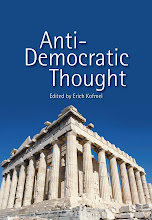
The Anti-Democracy Agenda Symposium 2011 will be the third event we organize to advance the research agenda on anti-democratic thought and practice as well as old and new criticisms of democracy. It will build up on a highly successful workshop on anti-democratic thought SCIS organized at the Annual Conference Workshops in Political Theory in Manchester, England, in September 2007, as well as the Anti-Democracy Agenda Symposium 2010, taking place at the Swiss Federal Institute of Technology (ETH) Zurich in November last year. Both events drew participants from the world over. The Manchester workshop led to the publication of an edited volume on "Anti-Democratic Thought" (Imprint Academic, 2008).
The Anti-Democracy Agenda Symposium 2011 is set to be equally international and interdisciplinary in scope. We invite affiliated academics, independent scholars, and doctoral students and candidates from a wide range of disciplines, such as Philosophy, Political Theory, Political Science, International Relations, Development Studies, Security Studies, Law, Economics, Sociology, Anthropology, Psychology, Literature, History, Classics, Theology, Religious Studies, Education, and so on. Papers may not only cover any and all aspects of criticisms of democracy and anti-democratic thought and practice, from perspectives including anarchism, libertarianism, conservatism, communism, Islamism, the extreme right, and others, but also related concepts such as authoritarianism, dictatorship, military rule, monarchy, chieftaincy, mixed constitution, the backlash against democracy promotion, terrorism, post-democracy, voter apathy, voter ignorance, etc. Have a look at the blog to see what might be of interest and falls within our remit. Papers may be theoretical and/or empirical in nature. Work in progress is welcome too.
This symposium may be the first academic conference to make use of the “Hangouts” video conference facility that is an integral part of Google+. Due to technical restrictions, the number of participants in the Anti-Democracy Agenda Symposium 2011 is limited to 10. All accepted participants will be required to create a profile on Google+ in order to be able to participate in the event. While we encourage the participation of scholars from developing countries, please only apply if you have access to a stable Internet connection. As in our previous physical events, over the course of two days, each presenter will have 60 minutes to present his or her paper and discuss it with all others. Due to the small size of the symposium, all participants are expected to attend both days fully.
As with all SCIS events, no fees will be charged from participants, and no funding is available to cover participants' expenses (if any). We will be glad to issue letters of acceptance on request to assist participants in securing leave from work. Detailed instructions on how to set up a Google+ profile and join the video conference will be provided to confirmed participants.
Please send your proposal to: erichkofmel@gmail.com
Deadline: 15 October 2011
Later submissions may still be accepted, but early submission is strongly advised and proposals may be accepted as they come in.
Cordially,
Erich Kofmel
Managing Director / Research Professor of Political Theory
Sussex Centre for the Individual and Society (SCIS)
https://plus.google.com/109507108125539761871
E-mail: erichkofmel@gmail.com
Postal address:
Sussex Centre for the Individual and Society
1200 Geneva
Switzerland
SCIS is an international association under Swiss law.
Founded 2006 at the University of Sussex.
Showing posts with label post-democracy. Show all posts
Showing posts with label post-democracy. Show all posts
16 August 2011

15 November 2010
Article: Postdemocracy, organizational transformation and the (im)possibility of politics
Timon Beyes and Christina Volkmann, "The fantasy of the organizational One: Postdemocracy, organizational transformation and the (im)possibility of politics" ("Journal of Organizational Change Management", 23 [6], 2010: pp. 651-68):
www.emeraldinsight.com/journals.htm?articleid=1891962
Abstract: "Purpose – The purpose of this paper is to reflect upon the politics of and in organizational transformations in the wake of the fall of the Berlin wall and Germany's reunification. Design/methodology/approach – The paper juxtaposes a political-philosophical perspective informed by Rancière – what we call a dramaturgy of politics – with the findings of an ethnographic study conducted in the Berlin State Library in 2002/2003. Findings – The paper outlines a reading of the event of November 9, 1989[,] and its aftermath as a dissensual event of politics proper, i.e. the emergence of a new political subjectivity, followed by a consensual process of social organization. In the state library, both the consensual 'fantasy of the organizational One' as well [sic] its disruption are causing struggles over what is visible and sayable. A dramaturgy of politics thus encourages us to add our voices to the specific time-spaces in which an excess of words, signs and forms alters the configuration of what is visible and expressible. Research limitations/implications – The usual disclaimers about the limits of ethnographic research apply. The paper calls for further inquiries into the dramaturgy of organizational politics. It also reflects upon the 'Western gaze' and the problematic of 'speaking for' the presumably dominated. Originality/value – It is hoped that the paper contributes to the understanding of the politics of organization (theory) by outlining an alternative conceptual approach and confronting it with ethnographic findings."
I had no access to the full text of the article.
Timon Beyes is Senior Lecturer in Non-Profit Management at the University of St Gallen, Switzerland.
Christina Volkmann is Lecturer in Management at the University of Essex.
28 September 2010
Article: What is Europeism?
Václav Klaus, the liberal-conservative President of the Czech Republic, is the author of an article titled "What is Europeism?" that forms part of a booklet, "What is Europeism, or What Should Not Be The Future For Europe" (by Václav Klaus, Jiří Weigl, Petr Mach Marek Loužek, and Jiří Brodský), published in 2006 by the pro-market public policy think tank Center for Economics and Politics (CEP) in Prague (pp. 7-20).
The booklet is available free of charge here:
www.cepin.cz/docs/dokumenty/europeism.pdf
Excerpts: "Europeism is a doctrine which hardly anyone advocates explicitly and, due to this, it is insufficiently specified or systematically formulated (de facto only some of its critics talk about it seriously). It is not possible to refer to any books and articles, from which it could be 'read'. [...] Europeists are [...] characterized by their clear stances in disputes about parliamentary democracy or civil society and in disputes about democracy or post-democracy. They do not prefer standard democratic processes. [...] It is also entirely obvious on which side the Europeists stand in the disputes about the importance of various post-democratic 'isms', such as multiculturalism, feminism, ecologism, homosexualism, NGOism, etc. [...] Europeists want, in their decision-making at the supranational level, to get rid of politics (because they dream about creating an apolitical society) and to introduce the system of decision-making which would be easy and uncontrollable. That is why they advocate post-democracy and graciously smile at the obsolete and old-fashioned advocates of the good old democracy and the good old 'political' politics. [...]
"The effort to emancipate politics and politicians from democratic 'accountability' is one of the primary objectives of the Europeists. They are not alone in this, but I am certain that never in history had the people with this type of thinking reached such success as through the creation of the EU. [...] These are the interests to get rid of the state as an unsubstitutable guarantor of democracy, as a basic political unit of a democratic system (in contrast to Reichs, empires, unions, leagues of countries), as the only meaningfully organizable arena of political life, as the biggest possible, but at the same time also the smallest reasonable, base of political representation and representativeness. Europeism is an attempt to create the Huxleyian brave new world in which there will be 'rosy hours', but not freedom and democracy. [...] They trust the chosen ones (not the elected ones), they trust themselves or those who are chosen by them. [...] They want to mastermind, plan, regulate, administer the others, because some (they themselves) do know and others do not. Even though we thought that after the collapse of communism all this was a matter of the past, it is not so. It is around us again." (bold removed)
22 September 2010
Article: Urbanity, Class and Post-democracy in Thailand
Jim Glassman, "'The Provinces Elect Governments, Bangkok Overthrows Them': Urbanity, Class and Post-democracy in Thailand" ("Urban Studies", 47 [6], May 2010: pp. 1301-23):
http://usj.sagepub.com/content/47/6/1301
Abstract: "Urban social movements are often associated with what are considered 'progressive' causes and most activists involved in such movements are inclined to describe themselves in such terms. The Thai coup of September 2006 poses problems for any such easy identification. Although executed by the military, on behalf of royalist interests, the coup was supported by an array of primarily Bangkok-based and middle-class groups, many of them associated with organisations such as NGOs and state enterprise unions. Although some of these groups claimed anti-neo-liberal political orientations, their support for the coup effectively placed them on the side of forces opposed to quasi-Keynesian policies and in favour of specific forms of neo-liberalism – at least for Thai villagers. This paper explores this development by focusing on the Bangkok/upcountry and urban/rural divisions in Thai politics, which, although socially constructed, have taken on political substance, in part because of their grounding in regionally differentiated class structures."
Excerpts: "I argue that the coup of 2006 and its sequelae represent a slide towards 'post-democracy' – a condition where democratic political forms achieved through previous social struggles (for example, a multiparty parliament) are subverted by both differential structural power (for example, the wealth and influence of royalist institutions) and overt attempts to reign in popular influence (for example, attempts to make much of the parliament appointed, rather than elected). This slide is driven in part by the interests of an embattled middle class, stronger in Bangkok than elsewhere in the country, which cannot consistently get all that it wants out of conventional parliamentary politics. [...]
"Confronted by the contradiction between a putative commitment to democracy and the reality of enormous social privileges which they attempt to maintain, many Bangkok groups – including some 'progressive' activists – have increasingly looked to conservative forces, chiefly the monarchy, to protect their interests and impose forms of development and social order. This tendency was already apparent before the 2006 coup, but became especially evident at that point. [...] Thailand seems to have entered a period of 'post-democracy', a situation in which there is still a functioning multiparty parliament but in which governments elected by the majority cannot effectively function or carry out policies because of Bangkok-based and royalist opposition. [...]
"Bangkok-based social movements and pro-coup middle classes have emerged on the side of 'post-democracy', utilising their disproportionate political power and media exposure to overturn these political decisions. In short, Bangkok is not a site of the most progressive democratic sentiment, while the countryside is neither a site of purely corrupt patronage systems nor of the romantic rural idyll. [...] [I]n the context of on-going divergence between the prospects of the Bangkok middle classes and other Thai social groups, Thailand seems for now to have entered a 'post-democratic' period in which Bangkok political activists and opinion leaders will continue their attempts to derail the political challenges emanating from outside the capital."
The article contains an extensive bibliography of relevant literature.
Jim Glassman is Assistant Professor in the Department of Geography at the University of British Columbia.
19 September 2010
Article: Neoleninism in Post-democracy (in German)
Micha Brumlik is the author of an article titled "Neoleninismus in der Postdemokratie" (Neoleninism in Post-democracy), published in the monthly German magazine "Blätter für deutsche und internationale Politik" (literally, "Pages for German and International Politics"; 8/2010: pp. 105-16):
www.blaetter.de/archiv/jahrgaenge/2010/august/neoleninismus-in-der-postdemokratie
Abstract in English (found online and apparently provided by the magazine): "What do Joachim Gauck's candidacy for German President and the 'Communism Congress' at Volksbühne Berlin [both in June 2010] have in common? Both represent the longing for alternatives in 'Post-democracy'. Micha Brumlik, Professor of Pedagogy at the University of Frankfurt on the Main and co-editor of the Blätter, criticises Alain Badiou's and Slavoj Zizek's undemocratic 'neo-leninism'."
Here too, I had no access to the full text of the article.
Article: The Crisis of Capitalist Democracy
Adrian Pabst, "The Crisis of Capitalist Democracy" ("Telos", 152, fall 2010: pp. 44-67):
http://journal.telospress.com/cgi/content/abstract/2010/152/44
Excerpt: "Is the neo-liberal era since the mid-1970s synonymous with a corporate capture of the state and the passage to 'post-democracy'? And if so, might the failure of neo-liberalism since the onset of the international economic crisis in 2007 and the state-sponsored bailout of global finance presage a return to the primacy of democratic politics over 'free-market' economics commonly associated with the post-World War II period? At the time of this writing, it is premature to analyze the aftermath of the Great Recession (2007-09), which could yet mutate into a twenty-first-century Great Depression. However, the current ..."
Unfortunately, the journal neither provides an abstract nor a more extensive excerpt. I could not access the full text of the article (which was published as part of a themed issue on "Religion and the Critique of Modernity").
Adrian Pabst is Lecturer in Politics at the University of Kent.
18 September 2010
Public forum: Power Grab: European Integration in the Post-Democratic Age
Policy forum "Power Grab: European Integration in the Post-Democratic Age", organized by The Cato Institute, F.A. Hayek Auditorium, 1000 Massachusetts Avenue, NW, Washington, DC, USA, 8 October 2010, 12.00 noon-1.30 pm
www.cato.org/event.php?eventid=7390
Description: "The Lisbon Treaty of 2009 massively increased the powers of Brussels and gave the European Union its own resident and foreign service. Supporters of Lisbon claim that it will make the EU more efficient and effective. Critics say that the treaty, which was adopted in spite of its rejection in several national referenda, will further deepen Europe's 'democratic deficit.' Other events, including the violation of the legal arrangements prohibiting the recent bailout of Greece, raise questions about the EU's commitment to the rule of law. By transcending nationalism, the EU was meant to be the way of the future. Today, however, many associate it with an unelected and unaccountable bureaucracy."
Participants include Frits Bolkestein (former European Commissioner for Internal Market and Services); John R. Gillingham (Professor in the Department of History, University of Missouri-St. Louis); and Angelos Pangratis (Deputy Head of the EU Delegation to the United States).
Open to the public free of charge. Early arrival is recommended as seating is limited and not guaranteed. Business attire requested. Followed by a buffet luncheon.
To register for the event, please fill out the form on the website or send an e-mail with full details (name, affiliation, etc.) to: events@cato.org
Alternatively, the event can be watched live on the website.
The Cato Institute is a libertarian public policy think tank.
19 June 2010
Journal "Internationale Politik" on "The False Glamour of Dictatorship" (in German)
The May/June 2010 issue of the German foreign policy journal "Internationale Politik" ("International Politics"), published by the German Council on Foreign Relations (DGAP), is dedicated to the theme "Der falsche Glanz der Diktatur" ("The False Glamour of Dictatorship"; my translation).
Those able to read German can find a table of contents and some articles accessible free of charge here:
www.internationalepolitik.de/ip/archiv/jahrgang-2010/der-falsche-glanz-der-diktatur-/
This journal special issue has been reviewed in English, on 15 June 2010, in an unsigned article titled "A Bit of Dictatorship" on the "Information on German Foreign Policy" website, a news and opinion site "compiled by a group of independent journalists and social scientists".
The full text of the review article can be read free of charge here:
www.german-foreign-policy.com/en/fulltext/56352?PHPSESSID=po88qd8mvp3i3bs9epn923v2q7
Excerpts: "Foreign policy specialists from Berlin's establishment are discussing possible advantages of dictatorial forms of government. According to the current issue of a leading German foreign policy review, some observers see the West as being currently in a 'state of democratic fatigue with an erosion of democratic institutions.' Simultaneously there are 'diverse discussions of dictatorial powers and measures' even if usually in terms of a temporary dictatorship. They see as the primary question, whether 'beyond the system of rule of law, legitimacy reserves can be tapped' to 'rejuvenate the system (– democracy –) that has grown old' [...], a terminology used in the 1930s by the key Nazi jurist, Carl Schmitt[,] to justify the annulment of the [Weimar] democratic constitution. [...] [S]ome business representatives are in no way adverse to authoritarian measures and are questioning whether 'the constitutional state can still hold its own' in the competition of systems against China and Russia. [...] [A] 'spreading discomfort with democracy' provides 'a certain seductiveness for a flirt with dictatorships.'"
13 June 2010
Article: Israeli Post-Democracy: Origins and Prospects
Keith Kahn-Harris and Joel Schalit are the authors of an article titled "Israeli Post-Democracy: Origins and Prospects", published on 10 June 2010 on the pro-democracy news and opinion website openDemocracy.net.
The full text of the article can be read free of charge here:
www.opendemocracy.net/keith-kahn-harris-joel-schalit/israeli-post-democracy-origins-and-prospects
Excerpts: "'The middle east's only democracy'. [...] This profound sense of itself as a democracy, which by that token makes the country an exception in the region, is woven into Israelis' self-perception. This makes it all the more painful for many Israelis to feel obliged to lament that the country's political character is now seriously threatened and that its democratic political institutions and culture are in effect under siege. It is even harder for them to confront the reality that as the repressive nature of Israel's occupation of Palestinian territories is increasingly exposed to the light, Israel's government has begun to treat sections of its own Jewish citizenry as it does Palestinians. True, the project of settling the West Bank (and until the withdrawal of 2005, Gaza) has always carried dangers for Israeli democracy within the 'green line' that demarcated Israel proper from the territories it conquered in 1967. The central conceits of the settlement project [...] rely on the false supposition that Israeli democracy could avoid being undermined by a fundamentally non-democratic project imposed on its closest neighbours. [...]
"Alarm about the corrosive effects of colonial occupation on Israel has long been expressed by intellectuals, radicals and jeremiahs (such as the late Yeshayahu Leibowitz); but its spread can be measured in the way that even establishment political figures (such as Ehud Barak and Ehud Olmert most recently) have publicly stated that without disengagement from Palestinian territory, Israel cannot remain a democracy. [...] [A] rightist [government] coalition led by Binyamin Netanyahu's Likud [...] seeks to hold onto the maximum possible number of West Bank settlements and contains figures with explicitly anti-democratic instincts. [...] These developments in themselves do not suggest that Israel inside the green line will, any time soon, dispense with elections or become a dictatorship. However, there is a real possibility that this Israel may drift into a kind of 'post-democracy' (in Colin Crouch's term): imposing restrictions on civil rights and the rights of minorities, the media and NGOs, in a way that erodes the checks and balances on the Israeli state. Israel would become a different kind of polity, one that in key respects might resemble Vladimir Putin's Russia or (at best) Silvio Berlusconi's Italy. [...]
"Even if Israel did fully withdraw to the green line, the 'post-democratic' tendencies that have been set in motion cannot now easily be stalled. The reason is in part because the tendencies pushing Israel towards post-democracy are connected to more than the settlement project; they are also the product of possibilities that have long been inherent within Zionism. [...] Zionism, in important ways comparable to other nationalisms even if the details differ, sought to create a national Hebrew culture forged out of the disparate Jewish diaspora, and to erect a state for Jews. [...] The strength of Israeli civil society has provided a powerful bulwark against the ever-present possibility that Israel would devolve into openly racist authoritarianism. In the post-democratic era, this bulwark is being eroded. Zionism is being reduced to a retrograde 'statism' that seeks only to build state power, and is suspicious of any counterweights. [...] Israel's political horizons were in historical terms always more limited than they once appeared, but [...] it has taken the rise of anti-democratic forces to national leadership for everyone, including Israelis, to figure this out."
Keith Kahn-Harris is an Honorary Research Fellow in the Centre for Religion and Contemporary Society at Birkbeck College, University of London.
Israeli-American Joel Schalit is a book author and editor based in Berlin, Germany.
10 June 2010
CONF: American Political Science Association annual meeting 2010
106th Annual Meeting of the American Political Science Association (APSA), Washington, DC, USA, 2-5 September 2010
http://apsanet.org/content_65547.cfm?navID=193
The programme of this year's APSA meeting features a panel on "Democratic Ethics in a Post-Democratic World", organized by APSA's "Normative Political Theory" section (2 September, 4.15 pm). The participants are Stephen Macedo (Princeton), Melissa A. Orlie (University of Illinois, Urbana-Champaign), Nancy L. Rosenblum (Harvard), and Ian Shapiro (Yale).
Also of interest, but unfortunately scheduled at the same time: The panel "Women, Authoritarianism, and Conflict", organized by APSA's "Comparative Politics" section and "Comparative Politics of Developing Countries" division, includes a paper by Dara Kay Cohen (University of Minnesota) and Amelia Hoover Green (Yale), "Are Non-Democracies Better for Women in Wartime? Regime Type, Sexual Violence, and Conflict" (2 September, 4.15 pm).
Further information and the full programme are to be found on APSA's website.
06 May 2010
CFP: Anti-Democracy Agenda Symposium 2010
Please circulate widely!
CALL FOR PAPERS
Anti-Democracy Agenda Symposium 2010
Organized by: Sussex Centre for the Individual and Society (SCIS)
Location: Gottfried-Semper Villa Garbald, part of the Collegium Helveticum of the Swiss Federal Institute of Technology (ETH) Zurich and the University of Zurich, at Castasegna, in the Swiss Alps
Date: 8-10 November 2010
The "Anti-Democracy Agenda" (www.anti-democracy-agenda.blogspot.com) has been run by the Sussex Centre for the Individual and Society since January 2010. The blog is the premier resource on the net for the study of anti-democratic thought and practice across the boundaries of various traditions and academic disciplines.
The Anti-Democracy Agenda Symposium 2010 will be the first event we organize in conjunction with the blog. It will build up though on a highly successful event on anti-democratic thought SCIS organized earlier, at the Annual Conference Workshops in Political Theory in Manchester, England, in September 2007, drawing participants from the world over. That workshop led to the publication of an edited volume, "Anti-Democratic Thought" (Imprint Academic), in December 2008.
The Anti-Democracy Agenda Symposium 2010 is set to be equally international and interdisciplinary in scope. We invite affiliated academics, independent scholars, and doctoral students and candidates from a wide range of disciplines, such as Philosophy, Political Theory, Political Science, International Relations, Development Studies, Security Studies, Law, Economics, Sociology, Anthropology, Psychology, Literature, History, Classics, Theology, Religious Studies, Education, and so on. Papers may not only cover any and all aspects of criticisms of democracy and anti-democratic thought and practice, from perspectives including anarchism, libertarianism, conservatism, communism, Islamism, the extreme right, and others, but also related concepts such as authoritarianism, dictatorship, military rule, monarchy, chieftaincy, mixed constitution, the backlash against democracy promotion, terrorism, post-democracy, voter apathy, voter ignorance, etc. Have a look at the blog to see what might be of interest and falls within our remit. Papers may be theoretical and/or empirical in nature. Work in progress is welcome too.
We expect that 10-15 participants will be attending the workshop-style Anti-Democracy Agenda Symposium 2010. Over the course of two and a half days, each presenter will have 60 minutes to present his or her paper and discuss it with all others.
As with all SCIS events, no fees will be charged from participants, and no funding is available to cover participants' travel and accommodation expenses. We will be glad to issue letters of invitation on request to assist participants in securing funding from their usual sources. The charges payable directly to the Villa Garbald (approx. $510 half-board/$570 full-board per person) cover accommodation for three nights and food and drink (except alcohol and minibar) throughout your stay. Participants will be arriving on Sunday, taking in the magnificent scenery of the Swiss Alps on a spectacular 5-hour train journey from Zurich airport (via St. Moritz) to a remote Italian-speaking Swiss valley (Val Bregaglia), home to Europe's largest chestnut forest, and leave on Wednesday after lunch, on the same way (cost of a return ticket approx. $115). Alternatively, you can get there in 3-4 hours by train from Milano airport, passing Lake Como. During the symposium there will be ample time to explore the surroundings. Please feel free to contact us with any questions. Detailed travel instructions will be provided to confirmed participants. Don't miss this unique opportunity.
The Italian-style Villa Garbald was built by German star architect Gottfried Semper (of Semper Opera in Dresden and Vienna Burgtheater fame) during his exile in Switzerland. A pro-democracy activist in aristocratic mid-19th century Germany, his experiences with direct-democratic government in Switzerland turned him in later life increasingly against democracy.
Please send your proposal to: e.kofmel@sussexcentre.org
Deadline: 31 July 2010
Later submissions may still be accepted, but early submission is strongly advised and proposals may be accepted as they come in.

Cordially,
Erich Kofmel
Managing Director / Research Professor of Political Theory
Sussex Centre for the Individual and Society (SCIS)
www.sussexcentre.org
E-mail: e.kofmel@sussexcentre.org
Postal address:
Sussex Centre for the Individual and Society
1200 Geneva
Switzerland
SCIS is an international association under Swiss law.
Founded 2006 at the University of Sussex.
CALL FOR PAPERS
Anti-Democracy Agenda Symposium 2010
Organized by: Sussex Centre for the Individual and Society (SCIS)
Location: Gottfried-Semper Villa Garbald, part of the Collegium Helveticum of the Swiss Federal Institute of Technology (ETH) Zurich and the University of Zurich, at Castasegna, in the Swiss Alps
Date: 8-10 November 2010
The "Anti-Democracy Agenda" (www.anti-democracy-agenda.blogspot.com) has been run by the Sussex Centre for the Individual and Society since January 2010. The blog is the premier resource on the net for the study of anti-democratic thought and practice across the boundaries of various traditions and academic disciplines.
The Anti-Democracy Agenda Symposium 2010 will be the first event we organize in conjunction with the blog. It will build up though on a highly successful event on anti-democratic thought SCIS organized earlier, at the Annual Conference Workshops in Political Theory in Manchester, England, in September 2007, drawing participants from the world over. That workshop led to the publication of an edited volume, "Anti-Democratic Thought" (Imprint Academic), in December 2008.
The Anti-Democracy Agenda Symposium 2010 is set to be equally international and interdisciplinary in scope. We invite affiliated academics, independent scholars, and doctoral students and candidates from a wide range of disciplines, such as Philosophy, Political Theory, Political Science, International Relations, Development Studies, Security Studies, Law, Economics, Sociology, Anthropology, Psychology, Literature, History, Classics, Theology, Religious Studies, Education, and so on. Papers may not only cover any and all aspects of criticisms of democracy and anti-democratic thought and practice, from perspectives including anarchism, libertarianism, conservatism, communism, Islamism, the extreme right, and others, but also related concepts such as authoritarianism, dictatorship, military rule, monarchy, chieftaincy, mixed constitution, the backlash against democracy promotion, terrorism, post-democracy, voter apathy, voter ignorance, etc. Have a look at the blog to see what might be of interest and falls within our remit. Papers may be theoretical and/or empirical in nature. Work in progress is welcome too.
We expect that 10-15 participants will be attending the workshop-style Anti-Democracy Agenda Symposium 2010. Over the course of two and a half days, each presenter will have 60 minutes to present his or her paper and discuss it with all others.
As with all SCIS events, no fees will be charged from participants, and no funding is available to cover participants' travel and accommodation expenses. We will be glad to issue letters of invitation on request to assist participants in securing funding from their usual sources. The charges payable directly to the Villa Garbald (approx. $510 half-board/$570 full-board per person) cover accommodation for three nights and food and drink (except alcohol and minibar) throughout your stay. Participants will be arriving on Sunday, taking in the magnificent scenery of the Swiss Alps on a spectacular 5-hour train journey from Zurich airport (via St. Moritz) to a remote Italian-speaking Swiss valley (Val Bregaglia), home to Europe's largest chestnut forest, and leave on Wednesday after lunch, on the same way (cost of a return ticket approx. $115). Alternatively, you can get there in 3-4 hours by train from Milano airport, passing Lake Como. During the symposium there will be ample time to explore the surroundings. Please feel free to contact us with any questions. Detailed travel instructions will be provided to confirmed participants. Don't miss this unique opportunity.
The Italian-style Villa Garbald was built by German star architect Gottfried Semper (of Semper Opera in Dresden and Vienna Burgtheater fame) during his exile in Switzerland. A pro-democracy activist in aristocratic mid-19th century Germany, his experiences with direct-democratic government in Switzerland turned him in later life increasingly against democracy.
Please send your proposal to: e.kofmel@sussexcentre.org
Deadline: 31 July 2010
Later submissions may still be accepted, but early submission is strongly advised and proposals may be accepted as they come in.
Cordially,
Erich Kofmel
Managing Director / Research Professor of Political Theory
Sussex Centre for the Individual and Society (SCIS)
www.sussexcentre.org
E-mail: e.kofmel@sussexcentre.org
Postal address:
Sussex Centre for the Individual and Society
1200 Geneva
Switzerland
SCIS is an international association under Swiss law.
Founded 2006 at the University of Sussex.
09 April 2010
Book: After democracy (in French)
Of possible interest to those able to read books in French: "Après la démocratie" (After democracy) by Emmanuel Todd (Gallimard, October 2008):
www.gallimard.fr/catalog/Html/clip/A78683/A78683.swf
Review: "Emmanuel Todd, the French historian, made a name for himself by predicting the collapse of the Soviet Union. [...] In his latest book, [...] he conjures up the alarming possibility of a post-democratic Europe reverting to ethnic scapegoating and dictatorship. Mr Todd's thesis will strike many readers as nonsense. In particular, his conclusion that only overt protectionism can preserve Europe's social fabric has already been attacked for being dangerously counter-productive. After all, was it not the reversion to protectionism after the crash of 1929 that tipped the world into the Great Depression and fuelled the rise of Hitler? Yet some of Mr Todd's arguments are as insightful as they are polemical, and reflect the evolution of Europe's political debate. His warnings of a democratic meltdown in France, and perhaps more generally in the developed world, certainly deserve to be read, challenged and debated." (John Thornhill, "Financial Times")
From the publisher's description (my rough translation): "Beneath a variety of symptoms, we encounter a veritable crisis of democracy. In order to understand it, we must identify the contributing factors, both present and historical, including the emptiness of religion, educational stagnation, the new social stratification, the destructive impact of free trade, the impoverishment of the middle class, confusion of the elite. [...] We have to ask ourselves if politicians, unable to manipulate our 'opinion democracy' any longer, will not simply seek to curtail the universal franchise."
Emmanuel Todd is a Research Engineer at France's National Institute of Demographic Studies (INED). A political scientist by training, he holds a PhD in History from the University of Cambridge.
12 March 2010
Article: The Politics of Development
Brij Mohan, "The Politics of Development", Journal of Comparative Social Welfare, 25 (3), October 2009: pp. 255-67:
www.informaworld.com/smpp/1244700700-65537240/content~db=all~content=a916030631
Abstract: "Global poverty and inequality, in the context of current capitalist crisis, will remain a daunting challenge in the twenty-first century. This reality will unleash an era of post-democracy bedeviled by multifaceted meltdowns in political, cultural and economic structures. The outcome will be a catastrophe that will be beyond any human intervention unless we think self-critically and fast. This article seeks to theorize the main processes that thwart the rational-humane logic of development in the 'post-American world'."
Some excerpts: "A hedonist culture wallowing in hubristic delusions is bound to crash. The contradictions of a society based on unprincipled consumption and consumerism is bad news for the future of humankind. [...] All political roles are implicated in a culture of deceptions and depredations until proven not guilty. Will there ever be an acceptable rationale and due compensation for the Iraq war that was launched by neo-cons based on lies? Can anyone on this planet rewind world history and undo India's partition that created a phony – now a failed – state named Pakistan, which has become the womb of world terrorism? [...] A cultural meltdown reflects on the nature of social contract that serves as the foundation of modern society. The rusted fabric of social institutions is in disarray. Social institutions are losing legitimacy and their leaders are guilty of bad faith. Banks cheat; schools do not teach; hospitals sometimes kill; prisons dehumanize; markets collapse; ideologies mislead; academe sucks; and faith corrupts. [...] It is cultural meltdowns of varied hues that destabilize systems of sustenance that render democracies vulnerable to the creatureliness of reptilian behaviors. From the Wall Street to Rwanda, the gluttony of greed and gloom has produced widespread dysfunctionality that thwarts all democratic institutions."
I venture the opinion that the acceptance of this incoherent little piece that reads as if it had been written on speed was greatly helped by the fact that the author is himself Editor-in-Chief of the journal it was published in.
Indian-born Brij Mohan is Professor of Social Work at Louisiana State University.
20 February 2010
Trend: In Italy, Mussolini makes comeback
United Press International yesterday published a special report by Stefan Nicola (UPI Europe Correspondent) headlined "In Italy, Mussolini makes comeback":
www.upi.com/Top_News/Special/2010/02/19/In-Italy-Mussolini-makes-comeback/UPI-78711266608304/
Excerpts: "Italy's Fascist dictator Benito Mussolini is making an unexpected popularity comeback in Italy, a phenomenon nurtured by Prime Minister Silvio Berlusconi over the past 15 years. [...] [T]he Duce, as Mussolini's admirers call him, is becoming increasingly popular [...] even with the younger crowd. In January, the iPhone application iMussolini became the most popular in Italy. The program [...] allowed users to read and listen to speeches of the Fascist leader. Up to 1,000 people downloaded the app each day, before Apple pulled it from its Italian store earlier this month. [...] Streets are being renamed after 'regime heroes,' 'good Fascists' are the stars of movies and politicians from all major parties are belittling the Fascist horrors. In 2008, the mayor of Rome, Gianni Alemanno, a member of the National Alliance, Mussolini's political descendants and key allies of Berlusconi, defended the Fascist dictatorship during a tour of Israel. Last June, Michela Brambilla, the Italian minister of tourism and a possible successor to Berlusconi, did what many interpreted as the Fascist salute [...]. She remains in power, despite the fact that doing the salute is against the law. [...] Berlusconi [...] himself has spoken warmly of the Duce many times".
The UPI report is based on a book by Aram Mattioli (Professor of 19th and 20th Century History at the University of Lucerne, Switzerland) that has just been published in German. It is titled "'Viva Mussolini': Die Aufwertung des Faschismus im Italien Berlusconis" (translated by UPI as "An Appreciation of Fascism in Berlusconi's Italy"; Verlag Ferdinand Schöningh, February 2010):
www.schoeningh.de/katalog/titel/978-3-506-76912-1.html
Says Mattioli (quoted from UPI): "I see a close connection between the revisionist tendencies and the inner state of today's Italy, were political culture has reached a low-point, Italy has entered a state of post-democracy. Democracy is still formally existent but policies are increasingly illiberal."
12 February 2010
Article: Demo-skepticism and Genocide
Daniele Conversi, "Demo-skepticism and Genocide" ("Political Studies Review", 4 [3], September 2006: pp. 247-62).
Abstract: "Genocide studies have expanded rapidly over the last twenty years, impelled by events such as the Bosnian and Rwandan tragedies and aided by the interdisciplinary confluence between comparative politics, history, anthropology and other social sciences. The challenge from historical sociology is particularly meaningful and few scholars are better equipped to achieve this task than Michael Mann. His explanation, linking genocide to 'democracy', is a relatively novel one. However, while scholars from various disciplines broadly agree on the link between genocide and modernity, the description of ethnic cleansing as the 'dark side of democracy' is more controversial. This article assesses Mann's claim, contrasting it with recent research in the field: after situating Mann's contribution within the structure-agency debate, I question whether causality and human responsibility are lost. I then explore the broader, recent trend of 'demo-skepticism' to which the book belongs. Its main weakness is a contraction of the concept of democracy into that of 'majority rule'. This is accompanied by an intermittent overlap between the concepts of democracy, liberalism and neoliberalism, under the umbrella term 'liberal democracy'."
The full text of the article can be read free of charge here:
www.sissco.it/fileadmin/user_upload/Risorse/biblioteca_digitale/pdf/Demoskepticism.pdf
Some excerpts: "Rarely in recent history has the faith in democracy become so debilitated as in the current dawning of the twenty-first century. Terrorism and counter-terrorism have demolished many certitudes. [...] In several Western countries, the lack of governments' responsiveness accompanied by the introductions of new 'anti-terror' legislation often sacrificing human rights in the name of 'security', have led many to question whether we still live in a democratic age. 'Liberal democracies' are facing a legitimacy crisis, while disenchantment, even cynicism, with our very political systems has gained ground. [...]
"[Academic thinking has been] expanding into a general critique of democratic theory and the very idea of 'liberal democracy'. It has combined with a much larger onslaught on the very notion of democracy, emerging in various areas and disciplines [...,] a rapidly growing circle of scholars, a larger, fashionable 'anti-democratic' trend which I define hereby as demo-skepticism. [...] US academics of different ideological persuasions [...] argue that mass democracy coupled with neoliberal globalization imperil multi-ethnic coexistence. [...] [T]he critics' true targets are not democracies per se, but more specifically globalizing market democracies. [...]
"Colin Crouch [...] has recently argued that we already live in a post-democratic age, where government slips away from popular control while big business and multinational corporations rule unchallenged. With globalizing neoliberalism, the era of popular sovereignty has come to an end, and with it the very meaning of democracy. The very fact that we begin to feel that we no longer live in 'democratic' societies could account for the rise of demo-skepticism. Long before the demo-skeptic turn, the Italian sociologist Franco Ferrarotti [...] had warned that the death of democracy is always a suicide, never a murder."
Italian-born Daniele Conversi is now Research Professor in the School of Social and Communication Sciences at the University of the Basque Country and at Ikerbasque, the Basque Foundation for Science.
04 January 2010
Books on post-democracy
People who lament or fear the end of democracy or the uncertainty after democracy may speak of "post-democracy". One reason why I prefer the clear-cut "anti-democracy" is that it is not as ambivalent (while leaving open the possibility of competing or coexisting non-democratic futures). Post-democracy is a term with many – sometimes mutually exclusive – meanings. Three publications of recent years may illustrate this.
A book with the simple title "Post-Democracy", written by Colin Crouch, was published in 2004 by Polity Press:
www.polity.co.uk/book.asp?ref=9780745633145
From the publisher's description: "Post-Democracy is a polemical work that goes beyond current complaints about the failings of our democracy and explores the deeper social and economic forces that account for the current malaise.
"Colin Crouch argues that the decline of those social classes which had made possible an active and critical mass politics has combined with the rise of global capitalism to produce a self-referential political class more concerned with forging links with wealthy business interests than with pursuing political programmes which meet the concerns of ordinary people. He shows how, in some respects, politics at the dawn of the twenty-first century returns us to a world familiar well before the start of the twentieth, when politics was a game played among elites.
"However, Crouch maintains that the experience of the twentieth century remains salient and it reminds us of possibilities for the revival of [democratic] politics."
The book is fully searchable on Google Book Search (including table of contents):
http://books.google.com/books?id=FIkqmsn4O0QC&printsec=frontcover
Colin Crouch is Professor of Governance and Public Management at the University of Warwick and a Fellow of the British Academy. At the time of writing this book, he was Professor of Sociology at the European University Institute.
In 2007, Edward Elgar Publishing released "Counter-Terrorism and the Post-Democratic State", edited by Jenny Hocking and Colleen Lewis:
www.e-elgar.co.uk/bookentry_main.lasso?id=4223
From the publisher's description: "The 'war on terror' and ongoing terrorist attacks around the world have generated a growing body of literature on national and international measures to counteract terrorist activity. This detailed study investigates an aspect of contemporary counter-terrorism that has been largely overlooked; the impact of these measures on the continued viability of the democratic state. Democratic nations are now facing an unprecedented challenge – to respond to global terrorism without simultaneously overturning fundamental human and political rights."
The (very expensive) book is fully searchable on Google Book Search (including list of contributors and table of contents):
http://books.google.com/books?id=ItgXW8MQCjAC&printsec=frontcover
Jenny Hocking is Professor (School of Humanities, Communications and Social Sciences) and Colleen Lewis is Associate Professor (School of Political and Social Inquiry) at Monash University, Australia.
Finally, "Cynicism and Hope: Reclaiming Discipleship in a Postdemocratic Society", edited by Meg E. Cox (Cascade Books, 2009):
www.wipfandstock.com/store/Cynicism_and_Hope_Reclaiming_Discipleship_in_a_Postdemocratic_Society
Endorsement: "Most Christians in the United States still tune their hope to the rhythm of the election cycle. For Reba Place Fellowship, Living Water Community Church and these other contributors [to the book], hope is tuned to quieter things a noisy world cannot hear – things like friendship, gardening, sitting down with enemies, and ultimately, Jesus. This collection is bracing in its timeliness." (Jason Byassee, Duke Divinity School)
From the publisher's description: "The contributors suggest a new way to live in the tension between hope that things will improve and cynicism about whether they ever will. While creating space for lament, they point toward a radical Christian faithfulness in neighborhoods and congregations that can be both hopeful and profoundly political."
The book is not (yet) on Google Book Search.
Meg E. Cox is a freelance writer and editor.
03 January 2010
Book: Hatred of Democracy
In 2007, Jacques Rancière's "Hatred of Democracy" was published by Verso (trans. Steve Corcoran):
www.versobooks.com/books/nopqrs/r-titles/ranciere_j_hatred_democracy.shtml
From the publisher's description: "Jacques Rancière argues that the West can no longer simply extol the virtues of democracy by contrasting it with the horrors of totalitarianism. As certain governments are exporting democracy by brute force, and a reactionary strand in mainstream political opinion is willing to abandon civil liberties and destroy collective values of equality, Rancière explains how democracy – government by all – attacks any form of power based on the superiority of an elite. Hence the fear, and consequently the hatred, of democracy amongst the new ruling class."
A book by an advocate of radical democracy.
Jacques Rancière is a former Professor of Philosophy at the University of Paris-VIII.
02 January 2010
Book: Beyond Democracy to Post-Democracy
In 2004, Peter Baofu published the two volumes of his "Beyond Democracy to Post-Democracy: Conceiving a Better Model of Governance to Supercede Democracy" (Edwin Mellen Press):
Vol. 1: www.mellenpress.com/mellenpress.cfm?bookid=6144&pc=9
Vol. 2: www.mellenpress.com/mellenpress.cfm?bookid=6145&pc=9
Publisher's description: "Contrary to the belief of many contemporaries, democracy is as evil and good as non-democracy. This sounds shocking, since democracy (of whatever version) enjoys its triumphant moment in our age, to the effect that there is a widespread belief of democracy, unlike non-democracy, as most congenial to the celebration (not condemnation) of difference. This democratic/non-democratic dichotomy therefore privileges democracy as the highest political achievement of human civilization, such that everywhere there have been endless discussions of how and why different societies and cultures are to adopt it, all in the celebration of difference in our time.
"Dr. Baofu, in this wide-ranging work, shows how and why the democratic idea of difference becomes the democratic mystique of difference. His inquiry reveals, in the end, how and why democracy privileges itself by an untenable dichotomy and is essentially contingent on the historical needs of society and the dominant themes of culture in our time. Democracy will not last (to be superseded by what Dr. Baofu originally called 'post-democracy'), just as aristocracy before it could not. The difference is that we believe in our version of historical destiny now, just as those before us believed in theirs then, and those after us will believe in theirs in the future.
"As an anti-hero of our time, Baofu's critique against the sacrosanct idea of democracy earns few friends and wins few hearts, in an age where the democratic idea reigns supreme as its god."
From the Foreword by Sylvan Von Burg (School of Foreign Service, Georgetown University): "It's not often that an innovative thinker comes along to question, in the manner of Socrates, the most strongly held beliefs of Western Civilization. Peter Baofu [...] brings with him an unusual perspective of democracy, that prompts him to observe, as did the boy in Hans Christian Anderson's The Emperor's New Clothes, that reality is not what others perceive. [...] And so it is, that Dr. Baofu, a scholar in Political Science, challenges us to conceive a better model of governance to supersede democracy. It's a clarion call to arms to move beyond democracy."
Table of contents: Introduction: The Democratic Idea; Chapter 2: Myth #1 – Democracy Is More Lawful; Chapter 3: Myth #2 – Democracy Is More Truthful; Chapter 4: Myth #3 – Democracy Is More Benevolent; Chapter 5: Myth #4 – Democracy Is More Peaceful; Chapter 6: Myth #5 – Democracy Is More Tolerant; Conclusion: The Democratic Mystique
Unfortunately, at almost 250 dollars for both volumes, this publication is hardly affordable to individual scholars.
Two years earlier, in 2002, Baofu had already published (equally expensive) "The Future of Capitalism and Democracy" (University Press of America):
www.univpress.com/Catalog/SingleBook.shtml?command=Search&db=^DB/CATALOG.db&eqSKUdata=0761823875
From the publisher's description: "In The Future of Capitalism and Democracy, Peter Baofu evaluates how and why capitalism and democracy have failed at the institutional, organizational, structural, cultural, systemic, cosmological, and bio-psychological levels in order to synthesize the often conflicting ideals of freedom, equality, and fraternity (broadly defined to include all dimensions of life), so much cherished by many minds since the modern era. And this is so, even if democracy and capitalism have different meanings in different cultures and societies. In the end, Baofu shows that capitalism and democracy, hegemonic as they are in the post-Cold War era, are just experiments in history and will not last, just as feudalism and aristocracy before them could not."
Peter Baofu, an ethnic Chinese born in Vietnam, received his PhD in Political Science from the Massachusetts Institute of Technology (MIT). He was a Fulbright Scholar in the Far East and has taught at different universities in Europe, the Middle East, and America, including the MIT, Harvard, and Johns Hopkins.
Experimental "competitive government" instead of democracy
Until recently, the term "competitive government" has been used to refer to competing policies with regard to democratic institutional arrangements and to the (neo-liberal) introduction of (market-)competitive elements to public administration, such as the privatization and outsourcing of public services (provision of water and electricity, waste disposal, public transportation, health care, etc.), public-private partnerships, and so on.
The term now is about to receive a new meaning thanks to the work of Patri Friedman and others. For them, "competitive government" describes the competition between the political arrangements of entire (future) nation states, be they democratic or otherwise. It is about the freedom of people to decide themselves in what political system they prefer to live and the freedom for every individual to move to a "nation" state/country of his or her choosing. It is about diversity in the forms of government worldwide rather than the uniformity of international "democracy promotion".
For a number of reasons the term "competitive government" may not be ideal, though, for what Friedman and others envisage. After all, unlike today there would be no real competition between such (new) nation states/countries. (Traditionally, competition between national governments and nations too often ends in war.) It's not about dominance, but rather about co-existence and tolerance for other, alternative, diverse forms of government, even "niche" government (political systems that only a minority of people would volunteer to live in). In a competition-theoretical sense, "competitive government" means, however: no monopoly for democracy.
At the same time, the "nation" would have to lose any connotation of blood, ethnicity, and nationalism and come to stand for communities of politically like-minded people instead.
It is safe to say that Friedman is stuck in the terminology of Economics ("competition" rather than accommodation or tolerance, "nation" as the basic entity of political-economic discourse – western democracy promotion suffers from the same competitive misapprehension, inherent in its linkage to capitalist market philosophy and mechanisms).
In Patri Friedman's case this is owed to his family heritage and background. His grandfather, Milton Friedman, 1976 Nobel Prize laureate in Economics, was one of the professors who turned the University of Chicago into a centre of so-called neo-liberal thought. The author of books such as "Capitalism and Freedom" (1962), Milton Friedman was a stout defender of the view that capitalism and democracy are inextricably linked.
Albeit deeply critical of the (welfare) state and pleading for a government that refrains from interventions in the economy, limits its activities to the bare minimum, and leaves the individual as much as possible alone, he still charged the state with the promotion of competition and the provision of a legal and monetary framework for individual and corporate action, primarily in the market place.
Political power should be dispersed as widely as possible, though, so as to avoid coercion of the individual by his fellow men. Dismissing "welfare" and "equality" as the "catchwords" of paternalistic politics against which classical liberalism fought, Milton Friedman held democracy to be merely a means guaranteeing individual freedom.
Now his grandson, Patri Friedman, declares his opposition to democracy.
Taking his clues from his grandfather and father (David D. Friedman) as much as from the libertarian and anarcho-capitalist traditions, Patri Friedman goes further when claiming – on the most elaborate of his many fragmentary websites and blogs – that he is "deeply dissatisfied with current forms of social organization (western democracy)".
http://patrifriedman.com/aboutme/politics.html
He finds "[s]ocial organization (aka government) [...] is being done really badly right now (democracy is better than previous forms, but still awful), and it can be done better. [...] I think most political discussion is [...] nonsensical reasoning about a useless tradition which has accumulated concentrated interests who benefit from it and have entrenched themselves [...]. By stepping up a level, we neatly avoid getting trapped in endless policy debates, debates which are almost pure intellectual masturbation because the problem is not figuring out a good policy, the problem is that the system (say, democracy) doesn't optimize for 'good'. We can argue for hours about the best tax system – but politicians don't want 'the best', they want one where they can profit by selling loopholes."
The solution Patri Friedman proposes is "competitive government" – and the creation of new spaces in which various forms of government and institutional arrangements (some of them non- or anti-democratic) can develop in their own "nation" states/countries. While people (unless they live in some form of democracy) may no longer get to elect their leaders, they would get to decide under what system of government they wish to live – and move there.
Friedman writes: "My path is not just a path to libertarianism, but to a wider variety of governments and societies. I wish to convince non-libertarians that this is an attractive vision, and that it is something they would like to see happen. I also want to help people of many different political persuasions to get along by seeing ways in which each group can have what they want, instead of arguing endlessly over what they should all have."
The way of getting there, according to him, is experimentation: "Government has stagnated. Very little experimentation. (What do you expect when it's basically impossible to start a new country or change an existing one? How do you expect to get technological advances without experimentation?) [...] Experimenting has some important benefits: It gives us empirical evidence about what rule-systems work. This is enormously more valuable than theoretical debates which depend on model assumptions; It enables people to live under a system while learning about it; It gives people a specific, real example to point to when debating the merits of various systems; They let people actually experience a society, physically and emotionally rather than as a mental abstraction. [...]
"The fewer, larger political systems we have, the less experimentation there will be. Also, the less different types of society we will have. I believe that a world with a diverse set of governments, peacefully competing for citizens, would be a much better one. We might see the technologies of social organization advancing as fast as other areas of science and technology."
Patri Friedman recognizes the difficulty of experimenting with political systems in existing nation states/countries. Much like the Zionists at the beginning of the twentieth century, he aims to solve this problem by creating new nations. (One of the blogs he writes on is entitled "Let A Thousand Nations Bloom".) He proposes to "open the new frontier of the oceans", because international waters provide "a very low barrier to entry to creating a new government, and avoid the powers-that-be". " By building cities on the ocean in a modular fashion, the ocean becomes a permanent frontier, because any dissatisfied group can go to a new, empty patch of ocean, and take their houses and offices with them!. This lets them reset at far lower cost."
"And if we build these cities out of modular platforms, so that people can vote with their house (instead of just their feet), we get a world of unprecendented mobility (ie free association). Together, these have the potential to transform the governing industry from an oligopoly into a competitive market."
Patri Friedman calls this "seasteading". He even founded his own organization, the Seadsteading Institute in Palo Alto, California, whose mission statement reads: "To further the establishment and growth of permanent, autonomous ocean communities, enabling innovation with new political and social systems". It may be the first serious project in the direction of "competitive government" since it received a financial contribution of half a million US dollars from billionaire Peter Thiel, co-founder of PayPal.
http://www.seasteading.org/
Questions remain, of course, like on what basis people are supposed to come together to form a new "nation"/country/community if they do not before have an abstract idea, model, conception of a future society all of them aspire to?
Like anarchist, capitalist libertarians, others too will have to find ways of conceptualizing such non- or anti-democratic societies first, and then put their ideas into practice and to the test in existing or new states, while never ceasing to experiment.
Patri's own libertarian project (which attracted the Silicon Valley start-up funding for his Seasteading Institute) suffers from his erring belief that capitalism can durably be separated from democracy. As his grandfather, Milton, knew full well a capitalist economy will (in the long run) always lead to democratic forms of government – and thus the same old problems.
New forms of government will not be democratic. They will not be capitalist either.
To build a swimming country will always require a lot of money. New non-democratic, non-capitalist societies are therefore unlikely to arise on the high seas. But arise they will.
"Political non-voters" in Germany
A new type of non-voter grabbed the attention of the German media prior to last September's federal election: the conscientious, or political, non-voter.
Non-voting as a political stance against the shortcomings of parliamentary democracy appears to have been popularized by renowned journalists and writers like Gabor Steingart and Thomas Brussig. They and others of similar thinking participated not only in many pre-election talk shows, but published books and essays calling for voter abstinence.
Steingart's book, for example, is titled "Die gestohlene Demokratie" (Stolen Democracy; Piper, September 2009):
www.piper-verlag.de/taschenbuch/buch.php?id=15942&page=buchaz
Non-voting they identify as a mode of resistance to the "political class", the "cartel", and as objection to being treated like "cattle" led to the voting booth. They feel defrauded by the party state and the interchangeability of the programmes of political parties that may have become obsolete and overextended, but cling to power. Parties, they argue, are no longer representative of the people they rule. German democracy thus has become dull and tired. It is a "democracy from above" and politics is made without the people.
In the May 2009 issue of the "magazine for political culture", "Cicero", Brussig, a former inhabitant of the German Democratic Republic, wrote: "Every generation deserves its revolution. There was 1968, and there was 1989. From that timing, something is bound to happen soon". With a view to the current economic crisis: "A system that has positioned itself for eternity can collapse all of a sudden. It happens very fast and with a dreamlike ease. Moreover, it is wondrously beautiful" (my translation).
There is no shame in not voting, so their message. If you don't vote, you still set a political sign. Non-voting is the "enlightened" thing to do.
Participation in last year's German elections was indeed the lowest since the end of the Second World War.
Subscribe to:
Posts (Atom)

 Posts

